Carry on camping Croatian-style
CAMP employee and barman Jerko: “I always like Ireland because I think that the Croatians and the Irish have a lot in common… Like you, we’re mostly Catholic and we also like to have a little drink.”
On a warm summer’s evening on the Adriatic, you can feel like you’re anybody’s friend when the mood is right, but it is true that we share a lot with our southern Slavic friends.
Like us, the Croatians lived under the shadow of more powerful neighbours for 800 years before finally achieving independence after a bitter conflict. And they do seem to be every bit as friendly and social as the Irish.
We were on a family trip to Istria. This is the “Italian” part of the country — a triangular green peninsula that’s bordered by Slovenia to the north and which is within driving distance of Italy.
In fact, the region was part of the Venetian empire at one point and it belonged to Italy for a short period between the two world wars. Even today, the region is officially bilingual, as the signs in Croatian and Italian attest.
Having flown into Venice, it was a 3-hour drive past two borders down to our base just north of the town of Porec.
If you are taking this option, one point to remember is that not all car hire companies will allow you to pick up a car in Italy and drive to Croatia without at least hitting you with a hefty surcharge.
We opted for Avis, who, at the time of writing, were one of only two companies that allowed you to cross borders unburdened.
As it turns out, Croatia’s roads (in Istria at least) are of a very good standard. Signposting is clear and from our experience, the local drivers seem to be amongst the most relaxed and courteous in any country bordering the Mediterranean.
The campsite (Camping Lanterna) was large — very large indeed. The award-winning site bills itself as one of the top campsites in Croatia and the park covers almost 50 acres in total, with over 3km of private beach.
We arrived in the early afternoon — a time when many were checking out and checking in. Despite the queues, we were admitted within ten minutes and, under the hot sun, we drove behind the holiday rep who showed us where we were staying for the next week or so.
There were five of us altogether — my wife and three boys aged 15, 13 and 10. It was our first time in Croatia and we didn’t know much about the country, apart from the fact that there had been a war here 15 years ago, that they had a very decent soccer team and that the weather was due to be really nice.
Initial impressions of Croatia were of a clean and well-organised country and the campsite was of a standard that was well ahead of most places I’ve seen. Lanterna is a couple of kilometres from the nearest hamlet (Tar).
It’s part of a whole peninsula that it shares with a sports centre and a naturist camp (a very big part of the Croatian tourist business, apparently), all owned by the same company. So it’s in a secure rural environment by the warm waters of the Adriatic.
Facilities in the park include three supermarkets, a variety of restaurants, piers and mooring facilities for boats (quite a few bring along their own vessels by the looks of things) and a salt-water swimming pool with ancillary paddling pools and outdoor Jacuzzi overlooking the beach.
For dog owners, they provide separate doggie beaches and doggie showers and there is free internet access for campers at a few hot spots.
Outside of the campsite, there are lots of beautiful towns and villages to see and it is in the more important settlements that the Italian/Venetian influence is most evident. Porec — just 12km south of Lanterna — is a must-see, and not only for the fact that the nearest low-cost supermarkets of Lidl and Kaufcentrum are there.
The Italianate town is a large and busy urban centre and Istria’s biggest tourist resort. But it also has a highly attractive Renaissance centre to it that has been perfectly preserved on an island-like peninsula.
It’s a beautiful town to stroll around and has plenty of shops selling souvenirs, arts and crafts and the like, as well as some fine restaurants and ice-cream parlours to keep tourists of all ages refreshed and entertained.
Prices are generally a little higher than you’ll find in some of the smaller inland towns but virtually everything is very reasonable by Irish standards.
From an aesthetic/historical point of view, the highlight of Porec is the Byzantine Basilica of Euphrasius. The sixth-century place of worship consists of a group of buildings that include a bishop’s palace, oratory and a baptistery complete with its own Venetian-style campanile.
The latter is worth the price of the entrance ticket alone for the unparalleled views of Porec and surrounding waters that it offers from its summit.
Further south again is the town of Rovinj. This arguably the most picturesque and most Italian in flavour of all the towns in Istria. It enjoys a similar location to that of Porec but has the additional attraction of having its old town on a hilltop and its narrow cobbled streets are even more atmospheric than those of Porec.
As an antidote to the impossibly beautiful towns that are a little bit crowded in high season, the town of Novigrad gives you a more relaxed pretty alternative.
Meanwhile, there are a lot of towns inland that are worth a detour for their atmospheric charm and highly affordable and delicious dining options.
The aforementioned Tar — although only slightly in from the coast — already gives you a flavour of this sort of option. Further south, Bale is a very atmospheric town with a typically Istrian Italian/Slavic atmosphere and where a groovy jazz festival reverberates off its ancient walls every July.
Much of the Istrian peninsula consists of hills that have a very gentle roll to them, but when you get into the northern interior, the landscape becomes suddenly dramatic.
One of the star turns in terms of location is certainly Motovun. It sits atop a sheer mound like the ghost of Camelot — visible from several kilometres away. On the day we arrived, the village was in full preparation for its annual film festival.
The Motovun Film Festival is one of Croatia’s premier cinematic events. Every year, a country is chosen as a “partner nation” and this year it was Ireland’s turn.
It was a slightly strange experience to walk its timeless streets looking at posters and brochures listing a line-up of films that included The Guard and The Runway.
Then again, our impressions of Croatia were far from overly “foreign”. I had come here expecting a good deal of the rough-and-ready of a country that had not yet been deemed suitable for entry to the elite EU club (although that appears to be only a matter of time now) and had found a smart young country tuned into doing business with the rest of the world.
Yet there is — in Istria at least — a relaxed and laid-back flavour and pace of life that would remind you of West Cork. Jerko was right; we do have a lot in common with the Croatians.
Aer Lingus (0818 365000; aerlingus.com) operate direct flights from Dublin to Venice four times a week throughout the year. Fares start at around €78 each way including taxes and charges. Ryanair (0818 303030); ryanair.com) normally operate a regular direct service from Dublin to Treviso (near Venice) three days a week during the summer months.
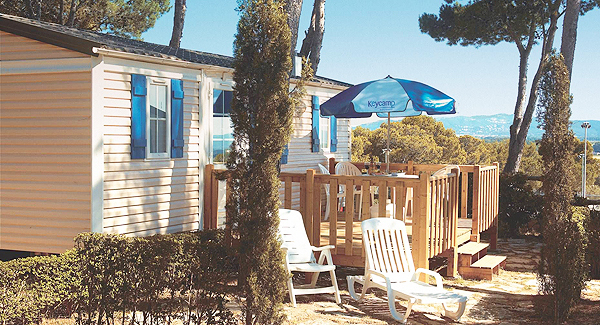
Conor Power was a guest of Keycamp (021-4252300; keycamp.ie), who offer a range of air-conditioned accommodation packages at the Lanterna campsite near Pore. €433 for seven-night stay from 6th in Villa Classic mobile home with a/c.
Apart from the aforementioned, the Baredine Caves are approximately 20km from Lanterna campsite. A visit to these dramatic limestone caverns includes a 30-minute guided tour conducted with off-the-cuff humour and apparently scientific accuracy, as well as getting to see some of the caves unique creatures in their natural habitat.
For watching the world go by, you won’t do better than the Peterokutna Kula (+385 52 451 378; kula-porec.com.hr) situated atop a Venetian tower in the heart of the old town in Pore. For value in rural setting, try the Bistro Tri Kantuna in Tar (+385 52 959 073), where a meal for four complete with beers and wine came to a mouth-watering €29. For rustic charm and more good value, call into one of the very many roadside shack-like konoba’s with a pig roasting temptingly on the spit outside the front door.
Like anywhere else, there are many souvenir shops to be found selling ranges of wonderful gifts. For a more unique bit of purchasing, a visit to a local vineyard can be a very rewarding one. We bought 2 litres of red and two litres of white for a total of approximately €9 from Coccolo Vina (+385 91 506 6238; Elvio Kokolo, Istarska 4, Tar 52465, Croatia) in Tar village, where they also sell fortified wines, olive oil and cured meats.