I was an English-speaking blow-in in the Gaeltacht — here's how I got a grá for the teanga
A native of Inis Mór, Megan Roantree knew she was different as a child — her parents didn't speak Irish. Here, she shares how the kindness of the Gaeltacht community nurtured her grá for the teanga
I was an English-speaking blow-in in the Gaeltacht — here's how I got a grá for the teanga

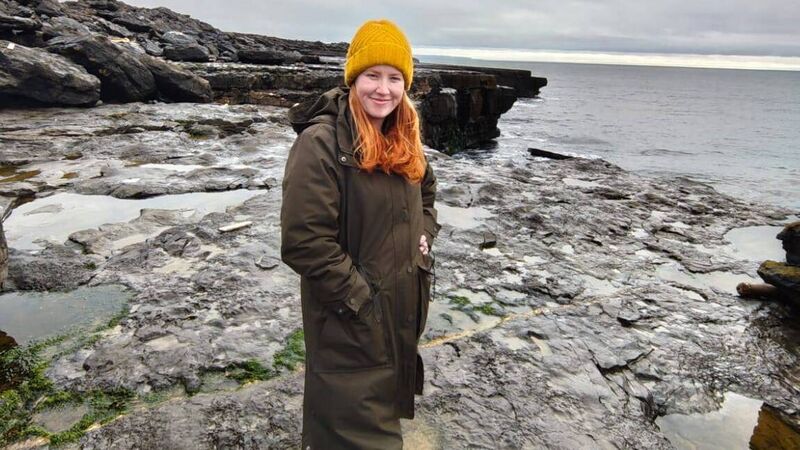
Megan Roantree on the cliffs in Inis Mór

I distinctly remember approaching my teacher at the top of the class on my first day of school. I cleared my throat, tugged on her top and said, “Can you say the words in English ‘cause I don’t have very good Irish?”
The múinteor gave an affectionate laugh and told me not to worry. The class continued, almost completely as Gaeilge.

I often think of this when people I know tell me they’d love to learn Irish, but don’t know where to start. I’m almost always told that people are afraid of embarrassing themselves by making a mistake. Even at the tender age of five, I was conscious of making mistakes. My teacher showed me I’d be fine.

I was lucky to have grown up in a Gaeltacht in Inis Mór, the largest of the Aran Islands. But I was aware that I was a little bit different. Not only was I the child of blow-ins, we were an English-speaking house on an Irish-speaking island. (That, and the fact that we were the only family who didn’t go to mass.)

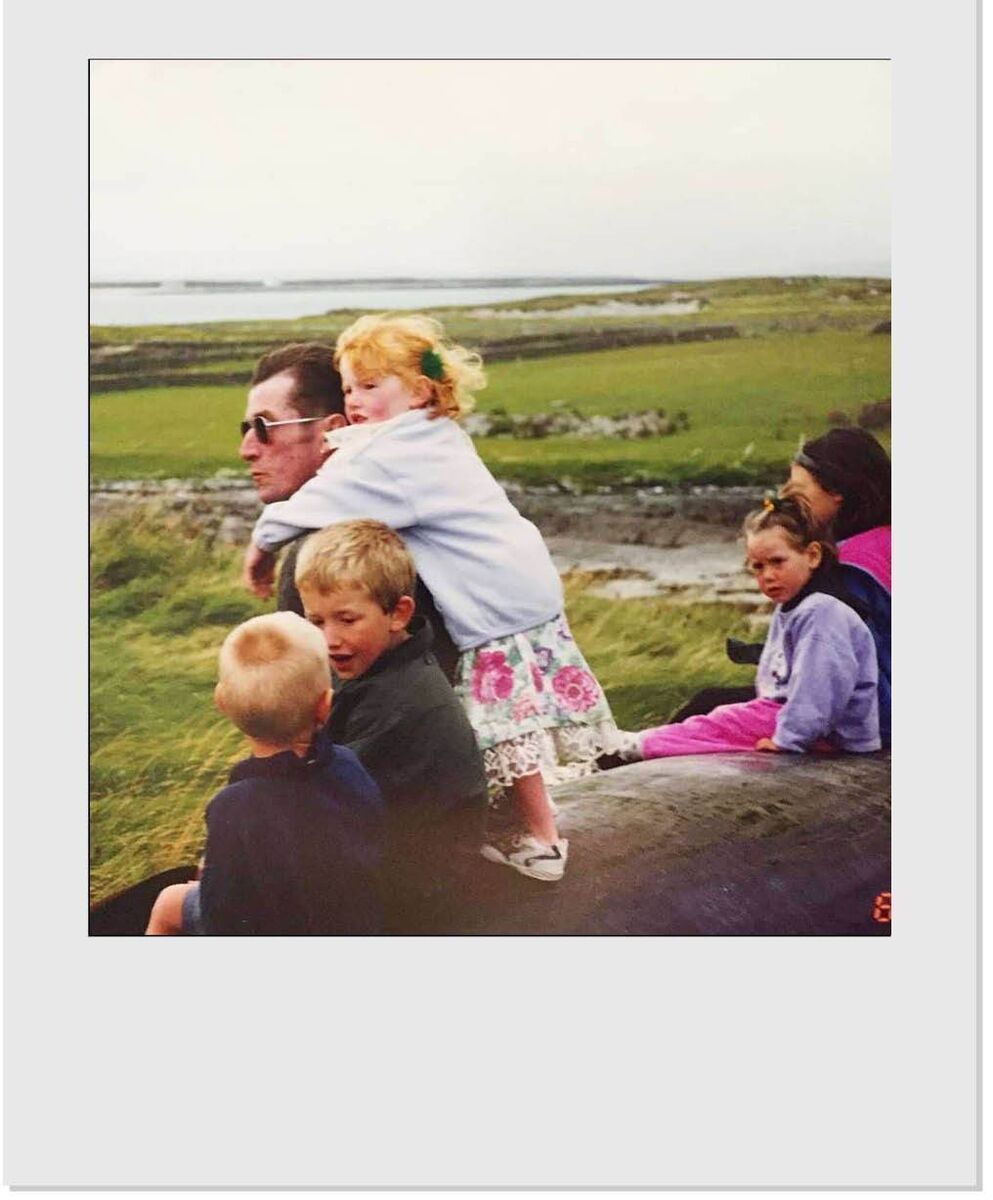
Megan with her dad Sean, her brother Oisin, and friends in Inis Mór

My father was from England, while my mother was a Dub. My dad had come to Ireland for a couple of weeks in the late 80s to work as a ferry captain for the island ferries, covering for a friend. At the same time, my mother took a trip to Galway for the first time in her life. She met an English gentleman with a booming voice in the pub, whom she decided, there and then, would be her husband. 

They decided to base themselves full-time in Inis Mór as it made sense with dad’s job, while my mom painted beautiful artwork and worked in cafes and restaurants. They knew it was the right place to raise their kids.

My childhood was as idyllic and free as you’d expect on a rural island with a population of 800. Even when I was small, I knew not everyone was lucky enough to have a childhood like mine; sandy beaches, clear waters, magical forts, cliff edges, and that unmatched fresh air. As a child of blow-ins, I never felt like I didn’t belong. It was home.

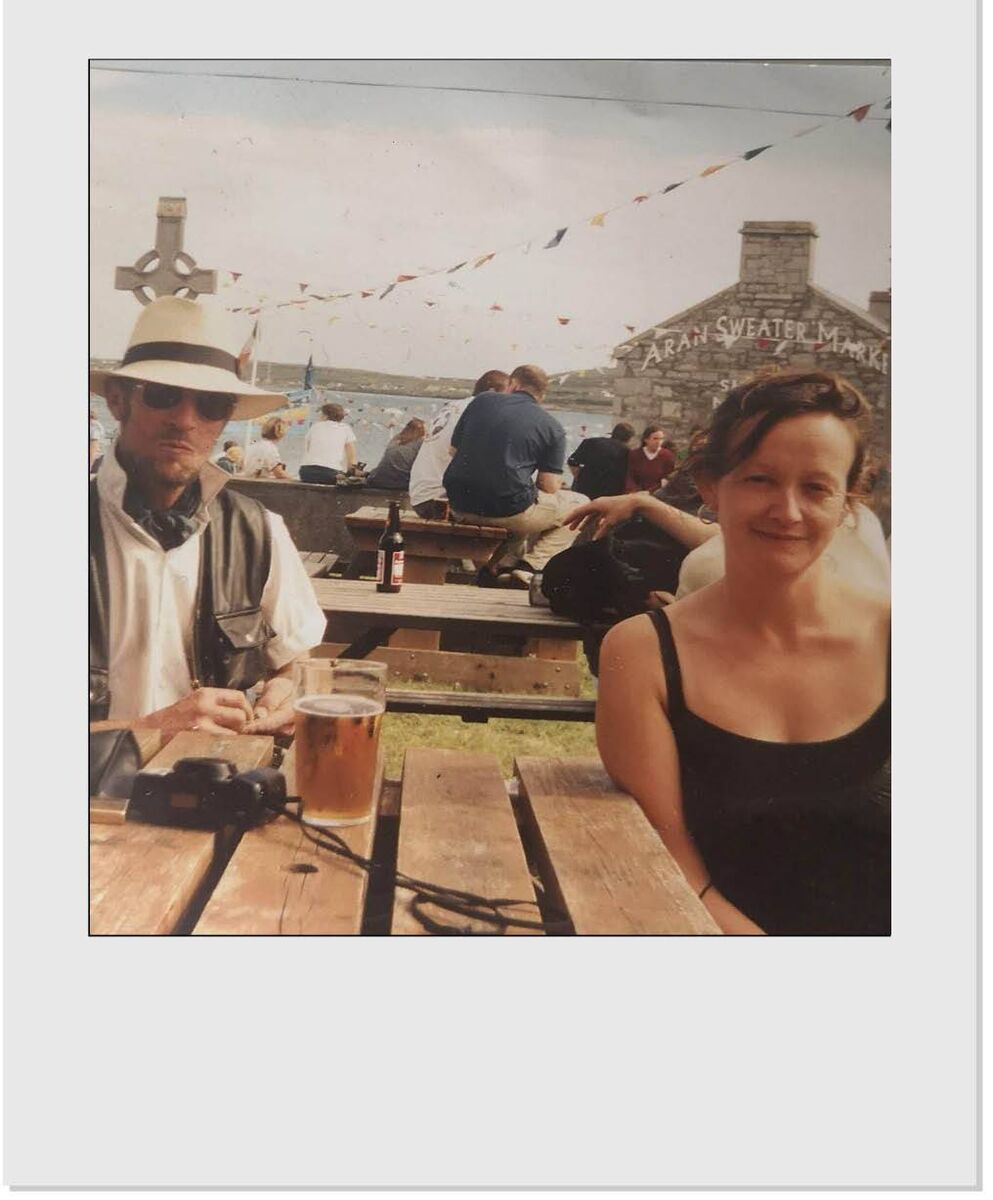
Megan's parents Sean and Jackie weren't fluent Irish speakers, but they respected the language and the island's culture

But as self-awareness develops and you begin to look around you more, I became aware that I wasn’t the same as my friends, because their households were almost exclusively Irish-speaking. I remember feeling nervous speaking in likely broken Irish to the parents of my friends.

I’m so grateful for them. Just like my teacher, my neighbours and best friend’s parents rarely switched to English when I was around. This wasn’t out of rudeness; it was quite the opposite. These adults would quietly encourage me, and gently correct me when I used a ‘sí’, instead of a ‘sé’ or forgot a séimhiu here and there. 

I can still remember getting a smile and a ‘maith an cailín’ when I spoke Irish in these homes. This gave me confidence and encouragement to continue speaking Irish. With every small mistake or grammatical error, I’d have a supportive correction, which added to my understanding.

When it came to tricky Irish homework, my neighbours would never mind me popping in to double-check my work before bringing it into school.

And while my parents never became fluent Irish speakers, they had great respect for the language and the culture of the island we called home. They’d get us involved in their own Irish language lessons, encouraging us to ‘teach’ them Irish words, and be the leaders in our house when it came to these lessons.

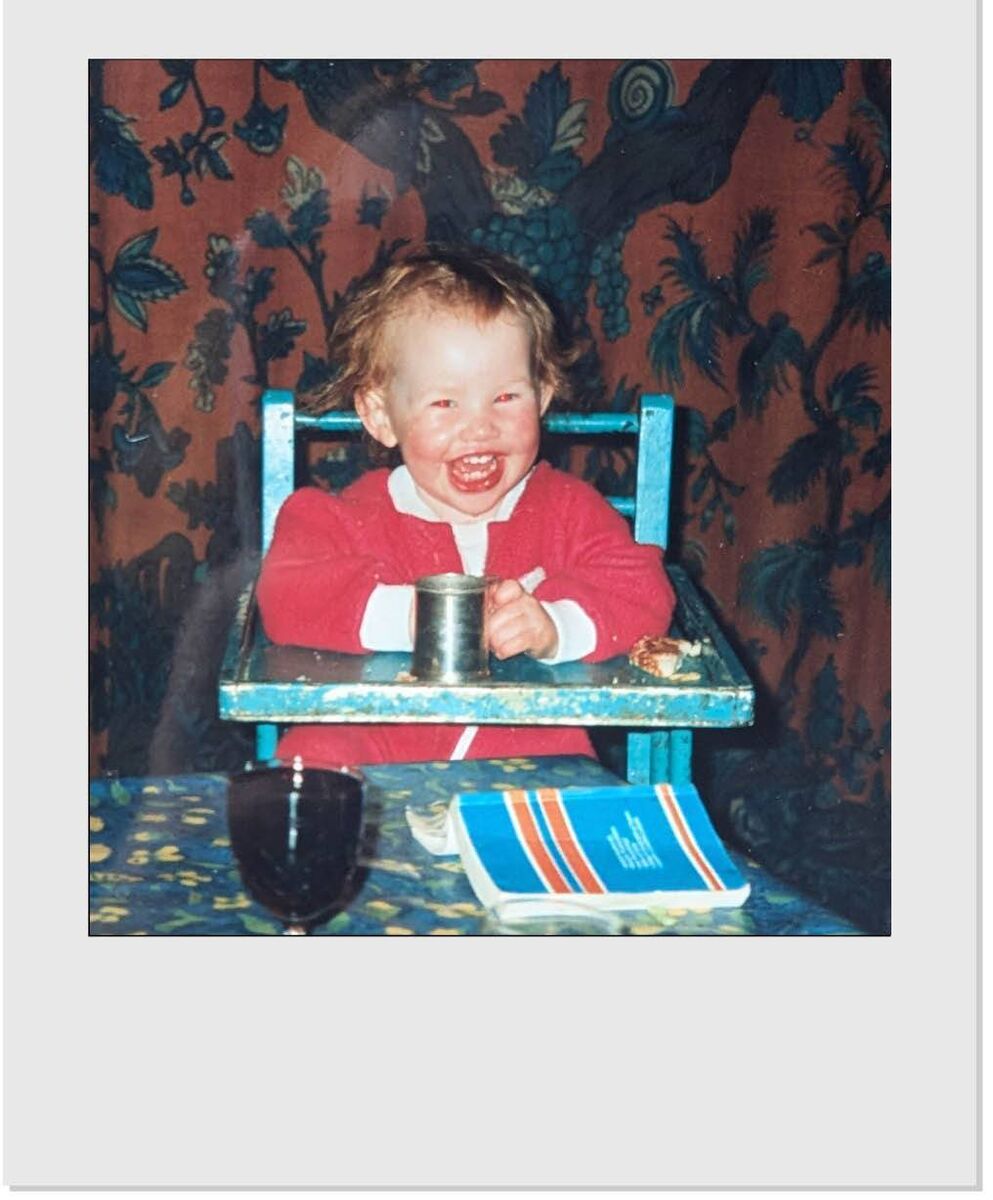
Megan, as a baby in Inis Mór, a foclóir on the table in front of her

They’d encourage us to speak Irish with neighbours or in the local shop, and ask us to translate conversations back to them to include them. This gave us a job to help them feel more part of Island life, and made us feel like the bridge between two cultures.

At the time, we were perhaps the only fully fledged blow-ins in our school, with almost all our friends having two island parents, or at the very least, one. These days, the island is rich with culture from all over the world, we have multi-national families contributing to our wonderful little home, and the children, just like my brother and I, have absorbed Irish into their vernacular. Kids like me are still getting the same experience I did over two decades ago, because Irish is part of their
surroundings and an important part of island life.

Encouragement is important, but so too is having tangible access to Irish outside the classroom. Our bookshelves had everything from Irish dictionaries to Irish mythology and storybooks told through Gaeilge. This helped us get used to the spelling and grammar of Irish in a way that didn’t feel like a lesson.

We were also incredibly blessed to have TG4 launch when I was a toddler, giving my parents a new avenue to bring Irish into our home.

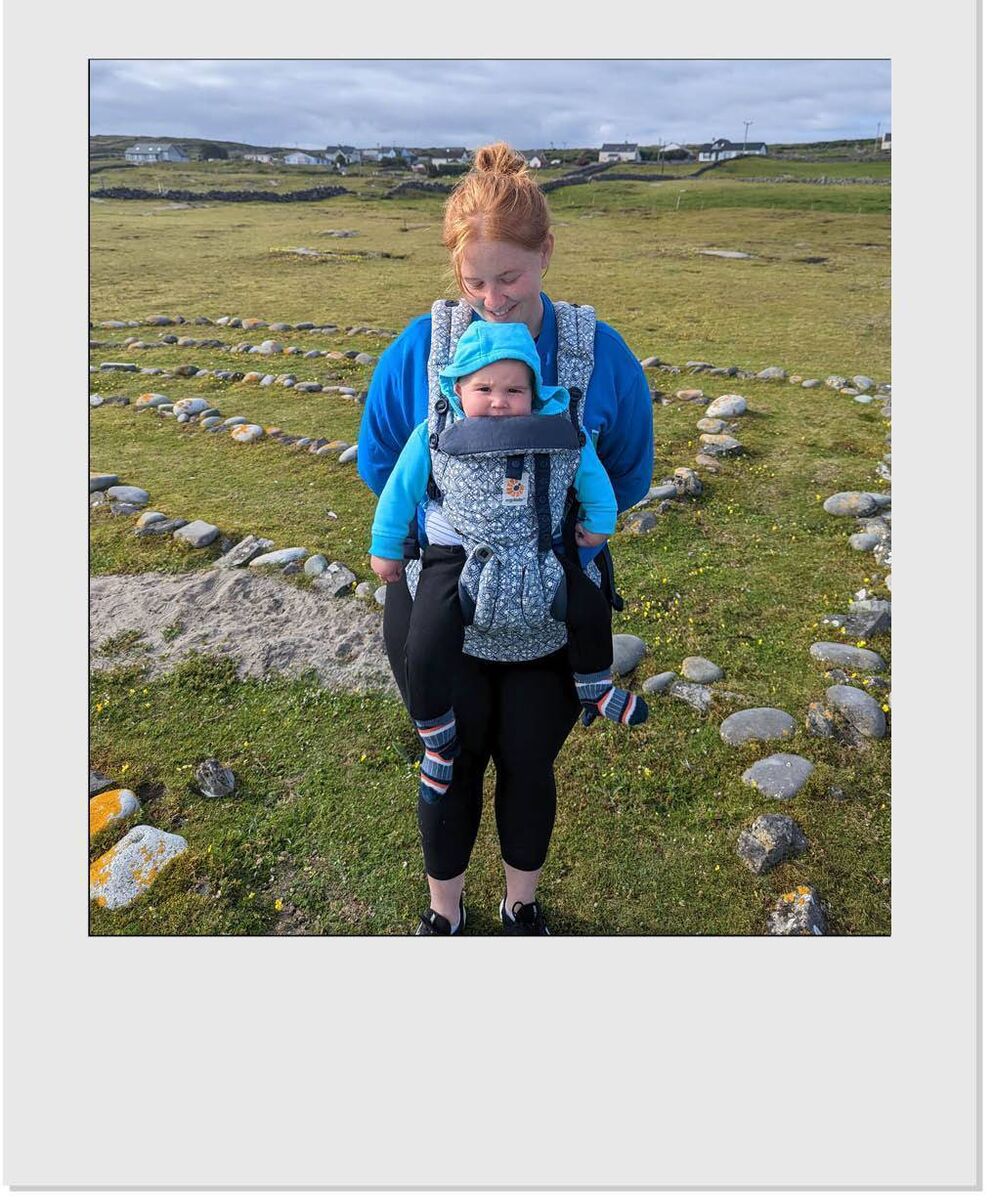
Megan with her nephew Tomás in Inis Mór

We grew up with brilliant Irish language shows. So while it wasn’t being spoken at our kitchen table, it was being heard in our sitting room. Irish language cartoons had such an impact on us growing up, to the point where my brother, who is four years older than me, even lent his voice to the dubbed Teletubbies on TG4. Not bad for the child of blow-ins! As we grew older, TG4 still had pride of place in our home, from teen drama Aifric, to hit soap Ros na Rún, which to us, was as compelling and as discussed as Desperate Housewives.

From encouragement to exposure, I count myself lucky that learning Irish was something I could do almost by osmosis. I absorbed it into my mind and my bloodstream to the point where I felt fluent. I know that not everyone can ship up and move to a Gaeltacht region to really immerse themselves in the language. But the method still stands — surrounding yourself with the beautiful language is the best way to learn.

There are so many more ways to expose yourself to Irish now. Just this week, I watched Nicola Coughlan speak Irish in an interview with Elle magazine. It struck me how I never saw anything like this growing up. We see cúpla focal on red carpets, as Irish stars continue to dominate the screen. It may seem small, but it is an impactful way to bring our language to the fore.
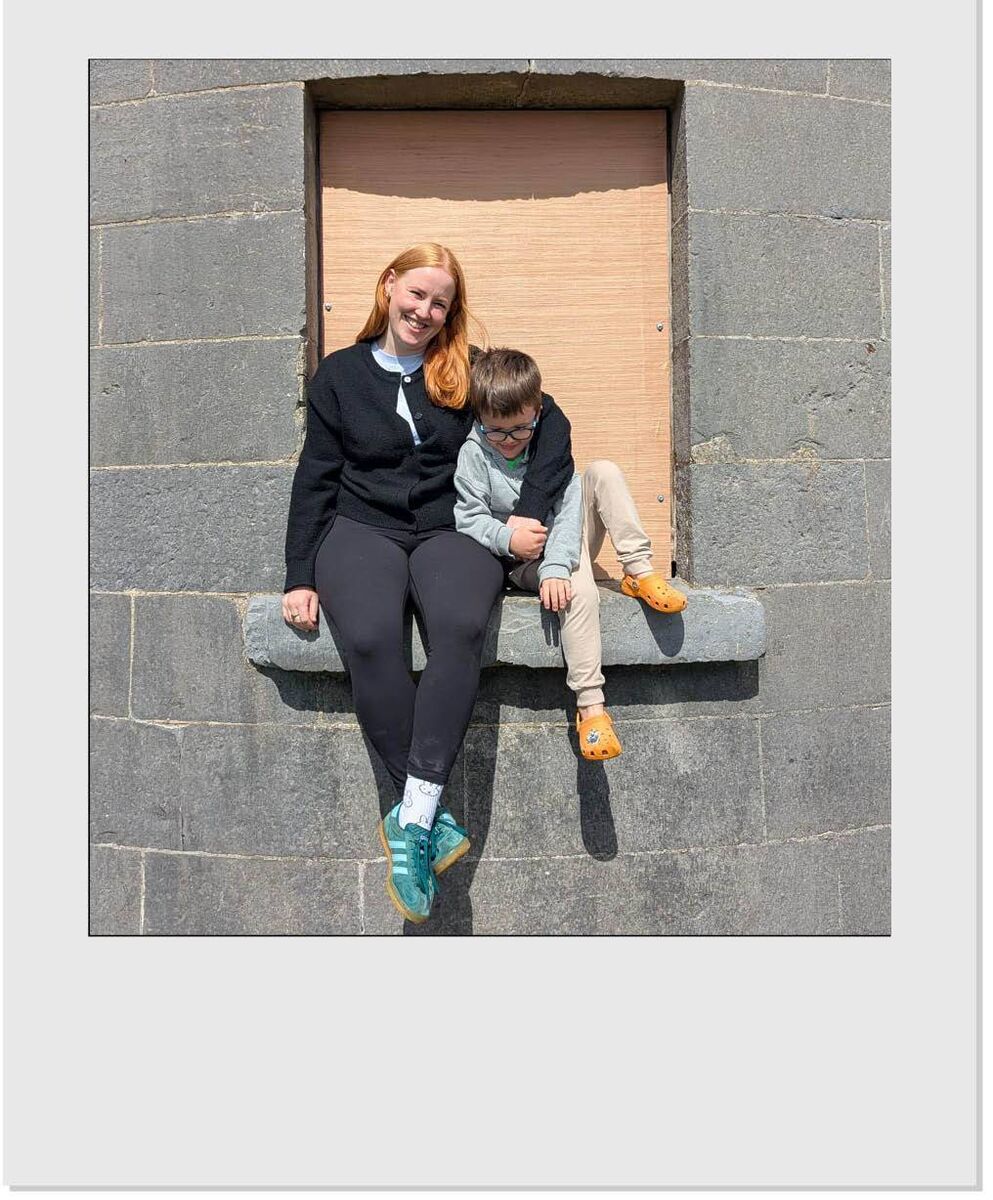

Megan with her newphew Finn in Inis Mór

Our modern world allows us to immerse ourselves in ways we didn’t have growing up. While the failsafe programming of TG4 and Raidió na Gaeltachta are still as powerful a tool as ever, there is now more than ever before in the form of podcasts, music, movies and TV.

Yes, there are more formal ways to learn the language; there are amazing classes, courses and even apps that can help you hone the grammar and sentence structure, but if you’ve struggled to learn in the past, or you’re keen to introduce it to your children in a way that feels natural, there are more ways now, than ever.

If you’re not in the Gaeltacht but want this experience for yourself or your kids, it’s all about positivity. My parents always encouraged us to learn Irish, but also to respect it as part of our heritage.

If you’re a parent who wants their child to learn Irish, my best advice would be to link up with other parents who are either Irish speakers, or learners. Adding it to every day does not make it a lesson to learn but a natural part of our lives. If you can’t surround yourself with more Irish-speaking people, surround yourself with more Irish-speaking media. If children grow up with Irish in their homes and their ears, it will end up in their vocabulary.

While there is plenty of advice I have for those learning the language, I’d also like to offer advice to those who already speak it: be kind, be open to those who are trying. Without this, I wouldn’t have the grá for the teanga that I do now. If you’re interested in bringing more Irish into your family; bain triail as! And if you’re an Irish speaker… bí cineálta!

x

More in this section

Lifestyle

Newsletter

The best food, health, entertainment and lifestyle content from the Irish Examiner, direct to your inbox.

Cookie Policy Privacy Policy Brand Safety FAQ Help Contact Us Terms and Conditions

© Examiner Echo Group Limited