Distiller Carmen O’Neal and celeb chef Matt Tebbutt to put on clinics in Montenotte

Flavour and Flair: Celebrity chef Matt Tebbutt and spirits expert Carmen O’Neal bring a night of entertainment, elegant dining and innovative cocktails to The Montenotte Hotel Cork on September 10,2025
‘My mom always said, if you want something done, you’ve got to do it yourself,” says London-based distilling maven Carmen O’Neal.
Doing it yourself started earlier than most for the Canadian. When, at age five, she wanted a bicycle, the response from her mom Rae was: “How are you going to make money to get yourself a bike? Because we’re not going to just buy you a bike.”
Rae’s no-nonsense approach to parenting has served O’Neal and her siblings well. “She taught all of us to be very independent.”
With assistance from Rae — an entrepreneur and aromatherapist herself — five-year-old O’Neal launched an enterprise making and selling scented beeswax Christmas decorations, which realised a profit of $500 in its first year. “My mom said, ‘You can buy yourself a bike’. I had to put the rest into stocks and savings.”
O’Neal’s entrepreneurial nous resurfaced some years later when she was working as a make-up artist. Her brides continually struggled to find wedding shoes, so O’Neal decided “to learn how to make a pair of shoes”.
From then on, whenever she had time away from her freelance career, she travelled to “somewhere in the world” that had a shoemaking course, learning the craft in Spain, the US, and Italy.
Having acquired all the requisite equipment, she began making custom shoes and bags and found herself regularly commuting between Canada and Italy.
Tragically, Rae became ill and died a mere 10 weeks after diagnosis. Before passing away, she told O’Neal that her commute was unsustainable long-term and if she was going to “commit” to shoemaking, she “needed to do it properly” and move.
So, a week after Rae’s death, 27-year-old O’Neal sold her home and her car and moved to London to train as a cordwainer at University of the Arts, after which she designed a shoe collection, found a factory to produce it, and investors to back her.
Then, while cycling through the city, O’Neal got hit by a lorry. Her side and hand were crushed, but her helmet saved her life. Not only did her nascent business crumble, O’Neal, who had to undergo extensive rehab, didn’t receive a penny in accident compensation as the driver was uninsured.
“I’m a big believer in, you pick yourself back up,” says O’Neal, now 39, who did just that. Having “always had side ideas for little businesses here and there”, she began mulling over the idea of creating her own gin. A G&T had been mom Rae’s favourite tipple, which she’d enjoyed “once in a blue moon”, and which O’Neal remembered as always “being special”.

Gin-making helped her feel close to her mum, with gin’s botanicals mirroring the plant essences Rae had once distilled — “she’d made essential oils and I made gin”.
At the start, O’Neal hadn’t intentions of building a brand, but her timing proved serendipitous, and the small-batch gin quickly took off. The 2009 change in UK law legalising small-scale distillation had sparked a “ginaissance” that was in full swing by the time O’Neal launched in 2016.
She christened the brand 58 Gin in homage to the 58 attempts it took to create her first offering, a London Dry Gin, which needed to be “bright citrus, a beautiful juniper spice-like finish with a nice spicy hit”.
O’Neal says, “I’m not a Bombay yet. I’m not a huge player”, but she’s come a long way since those early days creating small batches on a tiny two-litre still, and since 2019 the business has operated from a 3,000sq ft premises in London’s East End. A particularly large order necessitated the move to the atmospheric space under railway arches, the transformation of which O’Neal oversaw while on maternity leave.
Six months after the state-of the art distillery was up and running, covid hit. O’Neal has “a very distinct memory” of thinking “how long do I have until the business collapses?” A charity called asking if they could make hand sanitiser and O’Neal, despite having no clue, said yes, thinking “I’ll figure it out”.
With no ecommerce site to sell her gin and no glass bottles in which to put it due to a supplier issue, it proved both an essential move and a shrewd one. Hers was the first distillery in the UK to switch to sanitiser and when Humberside police bought their entire first batch, O’Neal decided to put all their resources into sanitiser production.
“It was a big gamble, because had it not worked, I would’ve bankrupted the company and that would have been catastrophic.” O’Neal and her team worked 12-hour days for five months producing the product, becoming official suppliers to the Metropolitan police and NHS and also quietly donating sanitiser to needful organisations.
“I have very distinct memories of saying, if we make this and somebody sprays it and kills germs and kills covid, if we can save one person, then it’s going to be worth it.”
Out of a desire to optimise sustainability, the Co-Lab Series was born, a collection of limited-edition spirits utilising “other people’s byproduct”. This led to a rebrand, with 58 Gin becoming 58 and Co.
The new segue kicked off with an olive oil vodka, using olive oil from Citizens of Soil, a company that works with women-led and regenerative-focused small farms. They had a quantity of oil that was unsellable due to damaged packaging.
“It sat in our vodka for a couple of months and then we tried distilling it in a couple of different ways and one of the ways really worked,” explains O’Neal.
Olive oil vodka might sound bizarre, but think dirty martini and suddenly it makes perfect sense.
Excess wine stock became a vermouth, while Japanese “sipping spirit” shochu emerged from repurposed sake, and was the brainchild of Ben, O’Neal’s head distiller.
“I said, if you believe in it and you want to be championed on it, I’ll stand behind you and cheer’.”
O’Neal is all about helping others to shine. It’s in her DNA. “Mom always lifted other people up in life and in business.”
To honour Rae, the biggest still in the distillery, a 450-litre copper Holstein, is named after her, while the others are named for women who “challenged the status quo, stood up for themselves, and really showed that they deserved to be in the room”, including Maya Angelou, Princess Diana, and Ada Lovelace.
O’Neal has “a really strong female team” around her now, which she says “is really great. And I want to continue that”.
The alcohol industry is a tough one. “Things take a lot of money, time, and effort, but it is quite a collaborative industry.”
One thing that took time and effort was 58 and Co’s B-Corp certification, a marker of high standards of social and environmental performance, transparency, and accountability.
“I did it all myself. It gave me structure as to how I could assemble the business and how I could get better.” The ethical distillery became the UK’s first female-founded alcohol brand to be awarded the prestigious accolade.
O’Neal has latterly become known as Cocktail Carmen by virtue of her appearances as a cocktail and spirit expert on BBC’s Saturday Kitchen cookery show.
Having discovered she’s “1% Cork” courtesy of an ancestry discovery test, she’s “very excited” to be bringing her mixology expertise to the Rebel City in September, when she and chef Matt Tebbutt will be hosting a fabulous evening of food, fun, and cocktails at the Montenotte Hotel.
So what makes a great cocktail? “That people enjoy it when they drink it is definitely the key. And balance.”
Balance is, perhaps, more easily achieved in cocktails than in business, but O’Neal has become adept at rolling with the punches.
“When you’re running a business, there’s fear you’re going to do it wrong. It’s a consistent battle of pushing that fear away and doing it anyway. But fear is never going to go away. It’s just learning how to deal with it.”
She’s playing a blinder.
- Matt Tebbutt and Carmen O’Neal bring a night of entertainment, elegant dining, and innovative cocktails to the Montenotte Hotel on September 10.
- For more, see themontenottehotel.com.

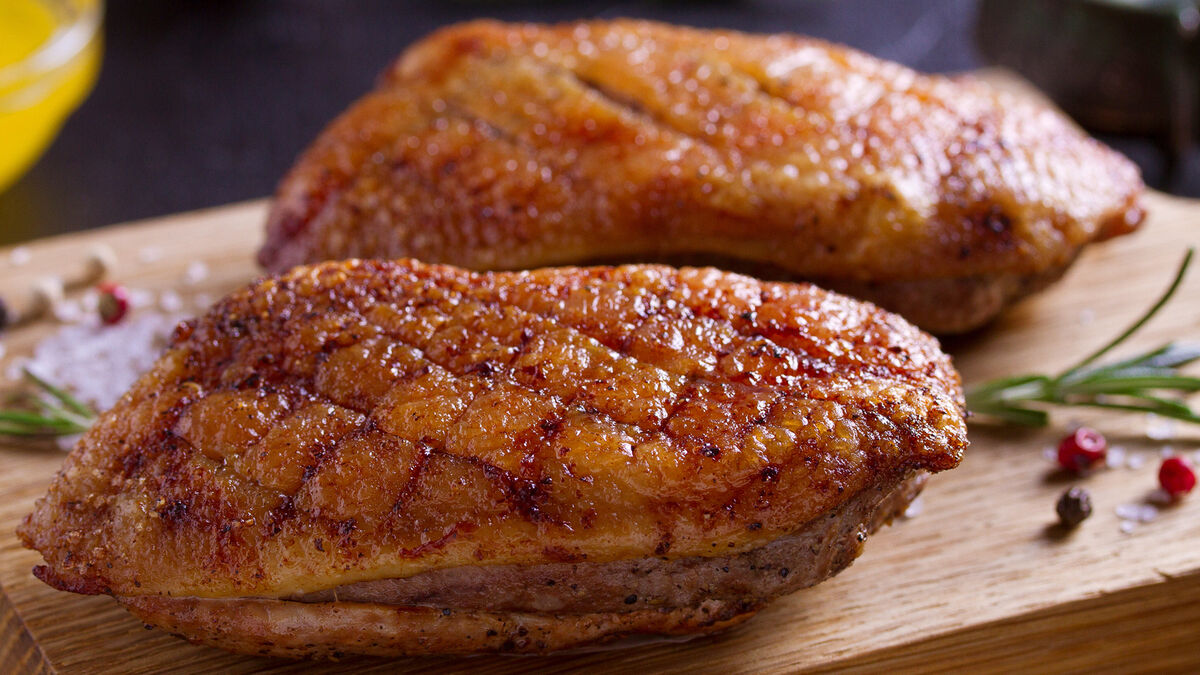
Matt Tebbutt's Duck Breast with Goat’s Cheese and Cherries
This canape recipe is a more domestic take on the canapé Matt will be serving at the upcoming ‘Flavour & Flair’ event at The Montenotte on September 10.
Servings
20Course
MainIngredients
500ml/18fl oz chicken or duck stock
250ml/9fl oz port
1 star anise
1 bay leaf
100g/3½oz pitted fresh cherries
runny honey, to taste
salt and freshly ground black peppe
For the vinaigrette:
2 tbsp olive oil
1 tbsp red wine vinegar
pinch dried red chilli flakes
1 tsp chopped fresh thyme
To serve:
1 red endive
1 yellow endive
handful watercress
200g/7oz goat’s cheese log, sliced
Method
To make the cured duck, mix all the ingredients, except the duck, together in a bowl. Bury the duck in cure, skin-side down, ensuring it is totally covered in the cure. Cover with cling film and press lightly with weights. Chill the duck in the fridge for 3 days.
After 3 days, wash off the cure and thinly slice before serving.
To make the cherry sauce, pour the stock into a saucepan and bring to the boil, then reduce by three-quarters.
In a separate saucepan over medium heat, add the port, star anise, bay leaf and cherries and poach gently for 10 minutes to soften.
Remove the cherries, set aside then turn up the heat and reduce the sauce to a syrup. Add the hot stock and reduce this to taste.
Season with salt and pepper and add some honey to sweeten if needed. Add the cherries back into the reduction.
To make the vinaigrette, in a small bowl mix the olive oil and vinegar with the dried red chilli flakes and thyme. Add 4 tablespoons of the stock and port reduction. Whisk to combine.
To serve, arrange the endive and watercress on a plate. Add some goats’ cheese and sliced duck then dress with the cherries and vinaigrette. Serve.
- Don’t press the duck too heavily, it’ll squash the meat while it’s curing.
- Similarly don’t over-cure, this will firm the meat too much. Better to under-cure than over-cure. Remember, you can eat duck breast rare/pink.
- If you can’t get hold of cherries, blackberries or elderberries substitute well (treat in the same manner).

CONNECT WITH US TODAY



Be the first to know the latest news and updates