Do you remember the Jackie magazine? It's 60 years old

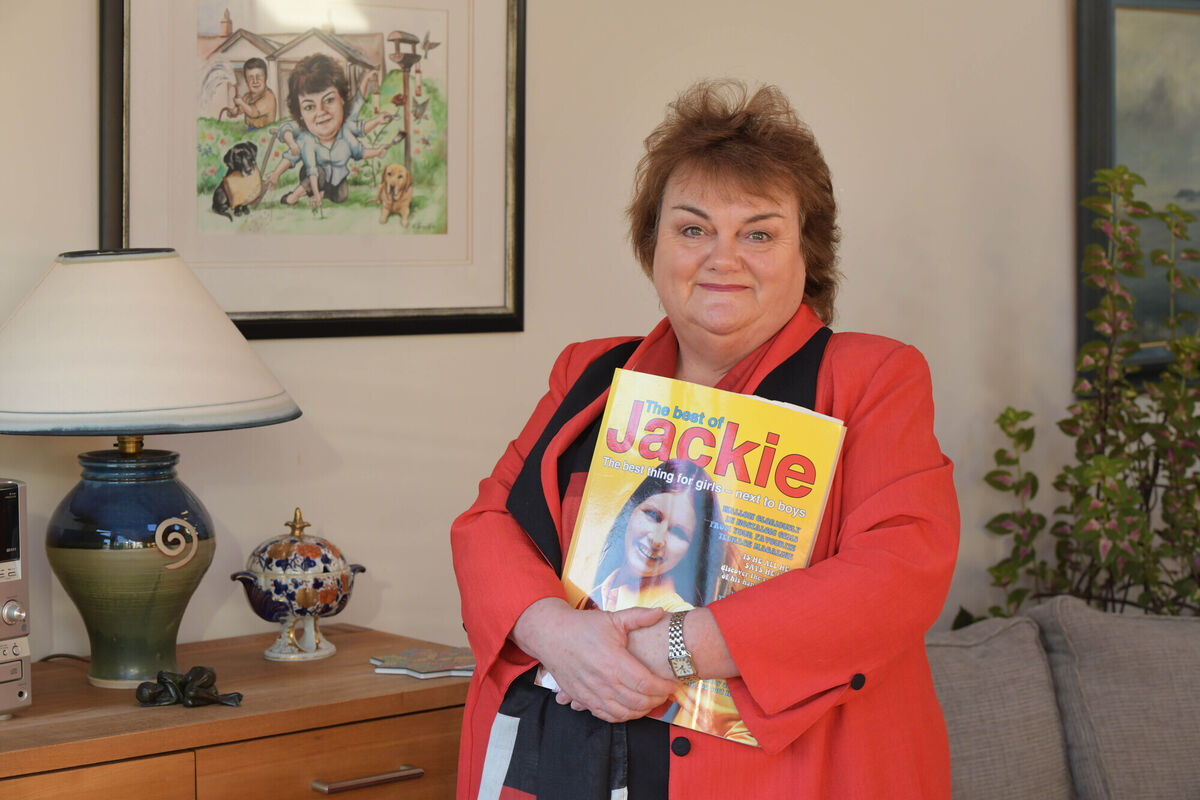
June Rodgers with a copy of Jackie magazine . Photograph Moya Nolan
Tallaght was a rural village when June Rodgers grew up there in the 1960s and 1970s. The comedian and star of Mrs Brown’s Boys recalls how she and her sister used to sit on the wall of the nearby Protestant church and count how many red and blue tractors would pass them by on a given afternoon. They had no phone and the only real connection they had with the teenage world outside was through a weekly TV show called Top of the Pops and a magazine they would rush down to buy from the local newsagents every Thursday.
“Jackie was the highlight of the week,” says the actress. “I just used one of the annuals for a seventies scene in my recent Christmas show and it brought back lots of memories. Myself and my sister got it once a week to share. There was always a big poster in the middle of it of a pop star like David Essex, Rod Stewart or Roxy Music. We used to cut out the pictures and hang them on our wall and when we’d be getting dressed for bed we would cover their faces so they wouldn’t see us getting into our nighties.
"There was an agony aunt, the Cathy and Claire page. It gave you beauty tips and tips around romantic problems. The fashion in it just blew us away. My sister was big into that side of it. In those days, we didn’t really have a Penneys and the like. It was a world away from what you’d see here because I suppose it all came from London.”
Officially, and as far as the publishers wanted their readers to know, Jackie was indeed based out of London. But it was written and produced in the slightly less glamorous city of Dundee in Scotland which at that point was more famous for cake, marmalade, two relatively poor football teams and two comics called The Beano and The Bunty.
The publisher of these pre-teen comics, DC Thomson, noticed their female readers had very little to move onto when they were done with Lorna Drake and The Four Marys.
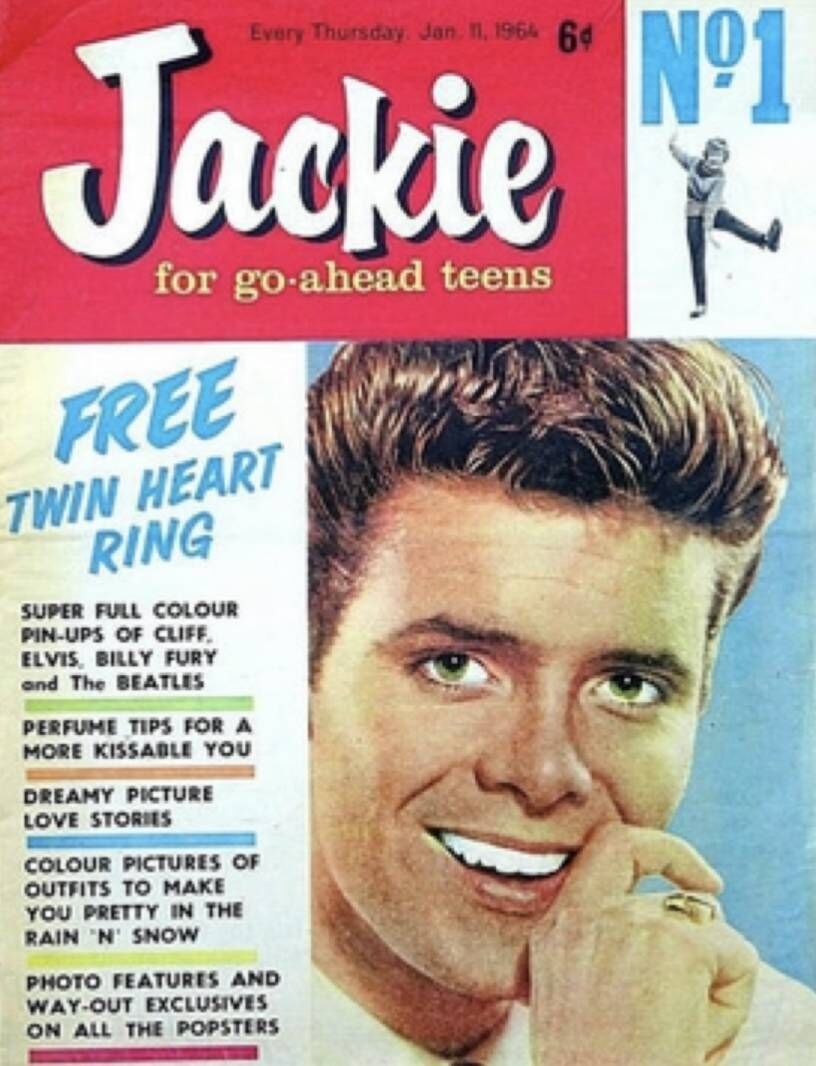
Jackie was launched back on January 11, 1964, at a price of just six pence with a picture of a smiling Cliff Richard on the front cover. It was packed full of quizzes, beauty and fashion tips, love stories, horoscopes, and pop features and it offered teenage girls a window into the lives of their peers up and down the UK.
There was one page in particular that everyone turned to first; a problem page run by the aforementioned Cathy & Claire, fictional agony aunts who churned out advice on everything from horoscopes to hairdos gone wrong.
At the magazine’s peak in the mid-seventies, the problem page would receive between four and five hundred letters a week. The advice given back was often quite forthright with a good dose of stiff upper lip dished out to those in need of succour.
Unsurprisingly, boys were a hot topic and not just in the letters pages. Jackie was awash with features around getting the boy, splitting up with the boy, getting back with the boy and splitting up with the boy again. To guide readers through the complexities of these loud and smelly alien beings, boys were classified into categories with easily discernible characteristics - The Boy Next Door, The Shy Guy, The Joker and The Wise Guy. Jackie readers could tell a lot about boys by the way they tied their shoelaces, combed their hair or whether they did or didn’t like football.
One issue examined the shape of boys’ heads and what those shapes could tell you. Apparently, those with square heads were “determined to change the face of the earth” and were “born to build and dig and fight”.
Another issue focussed on eyes and advised girls who dated boys with small eyes not to “expect a great show of affection”. Even worse was the boy with eyebrows which flare up at the end, “a dramatic exhibitionist who loves being the life and soul of the party”.
Noses, ears, posture, nothing was safe from the amateur psychologists and self-appointed body language experts at Jackie who were under pressure to come up with new ways of interpreting the teenage male for an increasingly hungry readership.
Advice on snaring one included taking an interest in his interests or knitting him a scarf of his favourite team.
Years later editors would admit, although you feel we knew already, that almost everything they wrote was based on nothing more than ideas that were bandied about the offices. But the formula worked. Sales of the magazine were huge, regularly hitting 600,000 in the mid-70s.
Special editions coinciding with tours of idols like Donny Osmond or David Cassidy would sell even more and then of course there was the annual.
For the guts of 20 years, Jackie was what its first female editor Nina Myskow described as a “big sister” to teenage girls in the UK and Ireland but by the mid-eighties, sales began to decline. While it had paved the way for teenage girls to explore more about themselves and their peers, it failed to keep pace with societal change.
In 1993 it folded, having left an indelible mark on the generation who read it religiously.
“This was basically the social media of its day,” says June. “There were things about your body that you’d be too mortified to talk to your parents about so you could read up on it. We didn’t know half the stuff that they were talking about but it did help in that respect. I have positive memories of it." There was nothing like it.”

CONNECT WITH US TODAY



Be the first to know the latest news and updates