Irish Teacher: It's okay to break school rules when it means helping a child learn
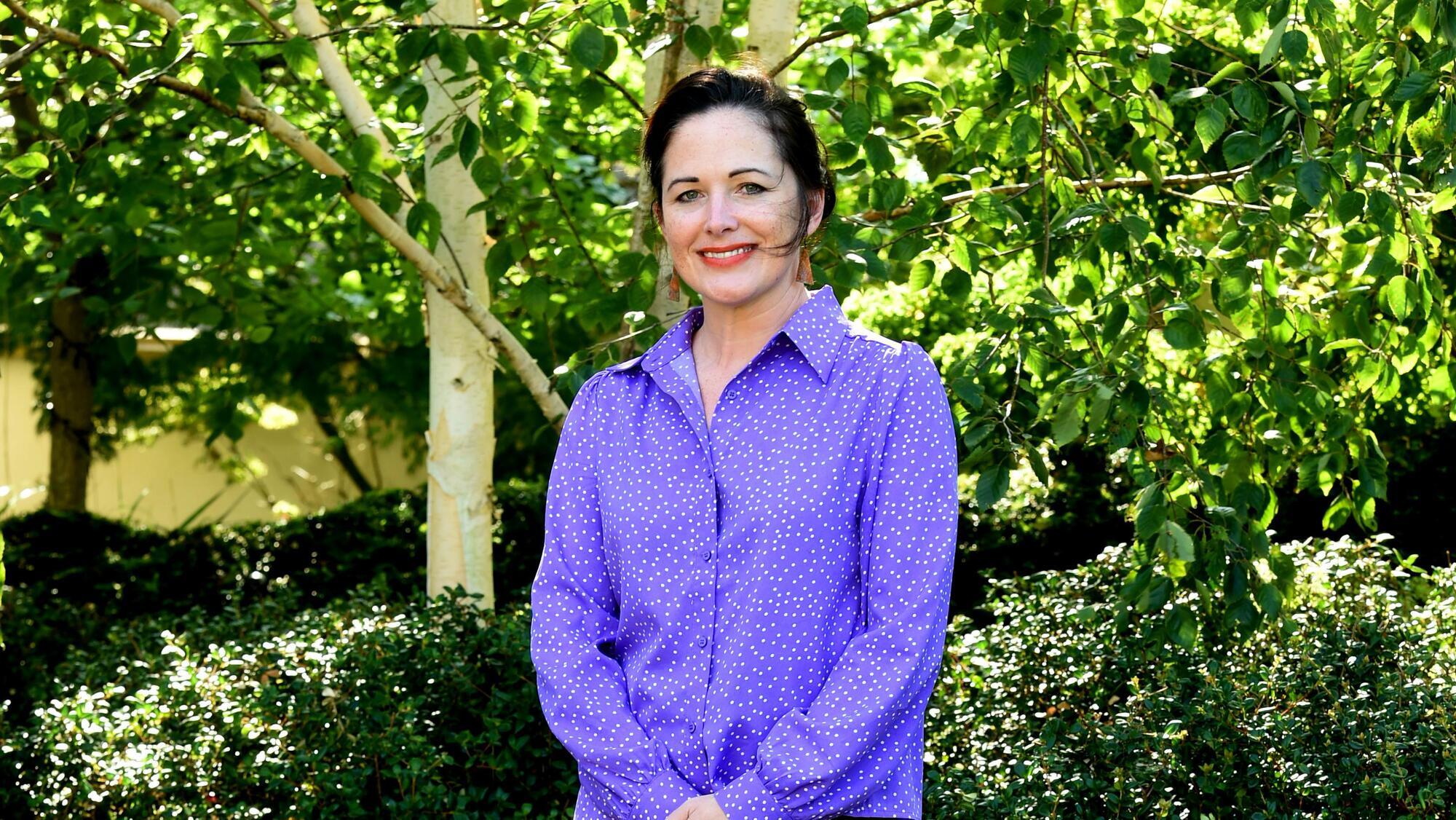
Jennifer Horgan. Pic: Larry Cummins
I endured a fellow teacher explaining how boys and girls learn differently on the radio last week. He made the claim that this difference is a good enough reason to separate them.
His "boys are just rougher" and "girls are more emotional" schtick is abhorrent to me. Boys will be aggressive if you tell them it’s in their bones. Similarly, girls will shoulder disproportionate caring responsibilities if bombarded with pink merchandise about kindness from infancy.
Even if it is true that boys and girls are inherently different, how can that be a reason to separate them?
I have limited time for schools that discriminate and segregate by religion, gender, ability or class. Education is a social act. I will put a child’s right to an inclusive education above a parent’s right to choose EVERY SINGLE TIME.
I suspect the gender debate will rattle on for decades. It is arguably less urgent than another concern: the discrimination faced by neurodivergent children.
I’ve asked management about this in various schools. I’ve asked why they don’t adapt their behaviour policies for autistic children with regulation difficulties, let’s say. I always get the same response: it’s discriminatory to have one rule for one child and a different rule for another. That’s the moment I imagine my wheelchair user parents being asked to attend a doctor’s surgery up a flight of stairs.
To give an example: a friend of mine was supervising detention in her school last week. Three out of ten of the students were autistic. One was forgetting to bring their equipment to school. He was asked to write an essay about the importance of being organised. She looked up his notes afterwards and found a psychologist’s assessment outlining his difficulty with organisation.
Speaking at an Inclusion Ireland seminar last November, Niall Muldoon, Ombudsman for Children said: “At the moment there is a twin-track approach of, a) mainstream education and, b) facilitation of special education needs, but what we need now is a clear plan as to when and how those tracks will converge into one inclusive pathway to education.”
I agree with him but I also fear a policy approach that ignores difference altogether.
I spoke with Clare Truman this week, who has just published a book about Pathological Demand Avoidance (PDA), something potentially experienced by 20% of autistic people. This is where someone can’t cope with demands, finds them overwhelming and exhausting to the point where their safety and the safety of others is put at risk.
Truman has worked in mainstream, in a special school and in a centre for children with PDA. She believes that with more staff training and understanding most children can access mainstream education but there will always be children for whom school is impossible. What must be protected, at all times, is the child’s right to an education, wherever it occurs.
She believes that all behavioural policies should come with a disclaimer, that it may be adjusted to help specific learners. If a child sprains their ankle and can’t wear leather shoes for a few days, it’s allowed. Breaking policy is accepted. A reasonable accommodation is made. The same flexibility needs to be shown to neurodivergent learners.
Truman spends time teaching her children with PDA the difference between legal rules and other rules, so they won’t contravene actual laws in adulthood.
“Adults need to learn about the difference between legal laws and school rules too. The most important legal law is that a child has a legal right to education. If school policy gets in the way of the child’s access to education, that’s unacceptable. I understand that people might say that adjustments to rules are discriminatory but to block a child’s education is far more so.”
Scoil Mhuire Gan Smál, a Catholic primary school in Co Louth has done inspiring work in this area. I invite school leaders to check it out online. Their behavioural policy for their special classrooms focuses on de-escalation and support. It was written by principal Ruairí Mac Dónaill in consultation with teachers and SNAs to “facilitate the education of each and every child”.
More schools will be opening special classrooms in Ireland, a development that’s long overdue. I just hope behavioural policies are reviewed and adjusted to make the environment truly inclusive for all children. Physical space is important. Recognising and celebrating difference across school rules is important too.
CONNECT WITH US TODAY



Be the first to know the latest news and updates