Bernard O'Shea: I tried positive affirmations but my big Irish head kept rejecting them
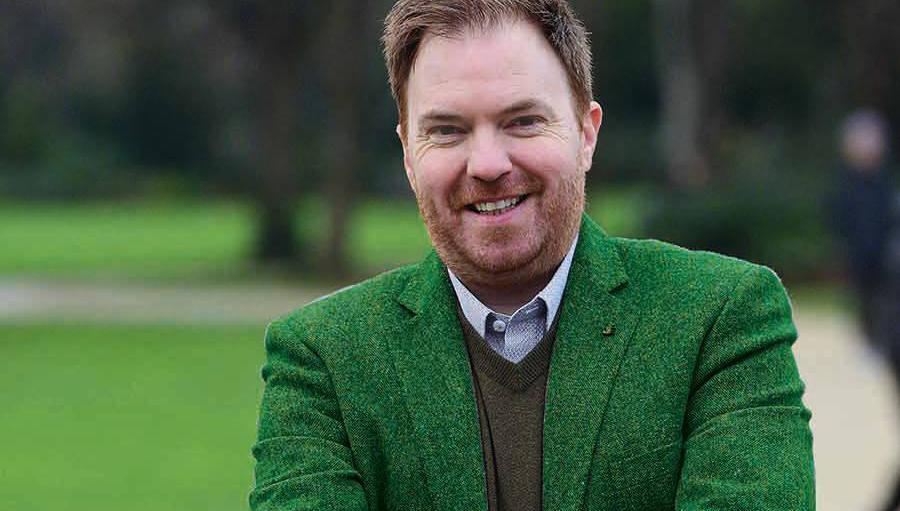
Bernard O'Shea: positive affirmations haven't quite worked out. Photograph Moya Nolan
Positive affirmations have gained popularity as a tool for personal growth and self-improvement. The idea behind affirmations is to repeat positive statements about yourself and your life, which can change your mindset and improve your overall well-being. But can positive affirmations transform your life? Or, in my case, make my guilt-ridden Irish head highlight all my inadequacies?
Ancient cultures and religions have used affirmations for centuries to manifest desired outcomes. They were popularised in the 20th century by self-help gurus like Louise Hay. Louise Hay was a self-help guru and author who became famous for her work on positive affirmations and the power of positive thinking. Her best-known book, , has sold millions of copies. She passed away in 2017, but her influence still resonates today.
Research has shown positive affirmations can affect the brain's neural pathways and influence behaviour. They have been linked to improved mood, reduced stress and increased self-esteem.
In a study carried out in 2006 entitled by David K Sherman, Geoffrey L Cohen:
“Self-affirmation theory asserts that the overall goal of the self-system is to protect an image of its self-integrity, moral and adaptive adequacy. When this image of self-integrity is threatened, people respond in such a way as to restore self-worth.”
Some of the most popular affirmations used include statements like "I am worthy", "I am capable", and "I am loved". Each affirmation targets a specific area of life and promotes positive thinking. Creating personalised affirmations that align with individual goals and values can be a powerful tool for self-improvement.
Regularly practicing affirmations have been proven to reprogram the subconscious mind. Incorporating affirmations into daily routines, such as repeating them during morning meditation or before bed, can be helpful, almost like when I practice gratitude with the kids before bed. This is no coincidence.

Actor Jim Carrey is a well-known advocate of affirmations, having used them to achieve his goals long before he became famous. He believes that thoughts and intentions underlie everything and that affirmations can turn them into reality. Also, Carrey, who may not seem spiritual, enjoys prayer and attributes this to an Irish teacher who told him to pray for what he wanted. He prayed for a bike, and within two weeks, he received a brand-new Mustang bike. It was won in a raffle. This experience taught Carrey the power of prayer and positive outcomes.
However, I hit a snag when I wrote my own. I tried “You are loved”, and my big culchie Irish head kept rejecting it. My subconscious answered, “Are you f*cking serious?”. When I switched to "I am capable,” I answered myself again “Yeah, capable of being a gobshite”. I kept saying affirmations daily, but I didn't believe half the stuff I told myself. It was like trying to sell a used car to a mechanic who saw me drive into car park pillars several times.
Is it possible that I couldn’t bring myself to be internally positive? One of the simplest things I have ever tried for this column, and I couldn’t do it! Then I tried thinking of Jim Carey's Irish teacher. What would she tell me to do? Go home and pray to God for an extra bit of self-esteem the next time I have to tog out when I’m bringing the kids to the beach.
Then I tried a different approach. What if I conjured up some very specific Irish eccentric self-affirmations? I eventually settled on five that my Tayto-infested brain would allow past my high vis-vested security guard who stood at my rusty neurological gates.
- There’s nothing wrong with you. Pull in your belly
- Get out of bed earlier, ya lazy (rhymes with colics)
- You are capable. What do you want, a medal?
- You are worthy, I suppose.
Finally my favourite -
- You are liked; isn’t that enough?
I may be too closed-minded when I analyse my failed attempts at absolute positive affirmations. That I’m not as open-minded as I thought I was. While positive affirmations may not be everyone's cup of tea, there is no denying that they have helped countless people improve their lives.
And who knows, maybe someday my guilt-ridden Irish head will learn to embrace a few “real” affirmations. Until then, I am happy with my personalised mantras, even if my subconscious is an awful (rhymes with colics).


CONNECT WITH US TODAY



Be the first to know the latest news and updates