Pete the Vet: Why is my dog eating the skirting boards? - and other pet peeves
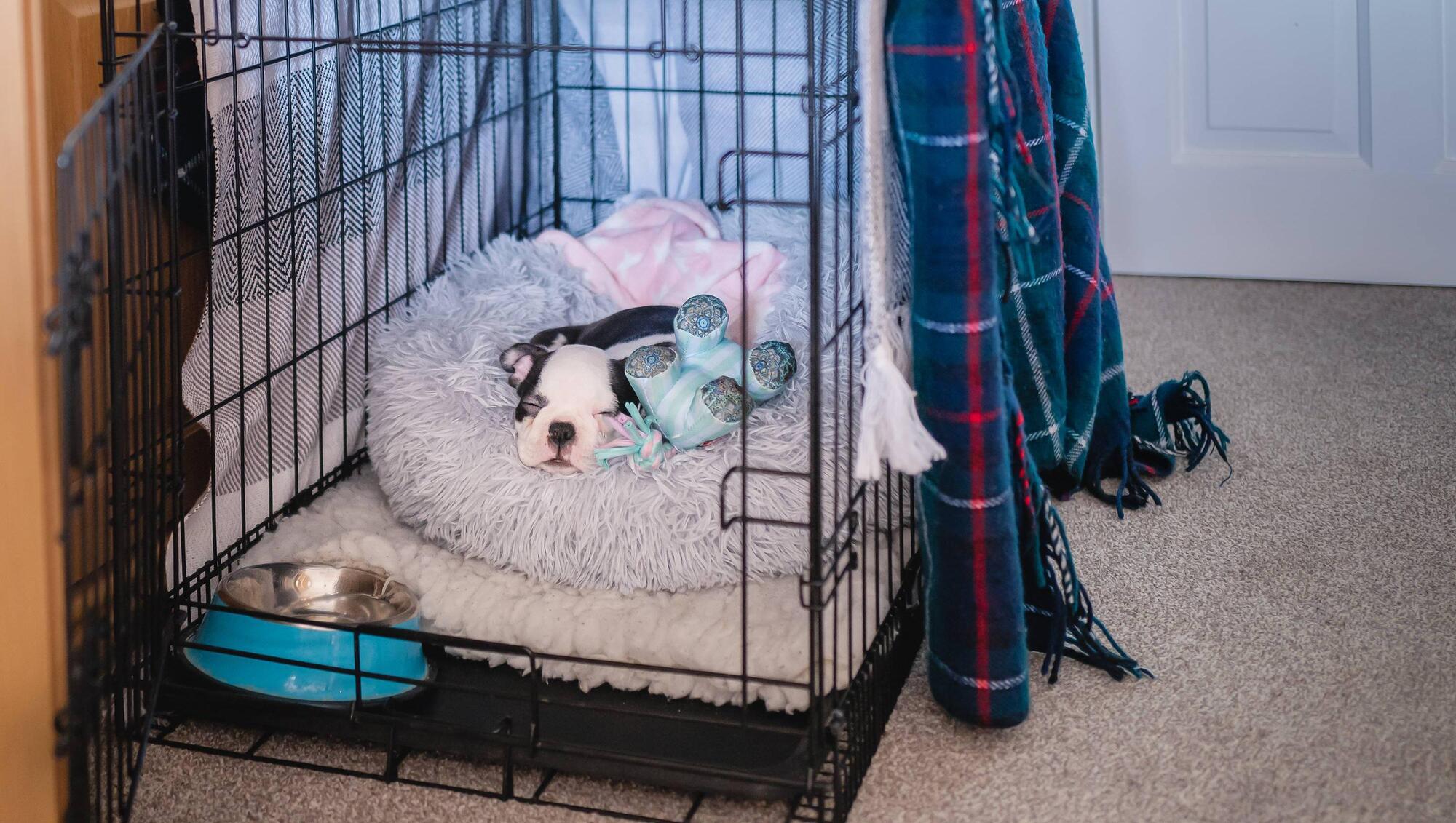
Pete the Vet: Crating can help retrain a dog with toileting issues.
As pet owners, we all need to give our pets the freedom to engage in natural behaviour, and for dogs, that includes play and chewing.
If we don’t specifically provide for these needs, then dogs find a way to do it themselves.
It’s likely that since the baby arrived, there may have been less time to focus on the dog, and perhaps less time for exercise.
This then leads to the so-called “bad” behaviour emerging.
Try to give him more walks, engaging with him while you are out, and when you are at home, give him food-releasing toys (such as Kongs, stuffed with soft food then deep frozen).
If you give him something fulfilling to do, he’s less likely to engage with the skirting boards.
I am so sorry to hear about your toileting troubles. Basic house training is a key part of good pethood!
“Sticking his nose in it” is cruel and does not make any difference: he would not understand why on earth you were doing this. Dogs do not have that level of understanding of acts and consequences.
The best answer is to gradually crate-train him again. This means gradually getting him used to spending time in a metal crate designed to be used as a dog’s “private bedroom”.
Choose one big enough for him to stand up and turn around inside. Put comfy bedding in here, and some food-stuffed toys. Encourage him to go in voluntarily, and after a week or so, start to close him in for short periods. Then you can move to shutting him in overnight.
Dogs have a natural desire not to dirty their own den, so if he is confined to his own “bedroom” in this way, he should choose not to go to the toilet in it. Take him straight outside first thing in the morning. He should soon learn this new routine.
It’s common for some dogs to have a circular balding area on the upper side of the tail, 3 – 5cm from the base: this is the supracaudal gland, or the “tail gland”.
This normally just produces skin secretions, but sometimes the skin here becomes thickened and greasy, and the normal balding area can widen due to complications such as bacterial infections and hormonal influences.
Regular bathing with antibacterial-type shampoos can help, and castration of male dogs can reduce the hormonal influence. If the patch looks red or sore, or if it is itchy, then yes, you should take him to your vet to rule out other causes.
Feeding dogs can be a surprisingly emotive topic. Many people find a diet that works for their dog, and they mistakenly presume that this is the “only good true way” to feed a dog.
The truth is that there are many different diets that work very well: after all, dogs have survived for centuries as scavengers.
Science tells us that a diet must meet all of a dog’s nutritional needs, and all commercial “complete” diets are legally bound to do this.
Cheaper diets tend to be less tasty, and less digestible, so more will pass through your dog and out the other end.
One of the hallmarks of a high-quality diet is that a dog produces less faeces (because more of the food is digested and absorbed).
My view is that it’s best to choose a diet that seems sensible (and your choice sounds fine), and judge the impact on your dog after 6–8 weeks. If your dog is thriving, with a shiny coat, bright eyes and well-defined musculature, then you’re onto a winner.
First, please note that the RSPCA only operates in England: it’s the ISPCA in Ireland. It’s common for money to be given to the RSPCA by Irish people in error.
Owners are obliged by law to provide for a dog’s needs, including the freedom to enjoy normal behaviour and social life, and if a dog is left on its own for long periods, this may be a breach of this law.
However, this would be a minor breach compared to more severe examples of cruelty, and realistically it would be difficult for a court to obtain a conviction for the law being broken.
That said, it may help if an official called to the house to remind these people about their obligations to the puppy: you may wish to contact the ISPCA National Animal Cruelty Helpline at helpline@ispca.ie, or phone 0818 515 515.


CONNECT WITH US TODAY



Be the first to know the latest news and updates