Life Hack: How to treat blackspot on roses - and what you can do to prevent it
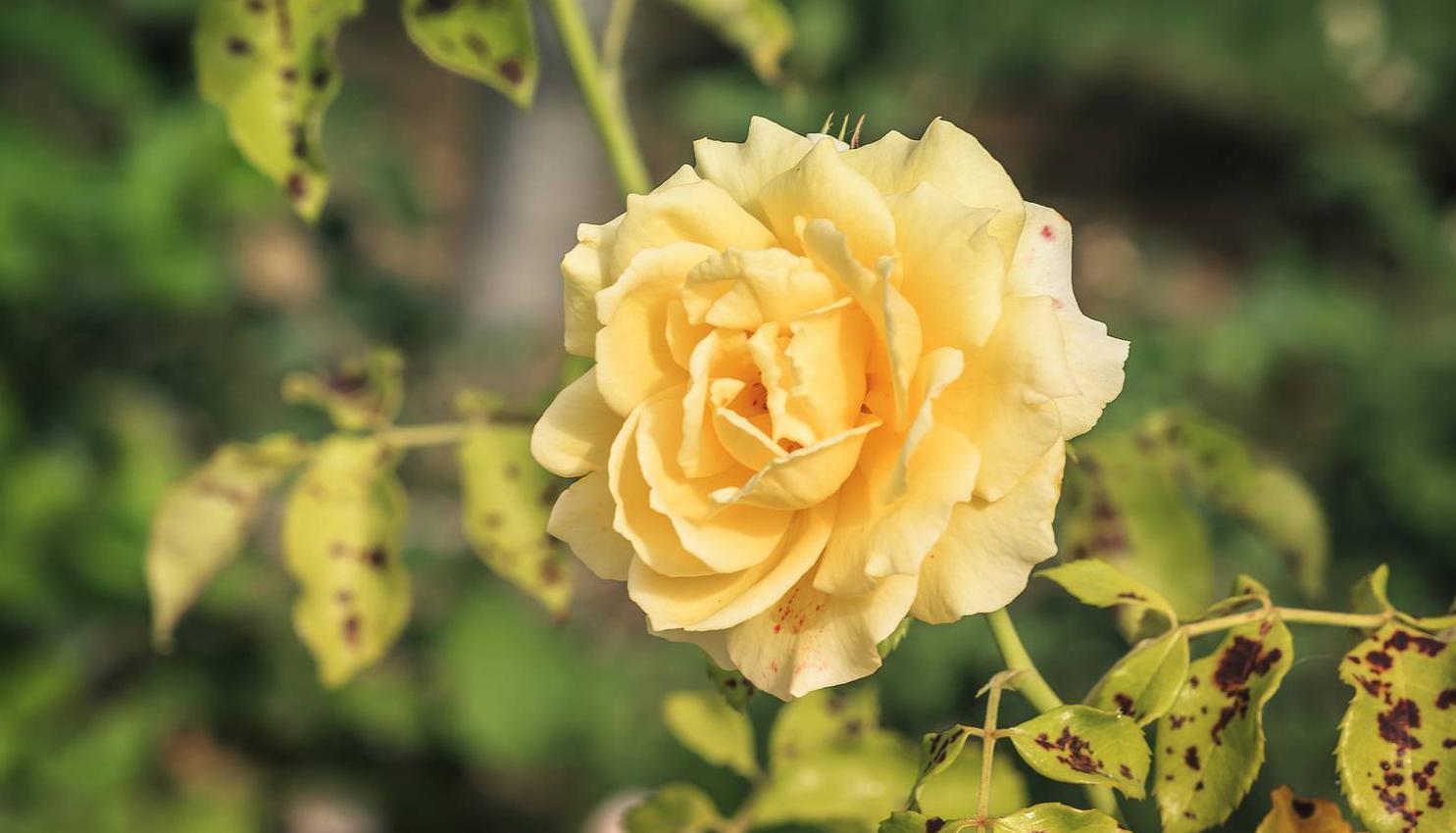
Keep your roses bright and beautiful - avoid blackspot with these tips.
Blackspot is caused by a fungus called diplocarpon rosae, which infects the leaves of roses, causing marks and greatly reducing the plant’s health. It develops easily in warm and damp conditions and the Irish climate provides this in abundance. The first signs of blackspot appear in from spring, so you may be noticing the telltale marks on your leaves around now.
To answer this reader’s question, I turned to the Irish Examiner’s gardening column. Peter Dowdall has written about the problem many times and he says the first step to tackle the issue is a straightforward pruning.
“Prune off any infected stems and leaves and don’t dispose of them in the compost bin as this could spread the problem. As we are all experts on disease prevention after the last few years and we need to maintain this hygiene in the garden so as not to spread infections. Clean all your pruning tools with a good quality organic garden disinfectant so as not to spread disease from one plant to another,” he writes.
“Prevention is easier than cure with such infections and by correct pruning during the winter months, you can lessen the risk of blackspot and other diseases. Prune quite hard and always to an outward-facing leaf bud.
“This will ensure that when growth begins in the spring that the shoots and stems will be growing outwards and away from the centre of the plant. If all the branches are growing inwards then that creates a very congested plant with very poor air circulation within and again, ideal conditions for fungal growth.” He notes it is important to prevent branches from rubbing against each other as this can spread the fungal growth. Again, pruning will prevent this.
In springtime, particularly around April, Dowdall recommends drenching the rose bush with copper sulphate and water to prevent fungal infections from developing.
“This is a broad-spectrum, organic fungicide that will help to prevent infection in the first place,” he advises. Dowdall says copper sulphate is sold in a powder form in garden centres and should be applied sparingly — once a year at most — and works best when applied at ‘bud burst’ when the leaves are bursting forth from the dormant buds.
Another option Dowdall suggests is a homemade spray that can be applied weekly during the growing season.
“You could also try using a mixture 1:1 of milk and water. Spray your roses with this every week or so during the growing season and it works very effectively as a natural fungicide.”
Feeding the plant and its surrounding soil also helps to boost its immunity. A liquid rose feed will do the trick during the growing season.