'No shelling or sniping heard': Commemorating The Christmas Truce of 1914
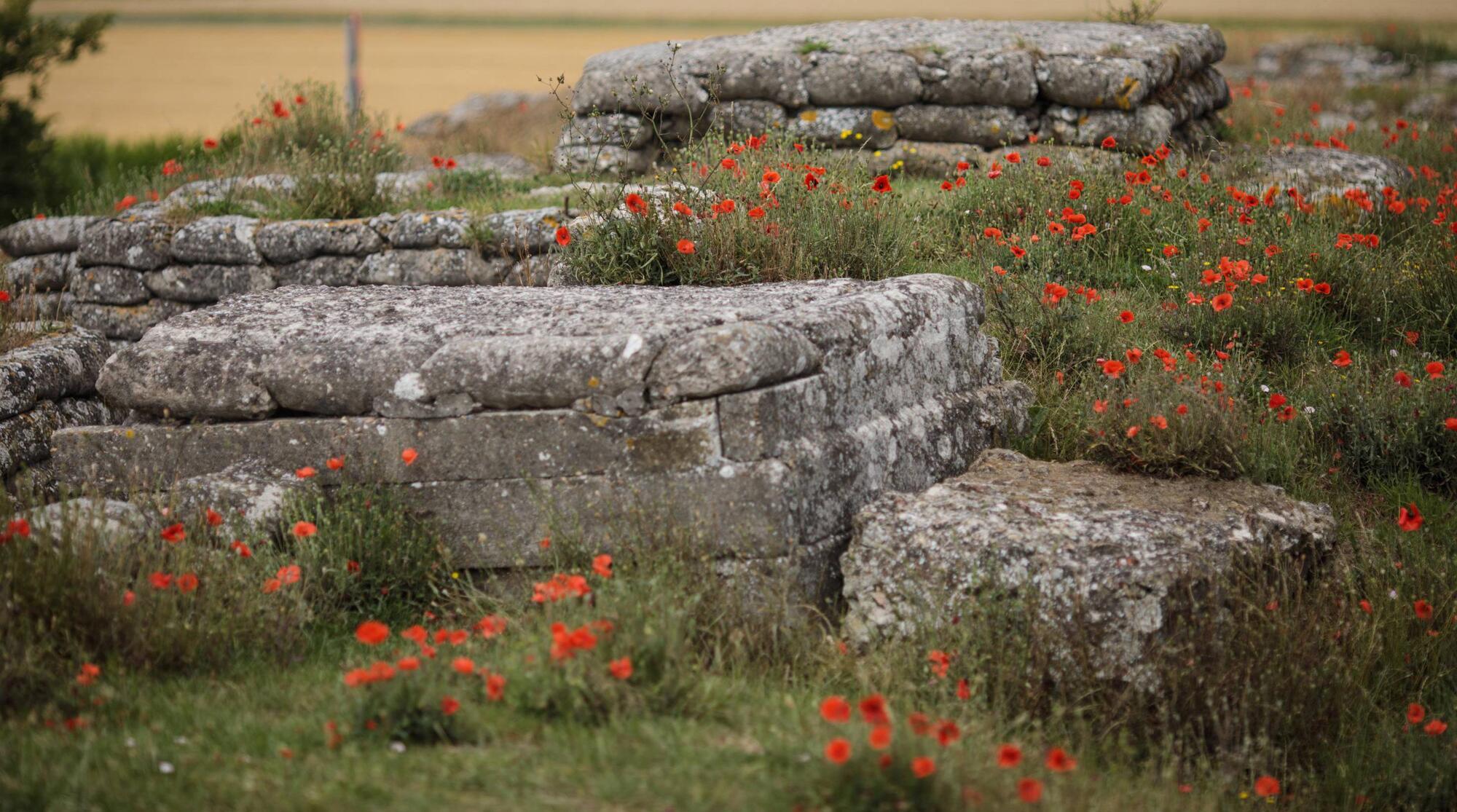
Wild poppies grow in the 'Trench of Death', a preserved Belgian World War One trench system. Picture: Jack Taylor/Getty Images
“Very quiet day, no shelling or sniping heard. Christmas Day. Slight frost”, noted the war diary of the 2nd Royal Dublin Fusiliers who were behind the front line at Hill 63 dugouts on Christmas Day 1914.
The previous day, Christmas Eve, the Battalion had been in the front-line fire trenches at St Yves on the edge of Ploegsteert Wood in Flanders.
They had a relatively quiet Christmas Eve; only two men were killed, one by a German sniper; they were Pte. Patrick McCarthy age 26 and Pte. Thomas Delaney, both from Dublin. Sadly Pte. John Cashman, age 19 from Gerald Griffin Avenue in Cork died from wounds on Christmas Day.
During the afternoon of Christmas Eve, the Dublins were relieved in the front line by the 1st Warwickshires who reported: “St Yves, the Germans were singing and seemed cheerful. They appear to think that an armistice exists for Christmas Day. An informal interchange of courtesies took place between troops in the fire trenches of both belligerents. Some valuable information was gleaned during the intercourse…Dead in front of trenches buried. Not a shot fired all day. No casualties.”
The Dublins must have got wind of the German desire to stop fighting over Christmas and informed Warwick’s officers as much when they handed over to them.
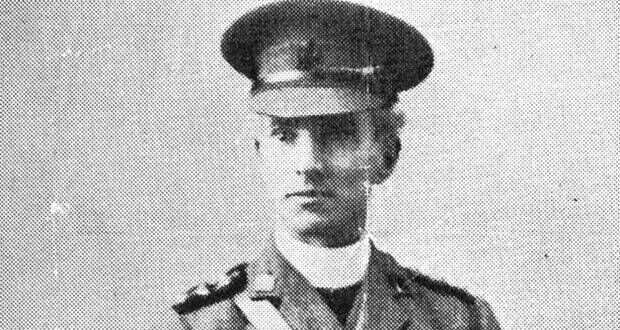
A chaplain to the Dublin Fusiliers, Kilkenny man Fr. Ned Dowling who before the war, lectured at St. Kieran’s College, Kilkenny, noted in his diary that, ‘the enemy came out of his lair and sang to us…’
Gifts were exchanged including, ‘buttons, electric torches, cigarettes and cigars’. Fr. Dowling received a gift of cigars from a German soldier from the city of Leipzig.
Capt. Standish Smithwick of the 2nd Royal Dublin Fusiliers, lived at Crannagh, near Nenagh in county Tipperary. A day or two before Christmas Eve 1914, he was hit by a German sniper’s bullet which grazed the top of his ear and drew a line to his eyebrow.
For the rest of his life, he had a white scar and the top of his ear that used to bleed and scab over from time to time. On Christmas Day 1914, he was still wearing a dressing on the wound, but was perfectly fit. His daughter, Marjorie Quarton, recalled her father telling her of his Christmas Truce experience.
“I recall my father telling me that as he walked towards the Germans, a young officer went up to him and held out his hand.
"Nodding at the dressing, he said in perfect English; ‘I did that. I am glad I did not kill you.’
“I would imagine my father’s response was, ‘So am I.’
"He asked the young German officer, whose name was Sigmund (or maybe Siegmund) what an officer was doing sniping from a tree.
"I saw the man’ he said, ‘miles away. It was a fluke shot.’ Sigmund continued; ‘Wait a minute’ and ran back to his trench and emerged with a rifle (the only weapon anywhere in sight. No weapons were allowed to be carried during the interchange of troops.) He showed my father the telescopic sight.
"It is the first,’ he said. ‘I am the best shot in Germany, so I was ordered to ‘bag an officer.’
“He had almost succeeded…My father gave Sigmund a souvenir; he couldn’t remember what it was. Sigmund gave him a pocket calendar for 1915 with a picture of the Kaiser on it and a photo of a group of British prisoners being rounded up by Germans. I have them still.”
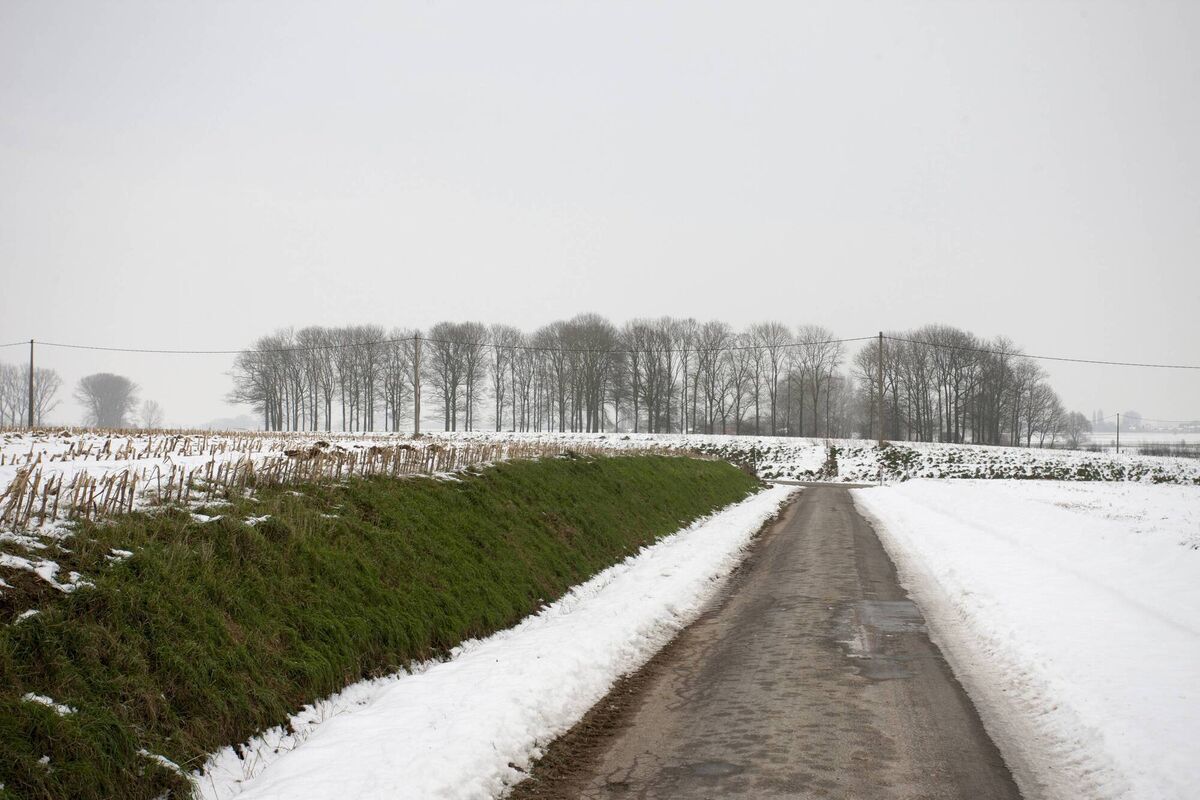
And so, the famous truce of Christmas 1914 took place, when, for a few hours’ barbarity gave way to humanity. Sadly, it only lasted for a day. The Warwick’s diary noted on St. Stephen’s Day, “Truce ended owing to our opening fire.”
One hundred years later on Christmas Eve 2014, to commemorate that historic event, myself, my friends Sean and Erwin, camped out in the field near St. Yves where the truce took place.
Our idea was to create an awareness of the message and symbolism of the truce which was reconciliation. We gathered on Hill 63 on a very frosty Christmas Eve night and walked the same route along the country road the Dublins would have walked to the front-line trenches just beyond St. Yves. Before we set off carrying lanterns and an old Dublin Fusiliers flag, Erwin played the pipes, Sean sang Silent Night in German and I recited Patrick Kavanagh’s poem, A Christmas Childhood.
As we marched, off in the distance we could see little flickering lights, like a string of rosary beads winding their way in the dark towards us through the frosty countryside.
The flickering lights were a procession of about 50 people, mainly Scottish-Canadians, who, holding lanterns, walked from nearby Messines to the site of the Christmas truce.
They had planned this pilgrimage from Canada to Flanders the year previous to pay respects to their relatives who had died in that horrible war.
Being of Scottish origin, they walked towards the sound of Erwin’s pipes. The little lights met along the country road outside Prowse Point Military Cemetery.
We exchanged our stories, handshakes, hugs and Christmas greetings for a while then entered the cemetery.
In silence, families huddled in the cold, star-lit night around their relatives’ headstones. We stood by the graves of Pte. Patrick McCarthy and Pte. Thomas Delaney.
The clergyman spoke of peace on this holy night, Erwin played his pipes and Sean sang Dublin in the Rare Auld Times.
It was close to midnight.
Outside we met other folks from overseas who made the same pilgrimage for the same reasons we all did. The sombre mood amongst the gathering had cheered up.
Warm tour buses awaited the Scottish-Canadians. We met an English couple; their teenage daughter chose the Truce as a school history project.
Also, a young American couple with their baby; the father was an academic studying sites of reconciliation throughout the world. They had just come from Bosnia.
Earlier in the day, we had pitched our tents near an old barn and set a log fire in a brazier for later. It was Christmas Eve, and from a feeling of fellowship with the English and American folks we met, I invited them back to our campsite for a fireside beer and slice of Christmas cake that Erwin’s wonderful wife Mia had made for us.
We had a mother and her baby, an old barn, three wise men and it was Christmas Eve. We couldn’t have planned it.
I’m not a religious man, but to this day I am convinced an angel was sent from Heaven to sit with us.
Wrapped in blankets, we chatted about the world, why we came to Flanders on this day and God knows what else well into the early hours of Christmas morning. We agreed not to exchange addresses or contact each other ever again.
This was a once in a lifetime joyful experience shared by strangers in the spirit of Christmas that we would lock away in our hearts to one day tell our grandchildren about.
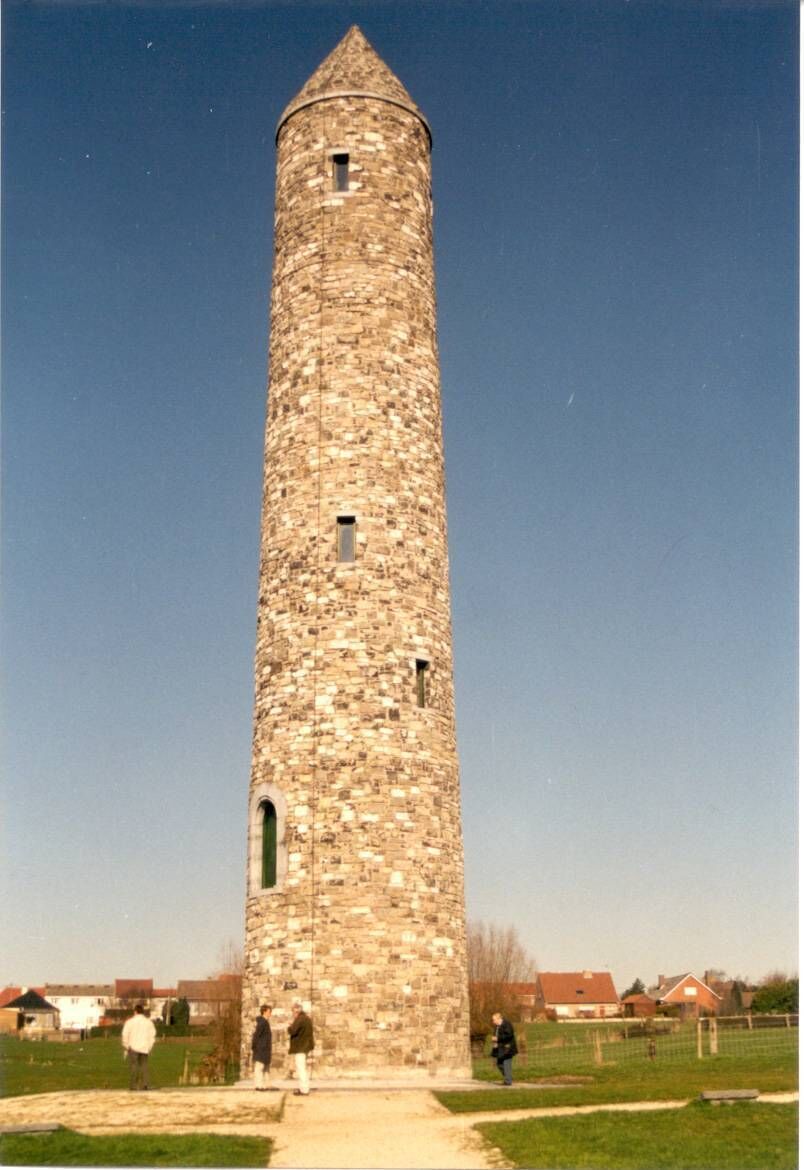
Next morning, suffering stiff backs from the hard ground we slept on, we marched to the village of Messines, passing the Irish Peace Park opened in November 1998 by President Mary McAleese and HM Queen Elizabeth II, RIP.
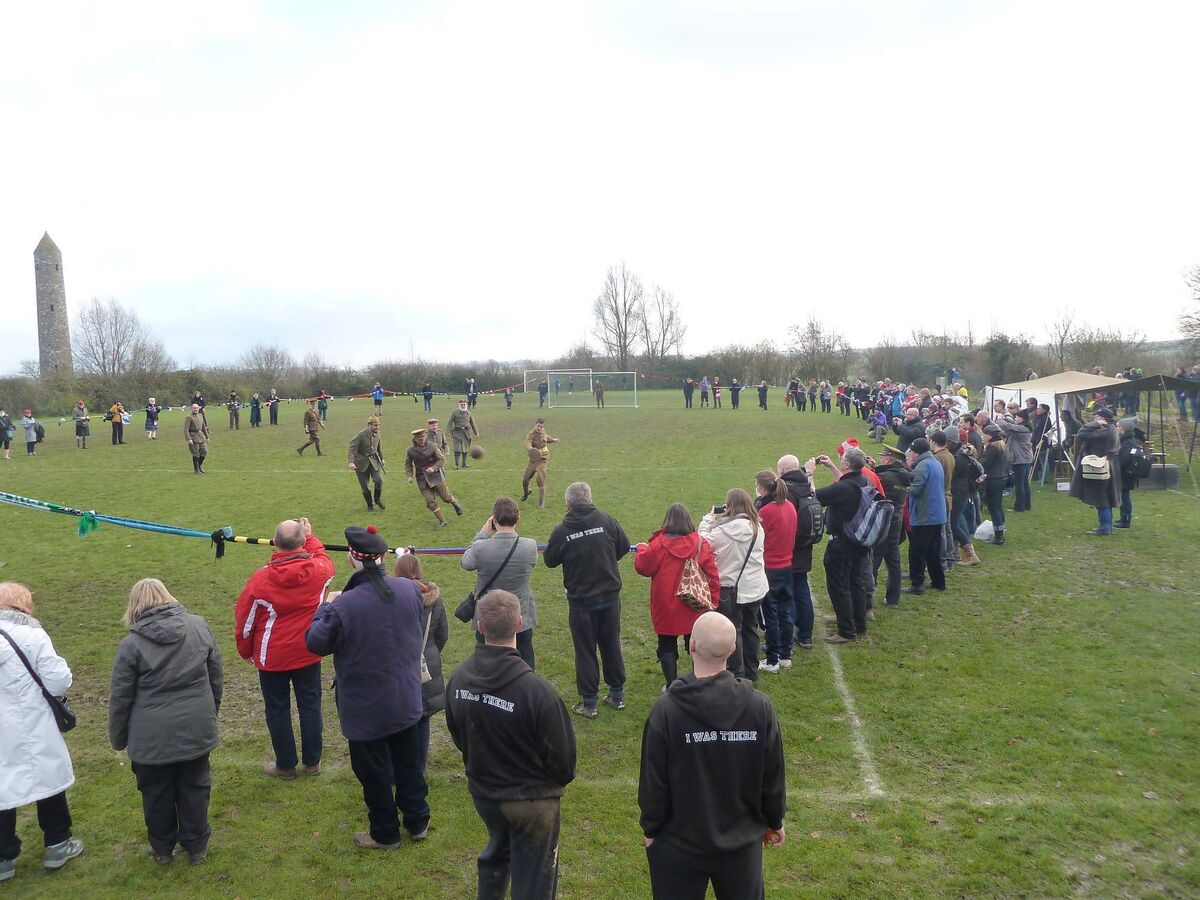
In a frost covered field near the New Zealand Memorial outside the village, there was a football match arranged to commemorate the supposed football match between the German and British soldiers on Christmas Day 1914.
Historians have questioned the story that such a match ever took place. However, Fr Dowling did make reference to it in his diary. The theme and purpose of the match on Christmas Day 2014, organised by Derry man Don Mullan, was reconciliation. Symbolically, surrounding the pitch was a chain of football supporters’ scarves tied together.
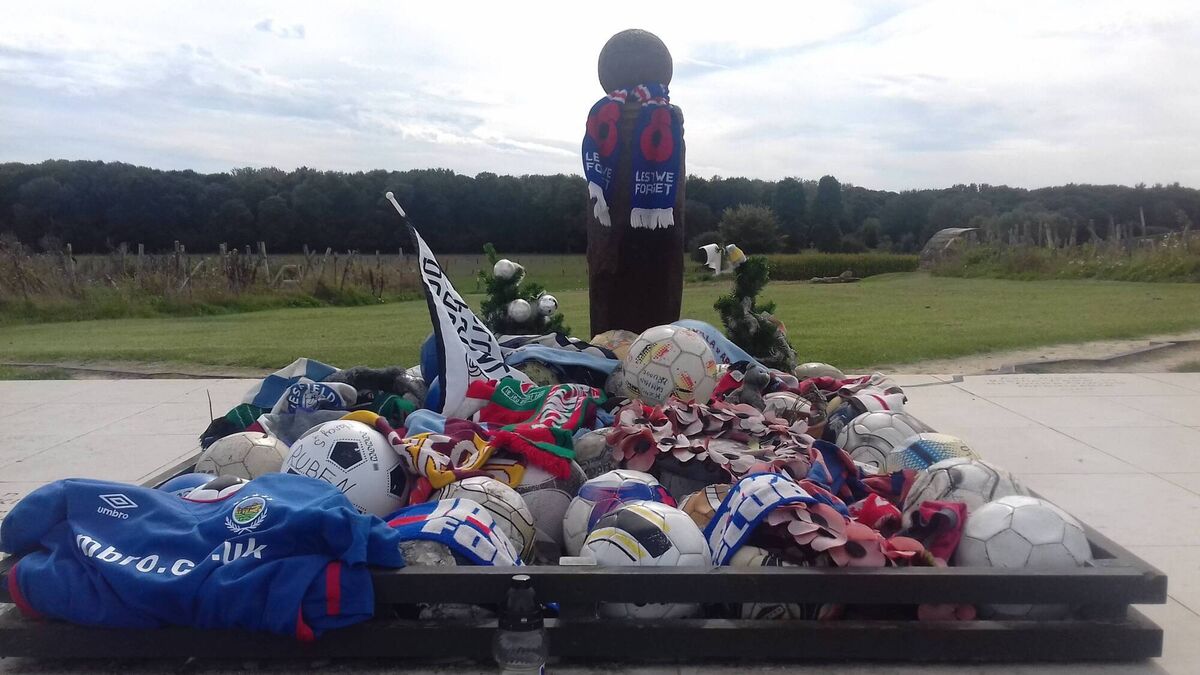
The scarves were from rival football clubs all over the world. For example, a Glasgow Celtic scarf was tied to a Glasgow Rangers scarf; a Linfield scarf was tied to a Cliftonville scarf, and a Manchester United scarf was tied to a Liverpool scarf.
The players were dressed in WW1 British and German army uniforms; I stood in goal for a spell.
Two ladies, who were nurses serving in the German army, travelled to Messines and togged out in WW1 German army nurses’ uniforms. The folks in Messines laid on tea and buns afterward and the last of Mia’s Christmas cake was eaten.
On Saturday December 27, 2014, Claire Byrne, then of RTÉ News at One, telephoned me to ask how we got on.
My message of reconciliation was heard, mission accomplished. That universal message of peace, in the words of Tom Kettle, ‘born in a herdsman’s shed’, given to us by young soldiers from opposing armies, who had no personal quarrel with each other, who stepped over the parapet and offered each other their hand in an act of friendship and reconciliation, is as important today as it was on Christmas Day 1914.
That message of reconciliation still echoes and maybe another group of warring nations might hear its call this winter.
Today, there are snow-covered trenches along a front line in Ukraine. Wouldn’t it be lovely to read of some young Russian or Ukrainian soldier write in his diary: ‘Very quiet day, no shelling or sniping heard, Christmas Day.’
- Tom Burke is a WW1 military historian. In December 2004, he was awarded an MBE for his contribution to the Irish Peace Process.
CONNECT WITH US TODAY



Be the first to know the latest news and updates