From monkey brains to young boys' blood - the different ways people have tried to stay young forever
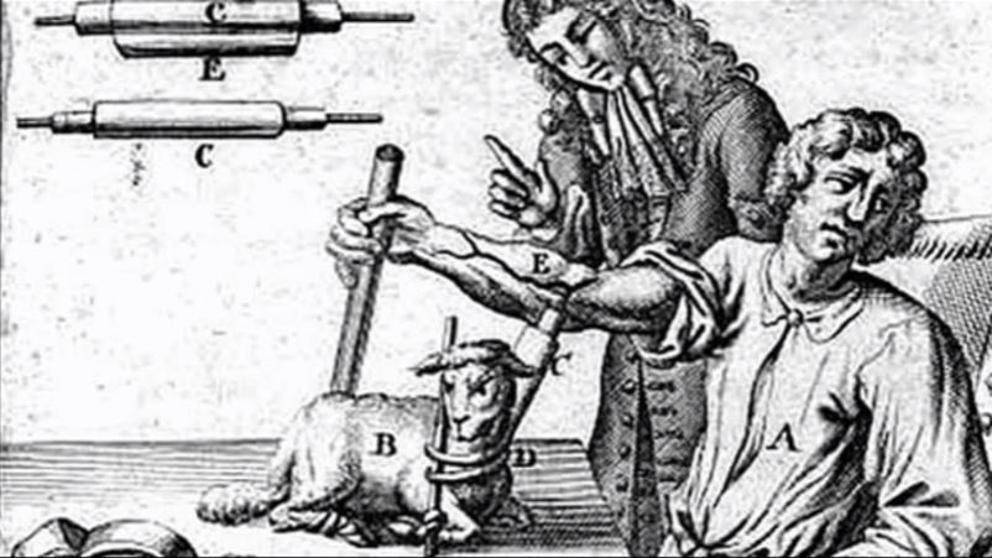
The first documented blood transfusion. On 15 June 1667, the French doctor Jean-Baptiste Denys, personal physician to King Louis XIV, gave sheep's blood to a fifteen year-old boy. Miraculously he survived (history.info)
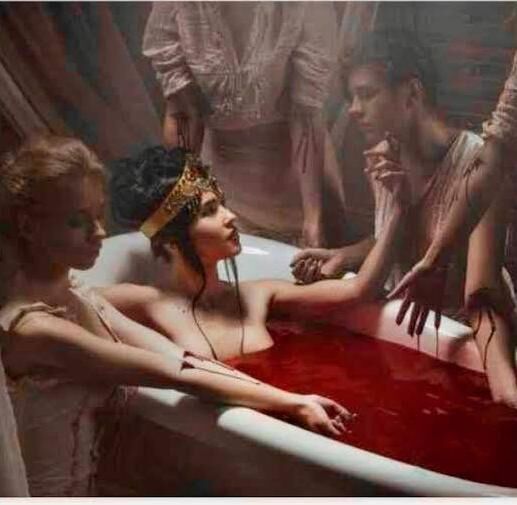
The search for the elixir of eternal youth has deep roots. In Ancient Egypt, Queen Cleopatra tried to stay looking young by bathing in sour donkeys’ milk and honey. Chinese Emperor Jiajing drank mercury, sulphur and arsenic – it killed him. In 16th-century Hungary, Countess Elizabeth Báthory swore that cleansing herself in the blood of freshly butchered virgins gave her skin a smoother appearance.
Today, age-defying Jennifer Lopez (52) attributes her youthful looks to avoiding the sun and "being kind to other women"; while fashion designer Vera Wang (73), whose fans claim "never ages", reveals her secret is sleep... and vodka cocktails. Attempting to push back the years is one thing.

Trying to cheat death is quite another. Yet one eighteenth-century musician and failed candidate for parliament (Monaghan, 1745 and Dublin, 1749) reckoned you could even do that. Enter Richard Pockrich (or Poekrich) who was born about 1695 on the family estate at Derrylusk, Aghnamallagh, Co. Monaghan: "You only need to let the blood of “youthful, sanguine” types flow across into “aged, decrepit and withered” ones, he maintained. "Projecting Pock", as he was nicknamed, was an entertainer and a master of self-promotion, who spent a lifetime blowing his inheritance of £4,000 (equivalent to €300,000 today) on a series of daring enterprises and bonkers schemes.
Most renowned were his “musical glasses” (or “glass harp”), which exploited a parlour trick using drinking glasses that he tuned by putting different levels of water in each. At first, he tapped the glasses with sticks, but by the time of his first public debut, which included playing excerpts from Vivaldi’s “Four Seasons” at the Smock Alley Theatre, Dublin in 1743, he had developed the more refined technique of stroking their rims and sides with his moistened fingers. Subsequently, he went on tours with his glasses to London. They caught the public imagination and inspired scientist Benjamin Franklin, composer Christoph Willibald Gluck and hypnotist Franz Mesmer.
Pockrich’s rise to public acclaim is remarkable, since one contemporary describes him as stingy: “he was never known… to do one benevolent act”. The whacky inventor also had more than a touch of arrogance: “I am, perhaps, the best master of harmony in the known world”, he professed in his unsuccessful application to become Choir Master at Armagh Cathedral in 1742.
Ever since his proposal to open a brewery and distillery at Island Bridge, Dublin, in 1715, most of Pockrich’s ventures had lost money, and it wasn’t long before he was plunged into debt. When bailiffs came to arrest him, he managed to entrance them with an impromptu performance on his “angelick organ” (one of the first recorded instances of mesmerism), and they apparently let him off.

The mind of the great eccentric continued to bubble over with impractical gimmicks, most of which were ridiculed by contemporaries. Using “an original method unknown to anyone else”, he proposed to drain bogs and plant vineyards, raise geese by the thousand on a farm in the barren mountains of Wicklow, and construct wings so every human could fly. “Self-glory and self-enrichment were his primary aims”, concludes FE Dixon in the Dublin Historical Record (1948). Exasperated by his mad aspirations, meanness and arrogance, his wife, Margaret (a widow he married at 50 for her money but who turned out to be in debt) left him and ran off with actor Theophilus Cibber.
Pockrich's schemes to "keep young and beautiful" began with the probably ineffective – though at least harmless – method of getting rid of wrinkles. He claimed that his own smooth complexion was due to a special recipe:
“Take common brown paper, steep it in vinegar, and apply it to the forehead, the skin about the eyes, or any other wrinkled part; let it lie on some time, every half hour renewing the application”.
But his schemes culminated in the downright dangerous, above all his proposal to rejuvenate old people – he meant those aged sixty or more – by means of blood transfusions with youthful, "physically active specimens". A dodgy business indeed: it was not until over a century and a half later, in 1900, that anyone knew about different blood groups.
Blood transfusions were not new, but before Pockrich’s time donors had been animals, such as sheep and dogs. The Monaghan man’s instructions were chillingly precise: "Take an influx tube... fix it to the extreme ends [of] the veins of two different persons... the one youthful... such as a strong cook, maid, or country girl, the other one aged, decrepit and withered." The rich "fermenting" blood of the one will "immediately flow like wine decanted into the shrivelled veins of the other".
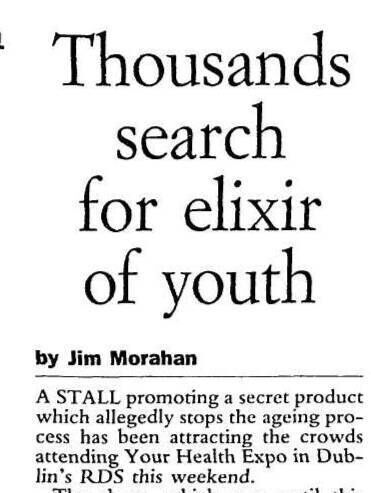
Results would be awesome to behold: "The wrinkled skin braces, the flesh plumps up and softens, the eyes sparkle".
His methods would "totally abolish the effects of age" and "cause an utter renovation of the animal spirits". What’s more, he declared, the process could be repeated time and time again, and mortality postponed indefinitely.
To those with a vested interest in death – undertakers, gravediggers, and those hoping to inherit – Pockrich's plan became a source of worry. But they were at least slightly assuaged by the suggestion that anyone who lived beyond 999 years be legally declared "dead", charged burial fees, and made to face claims on their estate.

In 1759, Richard Pockrich was on tour with his musical glasses in England, and making a healthy £6 per day from performances. But when he was lodging at Hamlin’s Coffee House in Sweeting’s Alley near the Corn Exchange on 10 November, the building, along with several other houses, caught fire and he perished in the flames.
According to his biographer, D.J. O’Donoghue (An Irish Musical Genius, 1899), the fire began in Pockrich’s very own room, perhaps when he was carrying out an experiment. For all the potions, elixirs and transfusions in the world, nothing could prevent his death by accident.
- Alchemist Ge Hong (283-343) described a medicine made from monkey brains and herbs that could lengthen life to 500 years, while by ingesting “divine cinnabar”, you might live “as long as heaven and earth” and “travel on clouds and ride dragons”.
- Philosopher Marsilio Ficino (1489) suggested the elderly drink blood from young men. Pope Innocent VIII tried it on his deathbed in 1492. Three ten year-old boys provided blood for a ducat each. All died, shortly afterwards, Pope included.
- Tobias Whitaker, physician to King Charles II of England, advocated wine (the “blood of the grape”) to extend life to “extreme old age, without any sickness”. He died at 32 – young even for those days.
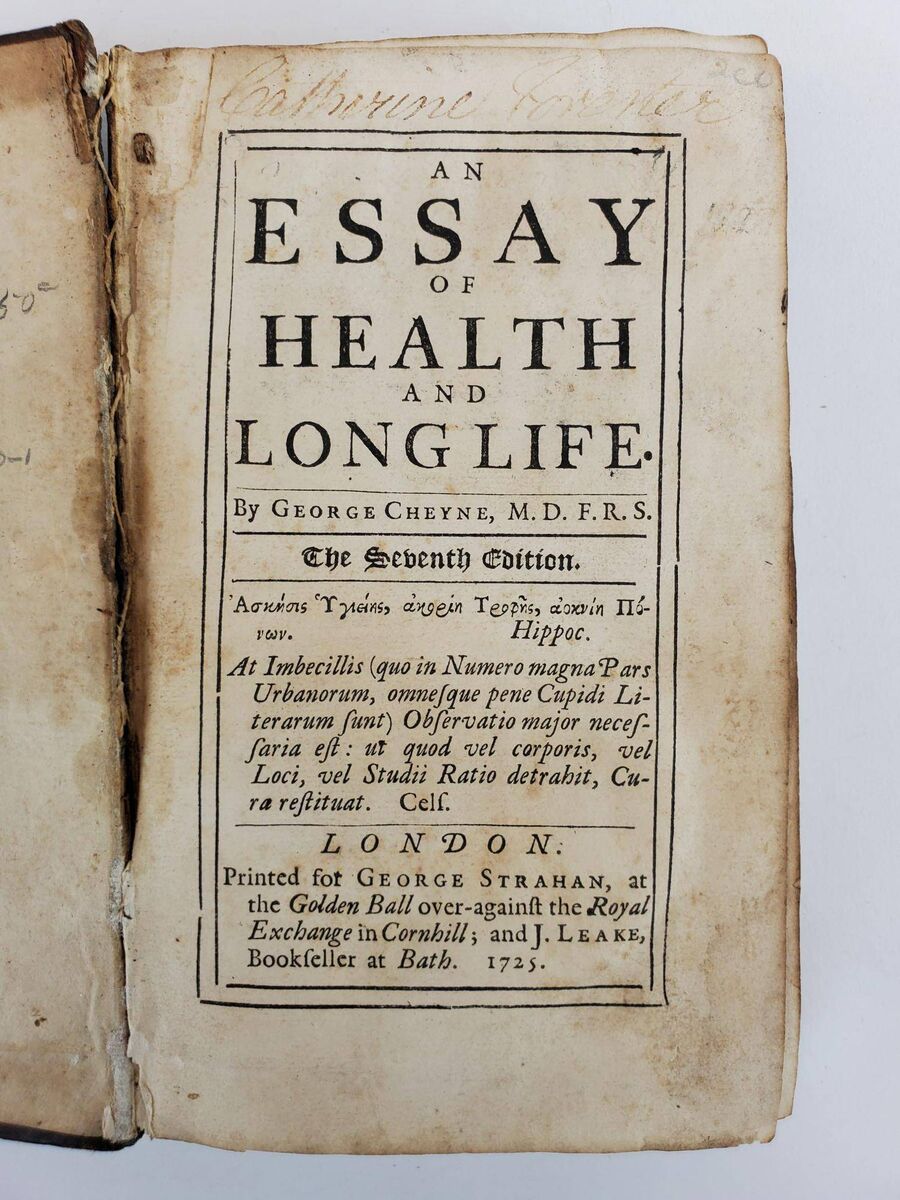
- Pioneer of vegetarianism, George Cheyne (1740), who lived until 71, argued that those who drink only water (the “original beverage”) from a young age maintain “freshness”, “vigour” and “chearfulness”, and could reach 100.
- In Art of Prolonging Life (1796) physician Christoph Hufeland believed that 200 years was achievable through an outdoor life, exhilarating travel, exposure to the “breath of young innocent maidens”, and “sleeping between two young persons”.
- Seventy-two year-old Charles Édouard Brown-Séquard, physiologist and neurologist, achieved notoriety in 1889 by claiming he felt rejuvenated after injecting himself with extract from the testicles of freshly killed dogs and guinea pigs.


CONNECT WITH US TODAY



Be the first to know the latest news and updates