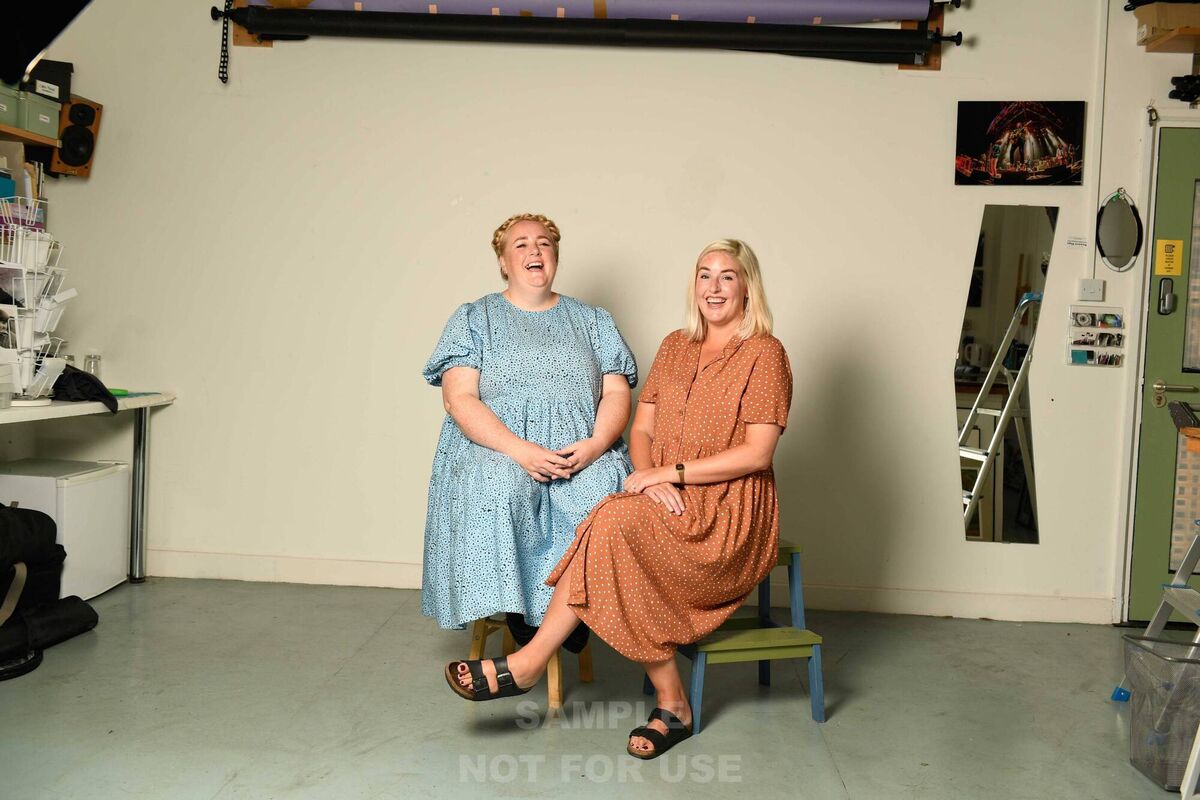
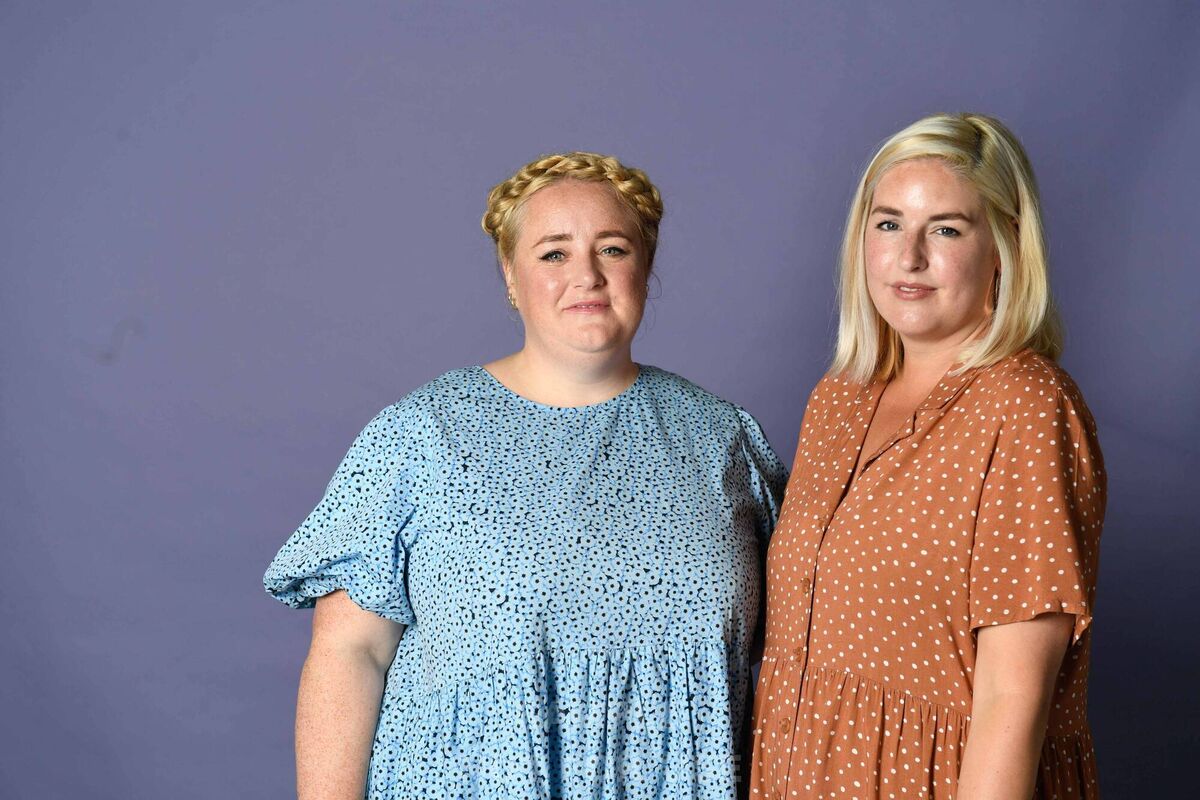
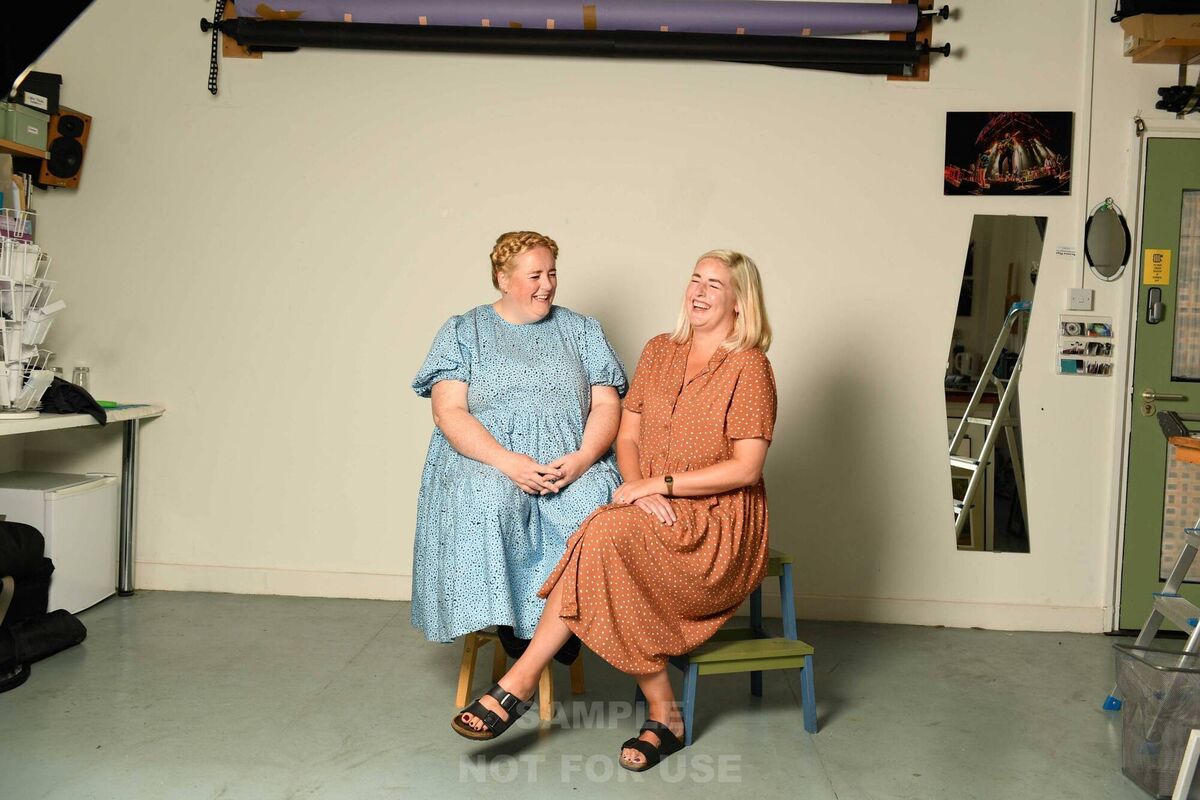
As I begin my chat with Sarah Breen and Emer McLysaght, the authors behind the mega-best-selling Aisling book series, I’m forced to clear something up before we get started. It concerns my sister, who shall remain nameless, and who, it turns out, knew Sarah in another life entirely.
“Remember we were in Barcelona?” she says to McLysaght, to whom this is an unexpected revelation. “Oh, wait. When you were swindling the old people over the phone?” McLysaght replies, with a degree of snark earned only by one’s oldest friends.
“Well,” says Breen, with studied offence, “as far as we knew, we were collecting data on people and passing it on to people we thought we were in a different company, but they were actually in the next room. It was all Irish people doing it, and one of them turned out to be Séamas’ sister. And isn’t she, like, your best sister?”
I reply that this may be the case, but having seven of them, I couldn’t possibly comment.
“Anyway,” continues Breen, very much acting as her own defence lawyer now, “We weren’t fully aware. When we handed in our notice, that caused ructions. They threw our money on the floor at us, but afterwards we did hear that there was some sort of police raid. One of my friends went on to be a lawyer and she regularly had nightmares about Interpol coming in her window.”
Once the laughter has subsided – and I have made it clear that I do not work for, nor report to, Interpol in any capacity – we get on to the meat of the interview: a chance to talk about all things Aisling, on the occasion of their third edition of Aisling’s Diary.

Aisling – like Cher or Shrek, her surname goes unrecorded – is the star of four novels, beginning with 2017’s Oh My God, What A Complete Aisling, followed by The Importance of Being Aisling and Once, Twice, Three Times an Aisling, and last year’s Aisling and the City. With a fifth and, they warn, final full-length novel coming out next year, the upcoming Aisling’s Diary 2023 is a chance for the duo to flesh out those areas of her life unexamined by the series’ modern-day setting.
“This is the third diary we’ve done,” says Breen, “and we always include new Aisling content. When our first book came out and it was successful, Gill were like ‘do you wanna do another book?’ and our first suggestion was to do a prequel, and go back into Aisling’s teenage years, because we always felt like there’s rich seams for experiences and comedy and everything.”
This time out, for each month of the year, we get a new, unearthed extract from one of Aisling’s teenage diaries, allowing us to read for the first time, the trials and tribulations of an Aisling in the making. We witness disco shifting, terrible summer jobs and the horror of puberty, in entries that range across the whole span of her adolescence.
While this is a chance to show the beginnings of her as a person, her beginnings as a character are fairly remarkable in their own right. Aisling arose in the 2000s as a fictional construct McLysaght and Breen would conjure in conversation. Less a person, more the perfect archetype of a highly specific, but highly average Irish girl that everyone knows but no one quite wants to be themselves.
They would trade Aisling traits with such frequency that she developed into a fully lived-in character, often built from things they noticed in each other.
“We each have Aisling things about ourselves,” McLysaght explains, “I have many – sometimes when your Aislingisms are pointed out you bristle a bit. I mean, she’s extremely square in some respects, and you don’t want your squareness pointed out.”
“Possibly when we board planes,” interjects Breen. “Yeah” says McLysaght, “Sarah’s like ‘let people all get on when they like, we can’t all be the first person on the plane’.”
“Yeah, I’d be a bit more relaxed about that, but Emer’s right because you might lose overhead space [laughs] so, yes, maybe when we write about Aisling travelling places, it’s like looking in a mirror for…” – she takes an artful beat while looking in Emer’s direction – “for certain people.”

In 2009, their little Aislingverse went global, as a massively successful Facebook page grew from a few dozen fans to a peak of tens of thousands of people, all coming together to suggest, nominate and fervently debate the attributes which might make someone a true, dyed-in-the-wool Aisling.
While a very entertaining page in its own right, I offer that having so many people discussing an as-yet-unwritten character is also a dream start for any work of fiction. They say there were pros and cons to this arrangement.
“Well,” says Breen, “we’ve always been so fond of Aisling and would talk about her the way we would talk about any of our friends, in that there’s gentle slagging, sometimes, taking the piss, but nothing ever mean or vicious, and the Facebook page reflected that. Once it became bigger and bigger, and more people started joining, it could get diluted and sometimes what people were posting about Aisling would be coming across very conservative and that wasn’t our idea of her, so when we got the opportunity to write the first book, we did take back a certain amount of ownership. We stripped away all the other people’s ideas and got back to the core that we had created.”
“A lot of people had very different ideas about who their Aisling was,” says McLysaght, “she was from their town, was overly conservative, or a dope. So, me and Sarah were like, ‘we know our Aisling, and those other Aislings can exist in their minds, but this one is ours’.”
“I remember Louise McSharry talking about the group,” says Breen, “and she said there was a thread about, if Aisling got a tattoo, what would it be? Loads of people were commenting it would be on her leg or her back, it would be this and that. And Louise was like, ‘but Aisling would never get a tattoo!!!’ And that’s true, she wouldn’t. But some other people thought Aisling might get Winnie The Pooh on a leaving cert holiday.”

Perhaps all these elements – the craft, the attention to detail, the fact they’d already gotten 40,000 random people to invest themselves so deeply in a non-existent person – risks making the jaunt to literary superstardom seem inevitable, but the pair were initially dubious about a move to the printed page.
“It was around 2016 when we were approached about doing a book,” says McLysaght. “By that stage Aisling had been in our lives for not far off ten years, and I think we really loved the character so much, we didn’t want to do a flash-in-the-pan thing. Having said that, we genuinely didn’t think anyone would read the book, we just wanted to do it justice. I can’t remember the actual conversation we had about it, but I think we just wanted to give Aisling her dues, and a chance to flesh out that world that we had created in our minds.”
“Gill don’t publish fiction,” Breen reminds me, “so I think they might have had Aisling’s Best Bits, or something illustrated in mind, but myself and Emer – she was working in radio, I was working in magazines – always had this idea that maybe we would work together at some stage, so when this opportunity presented itself, we wanted to take back ownership of the original Aisling. When you explain the concept to somebody, of who Aisling is, people get it immediately. So we thought, maybe people outside our group would get it, maybe our mums will get it, so we took it to Gill – and they got it.”
“At that point,” says McLysaght, “I don’t think I’d ever explained to my mother what Aisling was, because I’d have to go back to brass tacks and explain what a Facebook Group was, and it was not worth it.” Committing was one thing, but actually writing it was another. They quickly hit on the idea of writing alternate chapters in a shared Google doc and meticulously editing it afterwards. When I ask if this has led to ructions between them over this or that Aislingism, they are disappointingly bereft of examples. “I’m really struggling to think of something we haven’t agreed on,” says McLysaght, rather puncturing my attempt to throw their partnership into disarray.
For now, the pair are perfectly in harmony when reminiscing about their own teenage years, which fed directly into the adolescent Aisling who emerges in these diaries, a “semi-culchie” McLysaght claims, “I always imagine her growing up like where Sarah grew up, in a village.”
“I mean, yeah, it has a Chinese now, so is that a town?” Breen replies.
I query whether Chinese restaurants have replaced city charters and cathedrals as granting a place’s civic status, but am drowned out as both begin listing milestones of their own teen years they wanted to include. “Her first bra fitting,” says Breen, as a back and forth begins.
“Turning 18.”
“Getting a first job, going to Irish college.”
“Learning to drive.”
And, I say, learning to drive in a tractor, no less.
“I learned to drive in a tractor!” says Breen, “you feel so powerful in a tractor, I think it helps!”
- Aisling’s Diary 2023 is published by Gill

CONNECT WITH US TODAY
Be the first to know the latest news and updates