John Connolly: Tales from the pandemic 
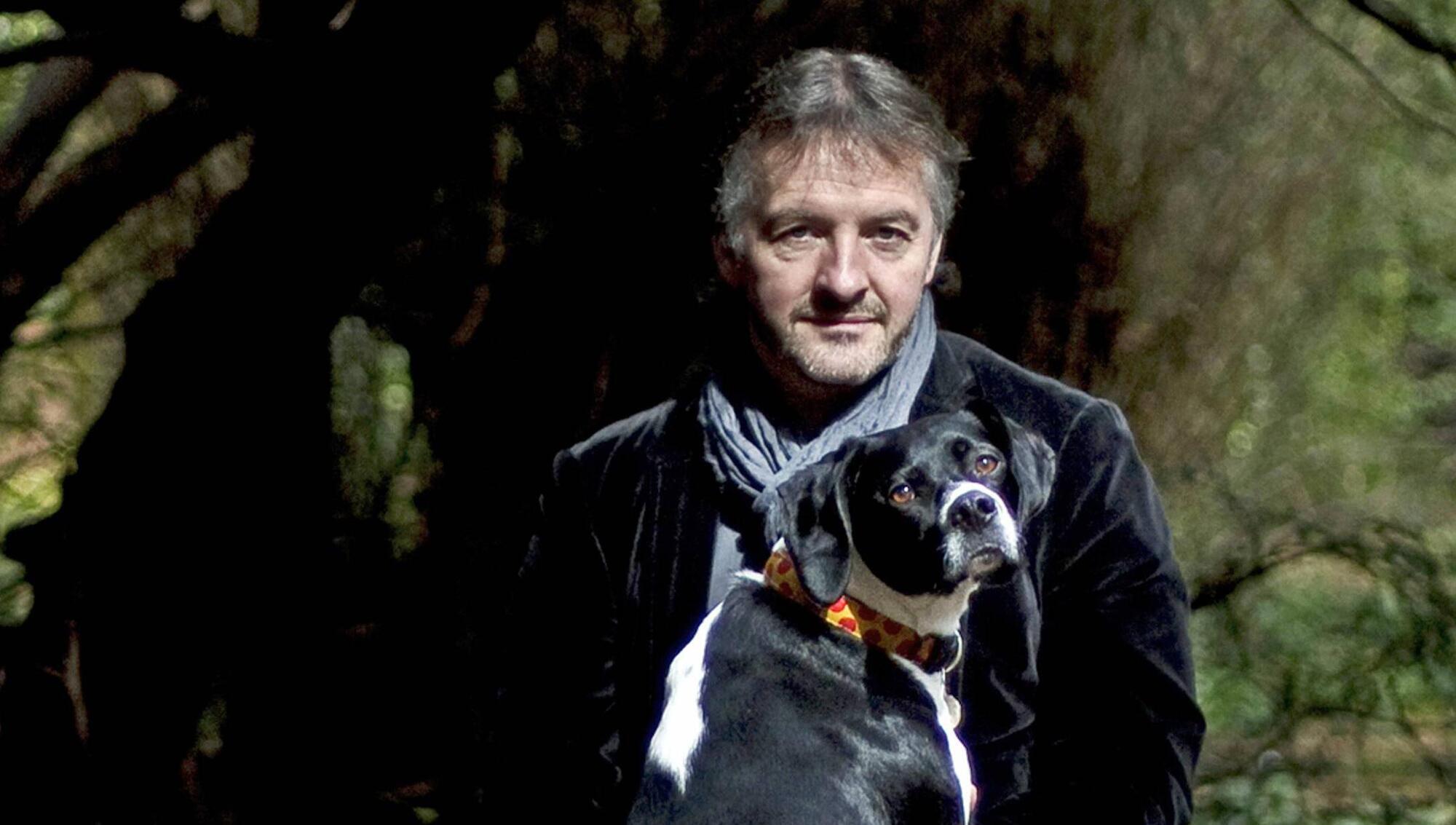
John Connolly released sections of his new book online during lockdown. Finally, the full novel is about to be published, writes Ed Power
John Connolly: Tales from the pandemic 

John Connolly's The Furies is published on August 4. Picture: Mark Condren/PA. 

Crime fiction isn’t dead but perhaps it is a little green around the gills, says best-selling thriller author John Connolly.

“It is going through one of its periodic downturns,” he says from his home in Rathgar, Dublin. “Other genres are coming up. Women’s contemporary fiction is doing well at the moment. Crime fiction was often a genre read by older people. And so that readership will occasionally need to be replenished with new blood.” Whatever about the milieu, Connolly (54) has been going from strength to strength. Last year he published Shadow Voices: 300 Years of Irish Genre Fiction — a mammoth anthology that celebrated the contribution of Irish writers to science fiction, gothic horror, romance and fantasy.

And now, having scarcely paused for breath, he returns to chronicle the further adventures of his melancholic sleuth Charlie ‘Bird’ Parker.

One of the classic crime heroes of the past two decades, Parker is a man haunted by demons — yet, beneath his laconic, world-weary exterior, he burns with the desire to see justice done. And he is front and centre of The Furies — which also reunites us with Connolly’s favourite setting of Maine, the vast, sparsely populated state in the American North East.

There’s a twist before you’ve even started reading as The Furies is actually two shorter novels packaged together. Each, in its way, is a pandemic tale.

The Furies unfolds in those chaotic early weeks of lockdown when a duo of criminals take refuge in a small town only to discover they cannot leave.

Sisters Strange, for its part, is a product of Covid, having been initially published in daily chapters by Connolly through 2020.

“During the first lockdown, I knew people were going to be looking at their phones a lot,” Connolly explains. “None of us have ever experienced anything like that before. And I’d had my novel postponed because publishers, like film studios and everything else, were worried about how they were going to get books and products to people. And so I thought, well, as an experiment, I could give people sections of a book, day by day. Just long enough that, if you were in a queue somewhere, instead of looking at your news feed, you could read a section of a novel.”

Those daily posts ended up as a sort of first draft of what would become The Sisters Strange. The story has been nipped and tucked significantly for The Furies. But it retains its undercurrent of weirdness, and the hint, at the fringes of the action, of the supernatural.

Connolly, who created a sensation in Irish publishing when he sold his first novel in 1998 at the age of 28, has long tiptoed along the outer limits of crime fiction. There is a powerful gothic component to much of his work. And, as we see in The Sisters Strange, nods towards the uncanny (one fan theory is that Parker is a ‘fallen angel’ exiled to Earth to atone for his sins).

This has sometimes made him a divisive figure in crime, where readers tend to prefer work that sticks to the convention. And yet he was revealed to be ahead of the curve when the 2014 HBO series, True Detective, followed his roadmap by combining a procedural ‘whodunnit’ plot with HP Lovecraft-style cosmic horror. And so, for all the acclaim, True Detective was venturing into territory already familiar to Connolly readers.

“The first season of True Detective, I thought, was interesting,” says Connolly. “It owes a lot to James Lee Burke [whose writing is likewise set around New Orleans]... and seemed to be drawing on his work a little in interesting ways. None of us have a monopoly on mixing crime with the supernatural. They’ve long been regarded as mutually exclusive. Crime people don’t like seeing the supernatural intrude. On the other hand, the horror community wants you to define yourself as a horror writer.”

True Detective was written by Nic Pizzolatto who moved into television after concluding the novel was a redundant art form. Crime writers have a long history of going into TV. Ian Rankin, author of the Rebus books, has written for Channel 4. Richard Price, author of Lushlife, was a writer on The Wire, The Night Of, and The Deuce. Connolly mentions that he has been enjoying the HBO drama, We Own This City, co-written by George Pelecanos.

He is, as it happens, friendly with Pelecanos. Still, he has no desire to emulate his pal by transitioning from novels to writing for prestige TV.

“It never appealed to me,” he says. “I actually don’t play well with other children. I like being the dictator in my own universe. And television is such a collaborative medium.”

That’s not to say he is opposed to seeing his work brought to screen.

“We’re moving closer to an adaptation of the Parker novels,” he says. “It’s sort of two steps forward and one step back but it gradually moves forward. I don’t think I would have very much to do with it apart from making my family sit down to watch it at some point.”

Given the appetite of streaming services, in particular, for new content, it seems surprising Parker novels haven’t already been adapted.

“They’re slightly odd books,” he shrugs. “They’re structurally odd [some are written in first person, some in the third]. Each book is a kind of chapter in a longer unfolding story, which hasn’t reached its conclusion yet.”

Despite being published in his 20s, Connolly’s journey to the bestseller lists was not straightforward. He grew up Rialto, Dublin, and attended the hard-knock inner city school of Synge Street CBS. His working life began in the accountancy department of Dublin Corporation. With his heart set on writing for a living, he went on to study English at Trinity College before joining the Irish Times as a freelancer. He was still working at the newspaper, reporting largely on education, when he sold Every Dead Thing.

“Journalism is useful because it teaches you not to be precious,” he says. “Every morning you sit down and you start writing and produce, to deadline, X number of words. That’s a very good discipline for writing a novel. And it teaches you that anything can be researched, and also teaches you that people are intrinsically interesting. Any life, if examined closely enough, is fascinating. And all those things are good training, I think, to be a novelist.”

Still, he feels he got out at the right time.

“The problem is that the longer you spend in journalism, the less likely you are to write a book because you become habituated to a certain type of writing, 500 to 1,000 words. And it’s very hard to conceptualise something, maybe 100,000 words long, that’s going to take years.”

Connolly isn’t the only Trinity graduate to make the bestseller lists in the past several years. What does he think of the Sally Rooney phenomenon?

“She’s handled herself very well,” he says. “Sometimes you kind of wish she was enjoying it a little bit more in interviews. She wears it quite heavily sometimes. But she’s produced three novels. She hasn’t gotten into spats. And it’s brought in a generational range of readers. Anything that does that is to be applauded. The fact that she has done so well is good for everybody because [aspiring writers] need these models [ to look up to]. And also the publishing industry needs the income. Some of it filters down to other writers coming up. I’ve read the books. I may be not the target audience. I didn’t like some of these people [the privileged, pretentious poshos who populate the Rooney-erse] when I was actually in Trinity.”

Connolly has been living with Charlie Parker in his head for over 20 years. He has a vague idea in the back of his mind where the character might be ultimately headed. Still, he isn’t ready to say goodbye just yet.

“I’ve often had an ending for it. Not the ending I think some people have expected. But I still enjoy writing the books. I enjoy looking at the world through his eyes. They give me pleasure. I have a readership that still enjoys what I do. I don’t think they’ve got tired. And if I were to write an ending, the series would probably have to come to a close. And then what are we going to do? I don’t really want to end it. I am still getting pleasure out of it. If that stops, I would bring things to a conclusion.”

  • The Furies is published on August 4

x

More in this section

Lifestyle

Newsletter

The best food, health, entertainment and lifestyle content from the Irish Examiner, direct to your inbox.

Cookie Policy Privacy Policy Brand Safety FAQ Help Contact Us Terms and Conditions

© Examiner Echo Group Limited