'I don’t know why I married him — after we got engaged, the red flags were going up'
Author Lisa Jewell's life has been more psychological thriller than rom-com, starring three generations of varyingly terrible men, she tells Suzanne Harrington
'I don’t know why I married him — after we got engaged, the red flags were going up'

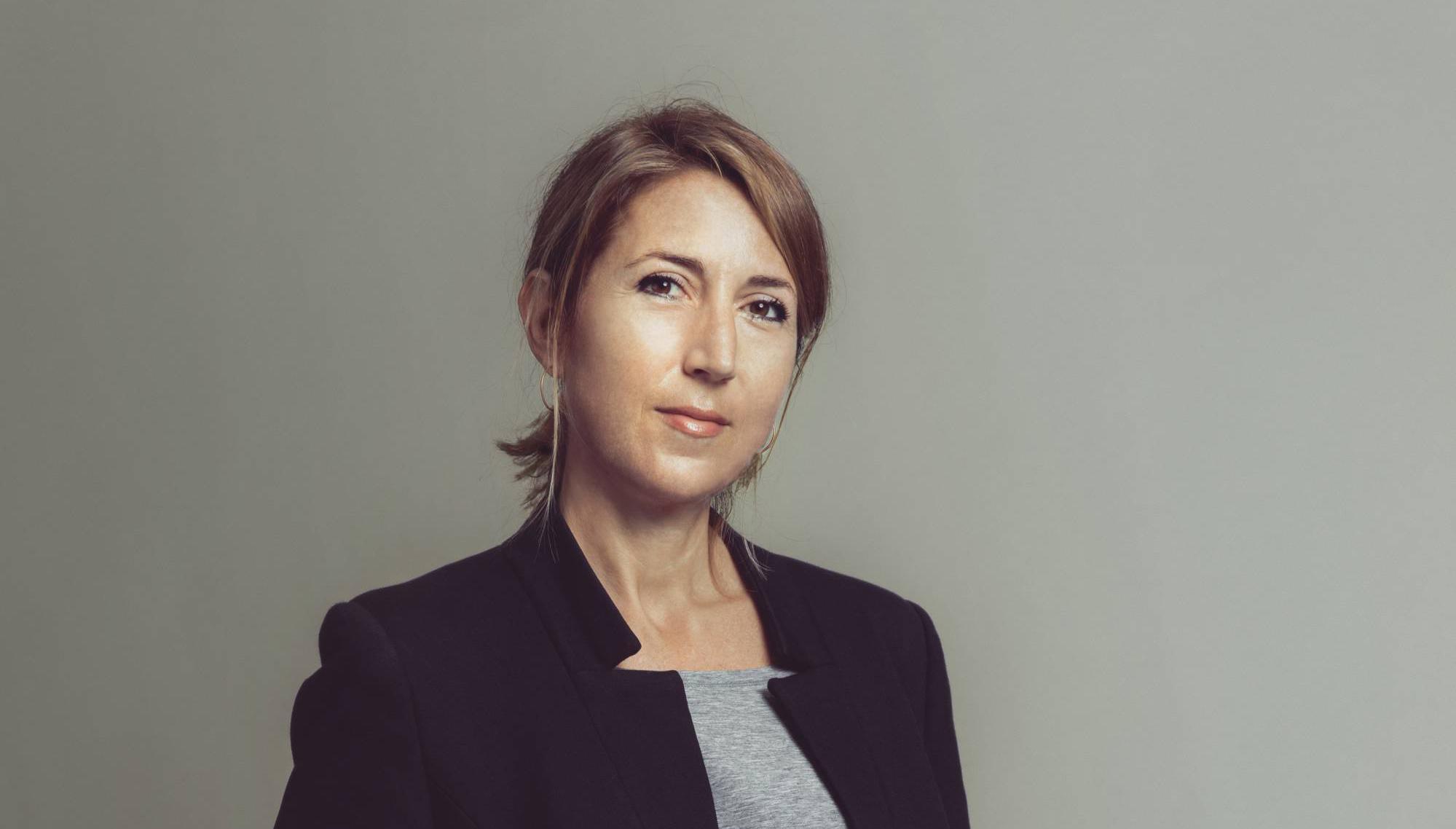
Lisa Jewell has successfully transitioned from one genre to another while best-selling all the way. Picture: Andrew Whitton 

Lisa Jewell, 20 novels in, has successfully transitioned from one genre to another while best-selling all the way — 10m and counting. Starting out in romantic comedy, she now writes psychological thrillers — her latest, The Family Remains, starts with a bag of human bones being discovered near the Thames. It’s a long way from her 1999 debut, Ralph’s Party, about housemates falling in love with each other — written after a holiday bet with a friend who promised her dinner in return for writing the first three chapters. Jewell got her dinner.

“It was always a matter for me when I would start writing psychological thrillers,” she tells me over Zoom. “I started writing in the mid-’90s when I was in my 20s, madly in love and starting out on the best part of my life, and although the books I liked reading and the films I liked watching were very dark, the novel I ended up writing was feelgood and romantic and funny, and it did really well.”

Ralph’s Party was 1999’s best-selling debut novel, and Jewell’s writing trajectory looked set.

“That’s what my readership and my publishers expected, and so for years and years I was trying to write romantic comedies, but using darker themes inside those comedies,” she says.

“As I got older and more confident, and my readers getting older with me, I felt I had a little bit more leeway and could start pushing boundaries a bit, so that in my seventh novel there wasn’t a romantic relationship at the core of it, and in my eleventh novel I killed one of my characters in suspicious circumstances. So it’s been book by book, step by step, increment by increment, moving from one genre slowly into another. It was very gradual.”

Now 54 — she looks so much younger — Jewell is inhabiting her own private romcom in North London with her second husband and their teenage daughters.

“I am the world’s number one fan of teenage girls,” she says. “I find them fascinating — it’s like living in a real-life TV show. I just adore them. This has by far been my favourite bit of parenting — I have no nostalgia whatsoever for changing nappies.”

Yet before meeting her second husband, her life was more psychological thriller than rom-com, peopled with three generations of varyingly terrible men; grandfather, father, and first husband.

She met her first husband, “a manipulative Svengali type who thought it was his job to improve the woman in his life, carve her into shape”, soon after a family barbecue where Jewell and her sisters were informed by their mother that their father was leaving for someone else — that very night. They’d had no idea about his long-term infidelity. It caused, she says, “seismic trauma in our family”. Shortly after, Jewell replied to a personals ad from a guy who liked “Tom Waits, Thai food and picnics in the park”. She was 21, three years younger than the man in the ad.

“Little did I know that I was about to spend the next six years married to someone who was a coercive controller,” she says. He love-bombed her with gifts and compliments, and although she wasn’t in love with him, she liked the way he treated her.

“We were equals at the beginning,” she says. “I don’t know why I married him — after we got engaged, the red flags were going up on an hourly basis. He was not the man of my dreams. But I was so young and stupid — I had a ring on my finger and felt I couldn’t back out of it, and everyone was so heavily invested in my love story.

“So I married him, and we moved out of my beloved London to a little red brick box in the suburbs. I didn’t have a door key, or a phone, I had to be home from work at the same time every day or he wouldn’t talk to me. “We’d get videos from Blockbusters on a Friday night and I would have to wait in the car while he went in to pick them. I wasn’t allowed to see my friends, and when I occasionally saw my family, he’d be this heavy moody presence. He tried to control the way I dressed. I was so young — in suit trousers and blouses instead of hotpants.”

She’d had a decent job at the fashion brand Warehouse, but lost it because she couldn’t work late; the abuse, while not physical, was totally coercive.“He fully controlled me psychologically,” she says. After her redundancy, she “spent a year totally trapped, just waiting for him to come home from work, living with his moods”.

She pauses. “Friends occasionally tried to stage an intervention, which is the worst thing you can do in that kind of situation as it just makes things worse. People were always trying to get me to join in and come to parties, putting pressure on me.

“I lost so many friends during those six years — nearly all of my friends, actually. But there were a few who made it clear that they were there, and they would wait.”

Things began to change after she got a job at the former shirt makers Thomas Pink. “I met this guy at work, and we developed an office friendship,” she says, of her second husband. “Pretty much from the first moment I knew that this was the man I should be with. There was no chance of after-work drinks, but we occasionally had lunch in the park, and he knew I was unhappily married to a controlling man. “I fantasised about him falling in love with me. And then about a year into our office friendship when he told me he had, I went home and left my husband that same day. It was one of the most extraordinary moments of my life. Nothing was going to stop me. It was that simple, after six years of being caught in his web.”

Jewell had grown up with a narcissist father. “My father is a narcissist, yes,” she says. “The sort of person who decided when our dog died of natural causes shortly after he left my mother for another woman that the dog had died of a broken heart. It was always all about him. “Our whole house was decorated to his taste. Every family holiday was about what he wanted to do. Everything revolved around him — nobody else’s opinion counted except his. He was very vain, very popular, very well-liked, very shallow, yet assuming great depths of insight and wisdom. He wasn’t fun to grow up with. A very difficult father and not a good husband.”

It’s her grandfather Albert, however, who wins the prize for most awful. Both grandparents were born in India, and emigrated to England in the 1940s — the grandmother leaving with twin babies, Albert to follow with Jewell’s mother, then aged four. Except he didn’t. He stayed in India, setting up home with a teenage lover — “We’re all pretty sure he was a bigamist” — and tried to give his little daughter away to the gardener.

“Instead, they sent her to boarding school when she was four years old,” Jewell says. Her mother later moved to England, but the fracture between mother and grandmother was irreparable. Unlike Jewell, closely bonded to her sisters and mother: before her death from cancer in 2005, she says her mum enjoyed six years of “boasting about her daughter the author” and “going in bookshops to rearrange my books”.

Now, as she brings up her own daughters, she reflects on how profoundly writing has changed her life — not just financially.

“Before I wrote Ralph’s Party, I had no life map, no clue where my life was headed,” she says. “But from the minute it came out, my life has had structure, meaning, purpose, forward momentum — I’ve gone from having a life where I had no idea what I was doing to a life that’s set in stone, in the best possible way. It’s very satisfying.” And all from a holiday bet.

The Family Remains by Lisa Jewell will be published by Penguin and available to buy from July 21.

More in this section

Lifestyle

Newsletter

The best food, health, entertainment and lifestyle content from the Irish Examiner, direct to your inbox.

Cookie Policy Privacy Policy Brand Safety FAQ Help Contact Us Terms and Conditions

© Examiner Echo Group Limited