'I'm more careful now': Orla O'Donnell on covering very public cases - and the very private tragedies behind them
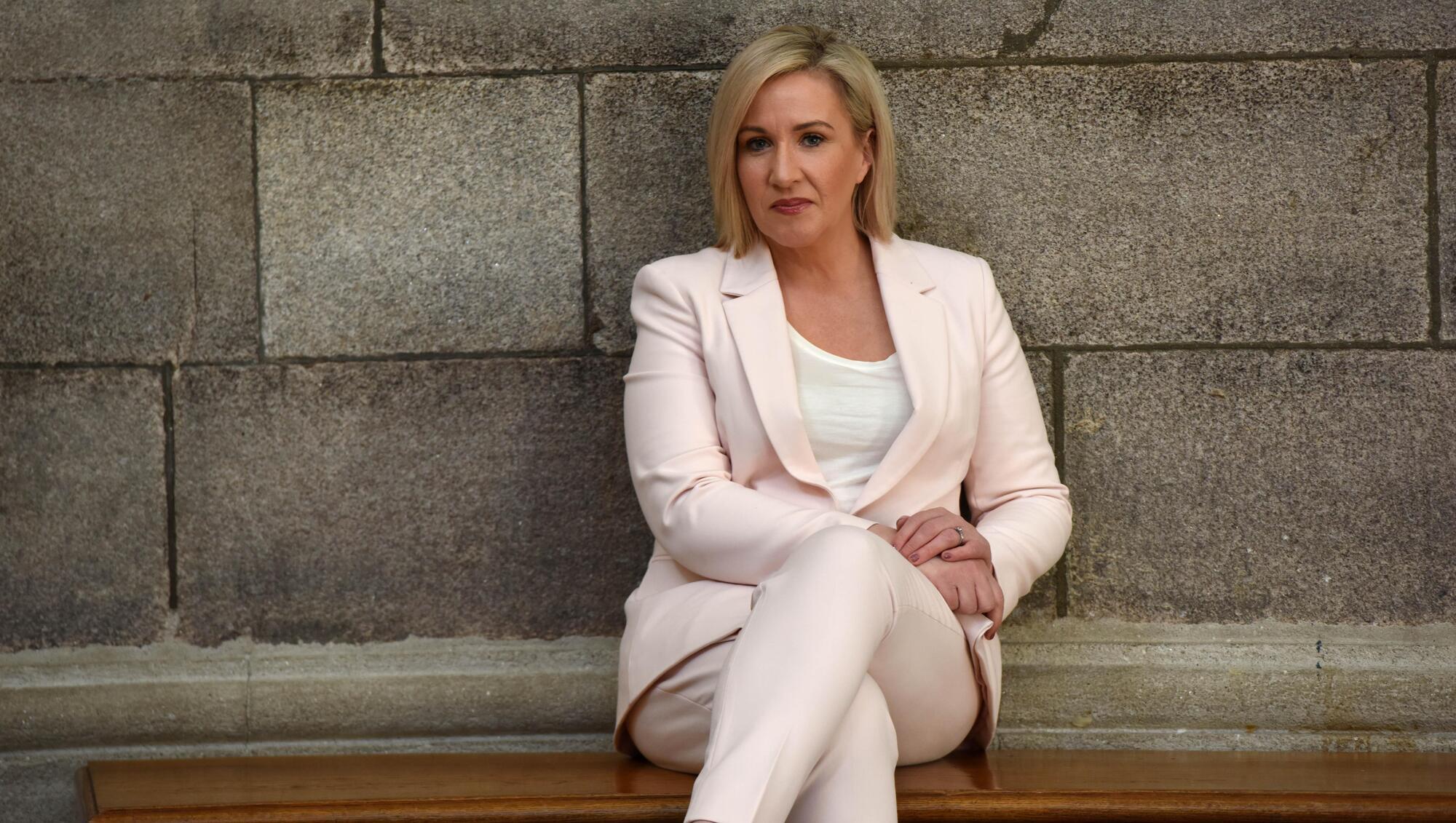
Orla O'Donnell, journalist and author: covering sensitive cases has changed her style of journalism. Photograph Moya Nolan
In 2007 there was a court case that gripped the country: Amy Dunne, known as Miss D, was barely 17 and pregnant with a baby girl who had anencephaly, a foetal condition that meant she was certain to die before or at birth.
Amy, who was devastated and in the temporary care of the HSE told a social worker about her plan to travel to Britain for a termination. Although she had the support of her family and the baby’s father, the HSE told her that travel would be impossible and so Amy had to fight her case in the High Court.
Her devastating, private tragedy became very public news and Orla O’Donnell, RTÉ’s legal affairs correspondent, was covering the story. Orla later read in interviews that Amy had been “destroyed by the media coverage and in particular by having her personal details broadcast to the nation”.
Around the time of the referendum to repeal the Eighth Amendment to the constitution, Orla got in touch with Amy to apologise to her and her mother for any added upset she had caused them with her reports. That was the start of a relationship between the two women that has culminated in the two writing I Am Amy Dunne: .
I spoke to Orla about what it was like working together so many years after the case.
“When you’re reporting, you have to be very strict that you only report what’s said in court because people could be trying to tell you all kinds of things outside the court. During Amy’s case I was new enough doing the job, very eager to do a good job and make sure I was very accurate. I suppose then, I think this happens to lawyers as well, you’re thinking about the case and the arguments, and in my case reporting accurately and making sure everything is right. You maybe lose sight a little bit of the people that are behind the case. It was afterwards I heard that Amy was a bit devastated generally by the coverage.
“Knowing Amy as much now as I do, I can see how the coverage must have been so devastating for her because she’s a very proud person. She’s always trying to make sure that she has her best foot forward and her best face turned out to the world and that people can’t feel sorry for her or can’t think that she’s deserving of sympathy from looking at her. She was very conscious of that.”
Finding out that Amy was so upset by the coverage has changed the way that Orla reports on the very sensitive cases that she covers.
“I’m very aware that a lot of people, whether it’s in the criminal courts, or civil courts, are mainly there because they’ve gone through the worst period of their life. Something catastrophic, or something really awful has happened to them. I try to be very aware of that. Whereas I might’ve heard a tragic story 20 times, for them, this is the tragedy that has defined their life, and I’m very sensitive to that.
“It can be very loud and busy outside court, you’re right beside the Luas Line and you often only have a minute and a half to tell the story. I think now I’m more careful about the particularly sensitive stories and saying that we need to go to studio and make sure we tell the story in a more sensitive way. I try to think more about the people at the centre of it.
“It does make me think about the impact of the reporting. You still have to tell the story and can’t add anything to it but I’m just that little bit more sensitive to the people who are at the centre of it.”

The Miss D case was a particularly emotive one at the time with crowds of people outside court. In the book, Amy recalls being approached by a man with a crucifix and a bible in the courts complex. Orla remembers the heightened emotions around the case and how, underneath it all people had forgotten that this was about a 17-year-old girl.
“I remember the noise, and I remember being in court and the staff having to slam the windows shut because the noise would get too much from outside, especially as the publicity around the case grew. One of my colleagues from a newspaper was quite shook when she got a bit of verbal abuse from the people who were protesting from the prolife campaign.
Orla had been the RTÉ legal affairs correspondent for less than a year at the time of the Miss D case. In the 15 years since, she has reported on some of the biggest cases that have appeared before the Irish courts and sometimes it can be difficult to leave some of the things she hears at the office.
“I’d say it was easier when I was younger, to be honest with you. Myself and my colleague, Vivienne Traynor, have talked about this a lot. We have done a course in vicarious trauma and how it affects people listening to other people’s trauma on a constant basis. I suppose it does affect you more than you know. I’ve always found it quite easy to compartmentalise and to say that’s that and not to dwell on it too much but of course there are some cases where it’s very difficult to do that.
“There was another case, the case of Natasha Perry, Miss P. She was pregnant — and again, it was a case where the Eighth Amendment had an impact. She had had an aneurysm very early on in the pregnancy, but the hospital wouldn’t turn off the life support because of the Eighth Amendment. That happened over Christmas and that was extremely difficult to leave behind.
“Of course, cases involving children, or anything like that are very difficult. Some of them are unimaginable tragedies. It’s an issue, and I sometimes worry that there’s a big pot of stuff in my head that’s going to explode at some point in the future.
“You have your coping strategies, and I suppose, sometimes the concern I have is that if I delve too deeply into it, the coping strategy won’t work or if somebody messes up that coping strategy, I won’t be able to cope with it anymore.
“It’s an issue, all right, because I’ve been doing it so long now. Especially in the last few years, there have been some horrific incidents involving abuse, and things like that. They’re very difficult to deal with. There are certain cases, like Amy’s story, that stick in your head, but you have to be able to go out and report on them because you’re not the story. You’re telling someone else’s story and you can’t put your own emotions and feelings on top of it.”
Orla and Amy had worked together on a TG4 documentary before writing the book. Even though they had gone over Amy’s story many times, going into the details for this project wasn’t any easier.
“It was difficult for everybody because you have to delve into really, really traumatic stuff and I don’t think either of us knew how deeply we’d have to go and how much we’d have to discuss. Sometimes I would feel terrible that I was asking her really tough questions and then she had to go to work or get on with her life. We were very open about it all and Amy is a great talker. She’s very articulate and well able to express her opinions and express her feelings. It was a difficult process in many ways, but it was eased by her great communication skills, but I don’t think it was easy for her. I don’t think it’s easy for anybody to talk about that kind of stuff."
Doing interviews like this for the book is something new for Orla who is much more used to being the person asking the questions.
“I don’t particularly love doing publicity about myself. I’m the journalist, not the story. It’s hard going to get out of that mindset. It’s not my comfort zone to talk about myself but then that made me think about all the times I expect other people to do it naturally any time I ask.”
- , published by Gill, is available now
CONNECT WITH US TODAY



Be the first to know the latest news and updates