Úna Ní Bhroin: 'Christy Moore sang an ode to feminism for us around the campfire'
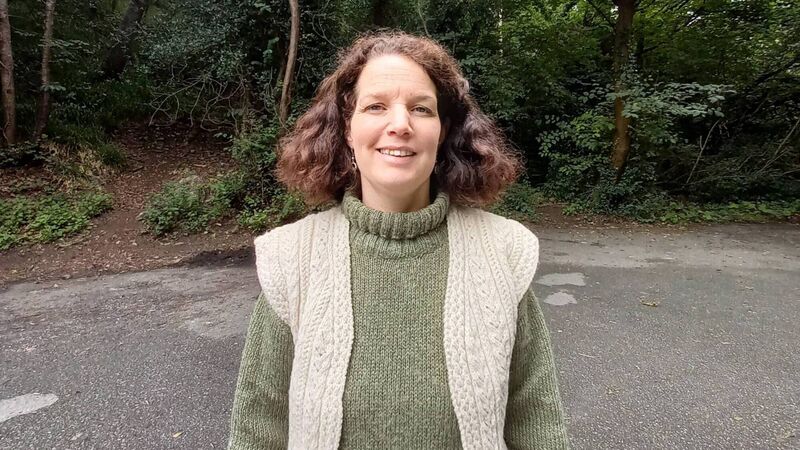
Úna Ní Bhroin
Úna Ní Bhroin was learning how to scale trees with a climbing harness, trying to foothold herself all the way up a rope, when journalist Nell McCafferty came looking for an interview.
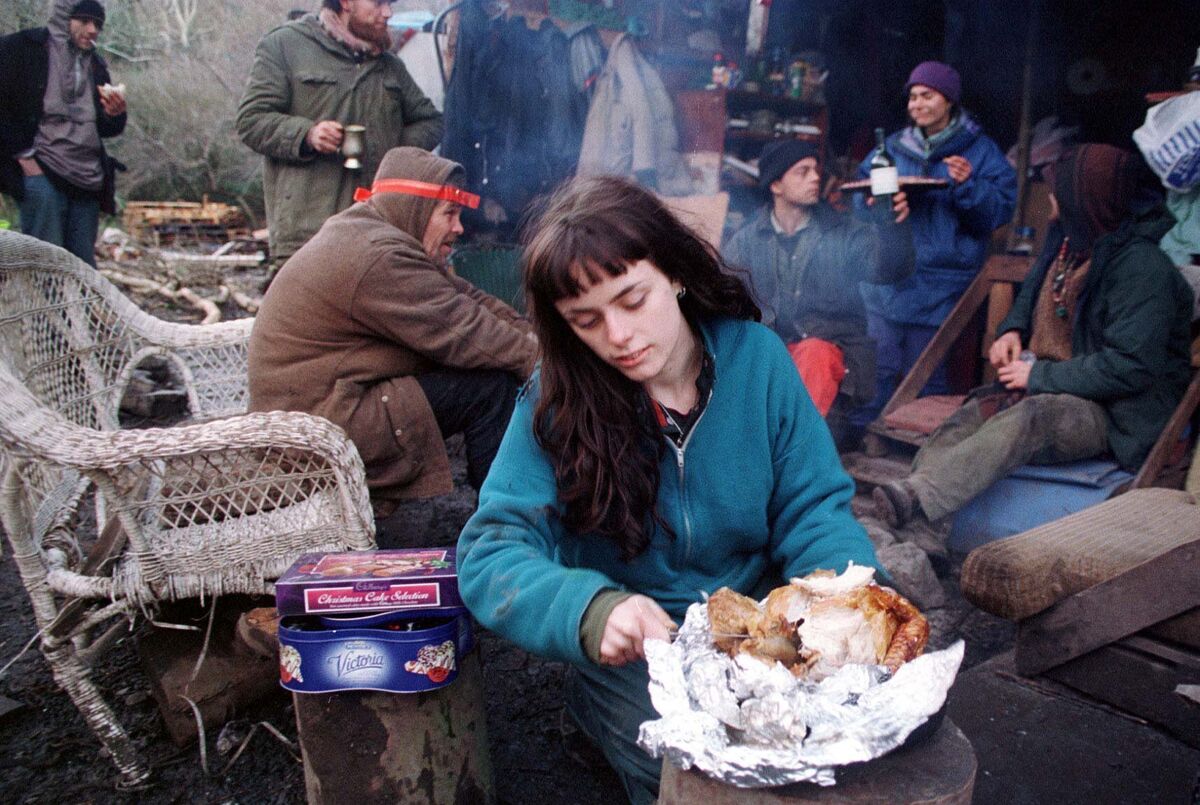
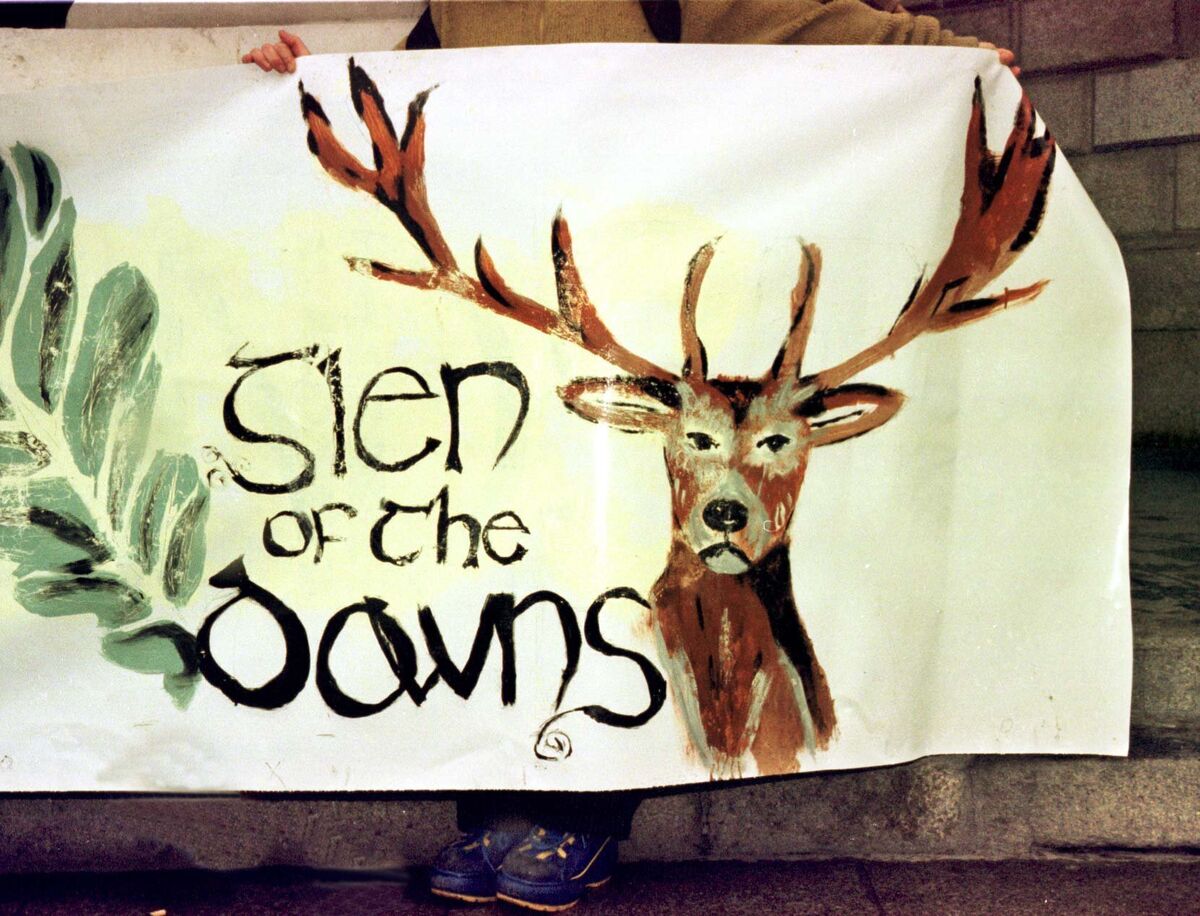
The Clondalkin girl was 23 at the time, one of a small band of eco-warriors who’d started living in the trees in the Glen of the Downs, in a bid to stop Wicklow County Council felling native trees as part of their plan to expand the N11.
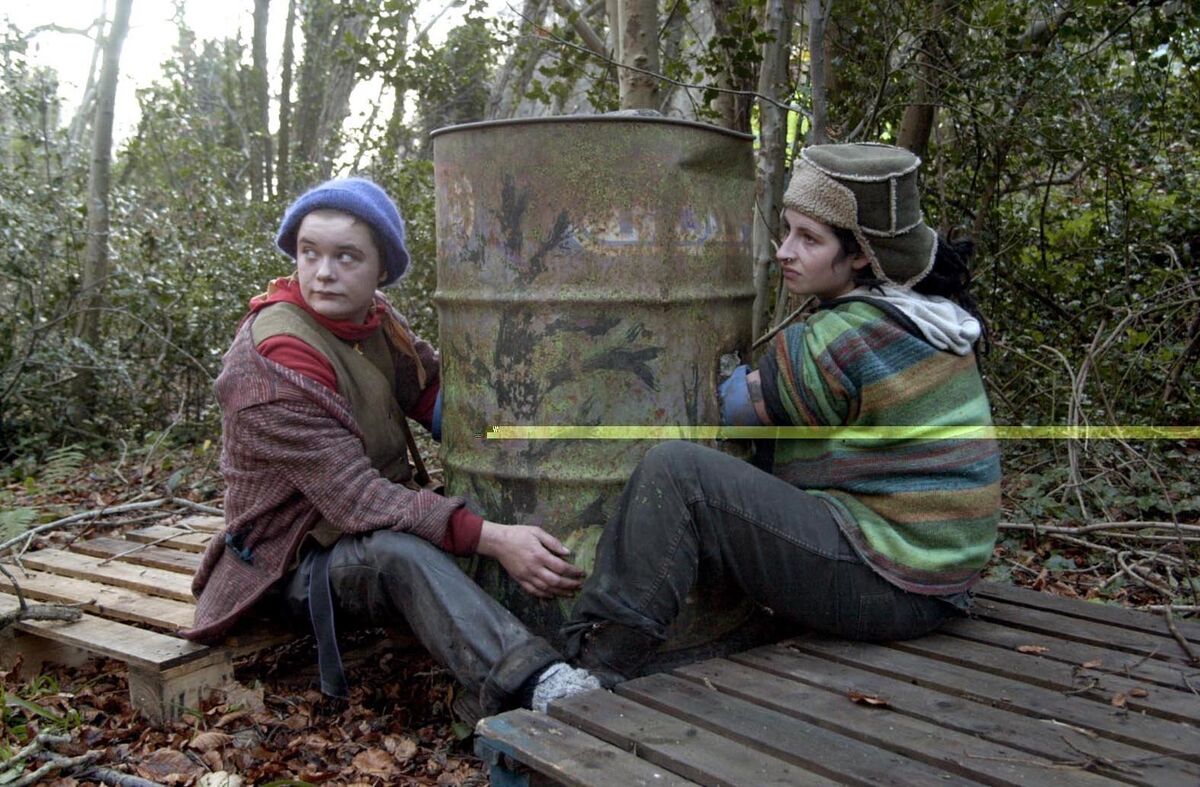
It was the late 1990s when, over three years, Úna and fellow protestors built defences to halt the road development. They built tree-houses in trees earmarked for felling. They created elaborate underground tunnels, which they inhabited, preventing the council from bringing heavy machinery over the ground above.
They locked themselves to immoveable cement barrels. They built an elevated rope network, allowing them move between treetops, thereby scuppering the council’s attempts to fell the trees beneath.
“Nell interviewed me and another girl. She swapped our surnames in the article. I think she did it to protect us,” recalls Úna, now a 47-year-old mother of four.
When invited by producers of TG4’s documentary series, , to tell her story, Úna felt her memories of that dramatic period in her life had grown sketchy. “I’d written a lot about it at the time. I had boxes in the attic full of diaries and newspaper clippings. Sometimes it was just one sentence in a day but it brought it all back. I only had two pages on my week in prison — but they covered that whole week,” says Úna, referring to her imprisonment in 2000 – along with 12 fellow protestors — for refusing to undertake to the court not to trespass in the Glen of the Downs.
In some ways, Úna can hardly fathom she was part of that extraordinary campaign — probably the first example of the ‘occupy’ style of protest seen in Ireland. Her recent re-acquaintance with her diaries has been an eye-opener. “Until then I thought I hadn’t done an awful lot, that I wasn’t so hectic. But looking back, I realise I did great things. Environmental activism was so unique at the time in Ireland. It was really on the fringes, so I got involved in a movement that was very different.”
While she didn’t live continually in the Glen of the Downs during that time, she did spend two extended periods there — in January and February 1998 and in December 1999-January 2000. “I picked a very cold time to live there. I’m a bit like that — if I’m doing something I do it the hard way.”
Úna has always suffered from anxiety (“much of the time I’m on high alert”) and trees have “absolutely” kept her sane. “The Glen of the Downs has always helped me. Forest bathing is very healing.”
One of her most vivid, very present memories, from those long-ago protest days is of sleeping nights in a tree-house. “You sway at night. Once you get over the ‘am I going to fall?’ feeling, once you trust, it’s so beautiful.”
Another memory is of Christy Moore joining them at their campfire a few weeks “before it all ended” (the eco-warriors succeeded in delaying the road development, but by December 1999 the courts ruled in the council’s favour and the protesters were ordered to leave the glen).
“It was just another magical night, sitting around the campfire — someone always had a guitar. We were in our winter clothes, looking a bit rough, and suddenly someone was joining us. I turned around, we didn’t have electricity, just torches, so it was quite dark, but I recognised him. I said how I liked his song about the goddesses [‘Burning Times’]. It’s an ode to feminism. He sang it for us.”
Úna sees trees as feminine. In a male-dominated society, she feels they’re not seen — or minded. “Trees aren’t diamonds or gold. You don’t necessarily see how valuable they are — it’s subtle. A tree could be centuries old, supporting 3,000 species of microorganisms.”
On three occasions in recent months — with various work needing to be done on the 50-acre organic farm she has run for 20 years with husband Pádraig Fahy in Ballinasloe — it has been put to them: "that tree needs to go". “If it was a house, they’d find a way around it,” she says. “People don’t find a way around an ancient tree. It’s not valued.”
The couple met when he came to the Glen of the Downs during the protest. He was with a group visiting from the Organic College in Dromcollogher. “That’s where I set eyes on him, and he saw me — we weren’t introduced until later.”
Their first child, Meadbh, now 21, was born the year after the campaign ended. Their other children are Róisín, 19, Teegan, nine, and Tomás, four. “When Meadbh was born, I quickly realised I couldn’t get involved in environmental campaigns. If I had to go to prison I didn’t want to abandon her.”
For Úna, the challenge has always been “to do the ordinary thing, to have routine, to be consistent, solid and positive”. It’s why she got into organic farming. “I’d been part of the fight against environmental degradation. Rather than fighting the State — and the State can do a lot of damage to an individual — I focused on being part of the solution, on doing something positive, earning some money.”
She found her answer in growing organic vegetables — “great because we’ve 30% more biodiversity compared with conventional horticultural farms”. But there are times she feels conflicted. “I know about climate chaos — and I knew before a lot of people did. Yet, I find myself being an average person — yes, we have an eco-friendly house — but I drive the kids to school instead of walking or cycling.”
It’s hard, she says, to be that person who does things differently to everyone else. Her two older girls, when they were teens, “kind of rebelled” against all the talk of environment. “They wanted an ordinary life, to enjoy the comforts other kids did, like being driven to school and not always holidaying in Ireland.”
Looking back, she feels the Glen of the Downs campaign had a huge impact. “There was so little love of nature at the time. I think it raised awareness. Practically the whole country heard about us. We were regularly in the newspapers.”
She’s glad there is more awareness and understanding of climate problems today. “Most people believe climate change is happening. But we’re in a much worse situation around mass extinction of species than before. Can we stem the tide? I don’t know. We have to be positive,” she says, adding that it’s time to find and embrace a new spirituality that embodies love of nature.
If she could somehow talk now to the 23-year-old Úna, what would she say? “I’d say ‘be kind to yourself, believe in yourself, you’re doing a great job. Trust you’re being guided in the right direction’.”
And what does she think her younger self would have said, had she seen the 47-year-old woman she’d one day be? “I think she’d say: ‘Wow! Well done, you did good’.”
- Úna Ní Bhroin's testimony is episode 3, series 4 of the award-winning documentary series , TG4 Wednesday, February 16, 9.30pm.


CONNECT WITH US TODAY



Be the first to know the latest news and updates