The 'beerage': The brewers who made it their business to make a difference

Cheers to a lifetime supply of beer. Robert Hume raises a glass to some benevolent brewers.
In these times of rising beer prices who wouldn’t welcome a stash of free booze?
That’s what Danish physicist Niels Bohr received a century ago, alongside the Nobel Prize in Physics for his discoveries concerning the structure of atoms.
Brewing giant Carlsberg splashed out by rewarding Bohr with a fabulous mansion next door to its Copenhagen factory. The property came with an unusual perk: a ‘Pilsner pipeline’ that pumped fresh beer in unlimited quantities – day and night – directly into his kitchen.
Bohr supposedly took advantage of this splendid arrangement from 1932 until his death in 1962.
The brew enabled him to keep his mind ”supple and flexible”, claims Alex Knapp from American business magazine Forbes, who cites several studies indicating that being drunk can help you find “creative solutions to problems”.
Well, maybe it wasn’t quite like that. Dr Christian Joas, director of the Niels Bohr Archive, believes that beer would taste stale if it swilled through a pipeline tens of meters long. Instead, the man who helped lay the foundations of quantum mechanics and develop the world’s first atomic bomb probably had the beer delivered by Carlsberg in crates.

And there’s more froth. Soon after Bohr moved in, a worker from Carlsberg allegedly stopped by to ask him how much beer he wanted each day. “Twelve”, replied Bohr, meaning – of course – twelve bottles, but the brewery promptly began dropping off twelve daily crates until the misunderstanding was cleared up!
Carlsberg had sponsored science for many years and had built its own laboratory. This was partly out of self-interest, because the company was searching for special yeast with which to brew pale lagers. But by analysing proteins Carlsberg also made an important contribution towards scientific knowledge generally.
With the fellowship awarded to him by the Carlsberg Foundation, Bohr was able to do research in England. The company also supplemented his salary when he was teaching, enabling him to buy extra apparatus.
Ever since the 19th century, other major brewers had been significant donors to good causes. Sceptics have suggested this was mainly to salvage their reputation during a period when temperance societies frowned upon their activities.
Whatever motivated their many donations, brewers were expected to be charitable. “A failure to give was reason for raised eyebrows”, writes Rhodri Davies (Public Good by Private Means, 2015).
Due to their good work in the local community, a significant proportion of brewers were nominated for honours, and several received knighthoods. Contemporaries quipped that they had been elevated to the ‘Beerage’.
Ireland’s leading brewers were among those making important contributions to social welfare, including Cork glory James Jeremiah Murphy (1825-97), who founded a brewery for stout at Lady’s Well, Leitrim Street, Blackpool, in 1856.

Murphy has been described as “ever giving, silently and generously”, and “ever genial, smiling and kind”. A popular pub song about him included the line: “Hurrah for the man who’s a friend of the poor”.
When the collapse of the Munster Bank in 1885 caused panic in Cork City, Murphy saved many from ruin by taking the initiative to found a new bank, the Munster and Leinster. Modest to a fault, the brewer commented: “I did, under the circumstances, what I consider I was called on to do.” Living quietly and unostentatiously, Murphy supported orphanages and hospitals, notably the District Lunatic Asylum for the County and City of Cork. “A silent worker in this age of chatterboxes” is how the Wine Merchant & Brewers’ Review (1890) described him. Many of his donations were made in private and anonymously, and he refused the honours his friends wanted to bestow on him.
When Murphy died on 26 October 1897 at his home in Bellevue, Passage West, flags floated at half-mast in Cork. The Irish Daily Independent referred to him as “one of the most prominent and highly respected figures in the public life of Cork”, dubbing him “a prince in the charitable world”. The newspaper concluded that society could “ill afford to lose so fine a type of citizen”. The Lord Mayor, Mr P.H. Meade, went so far as to declare that the name of James J. Murphy was “connected with everything that was good”.
The Dublin press also praised Murphy: the special correspondent at the Evening Herald described him as “a philanthropist in the very best sense of the word”.
That same description extends to the founder of Ireland’s most successful brewing company, Arthur Guinness (1725-1803). Of humble birth, Guinness began his working life as a servant until 1755, when he used an inheritance of £100 to set up his first brewery at Leixlip, Co. Kildare.
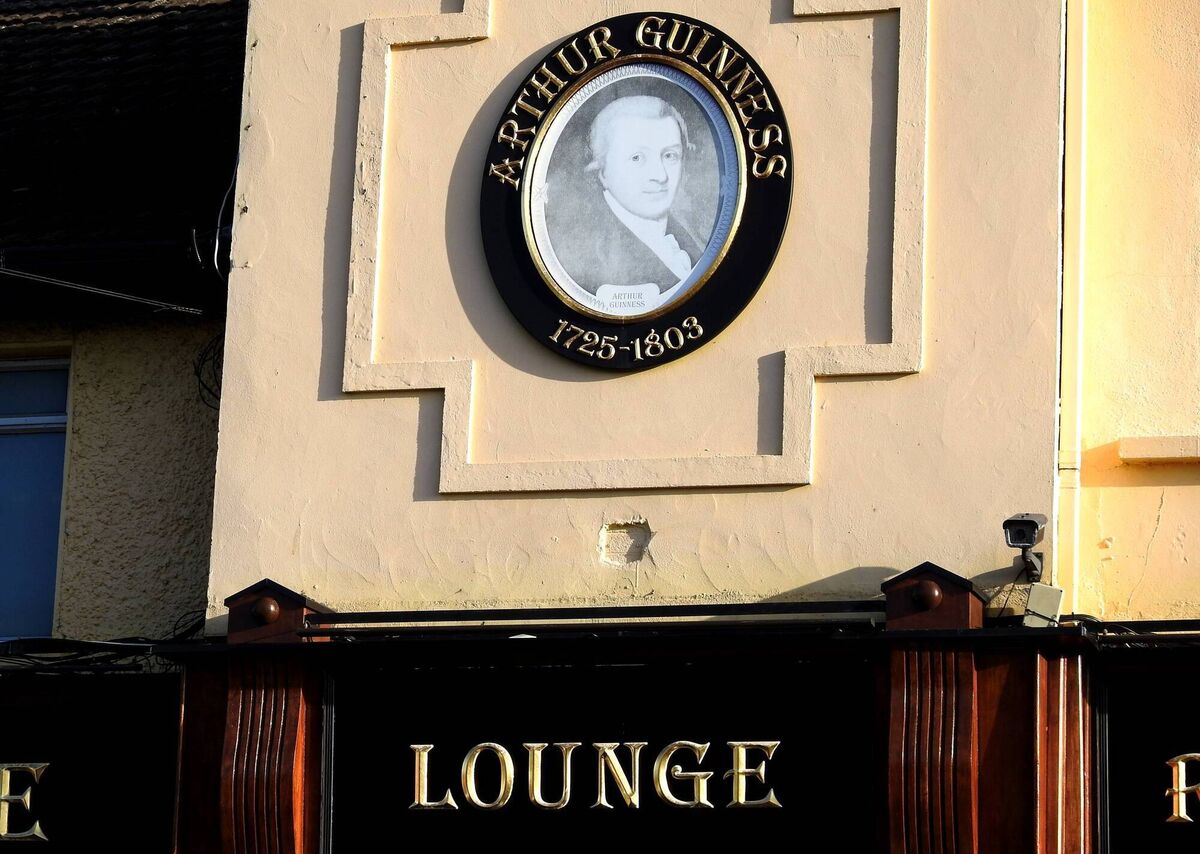
Four years later he left the enterprise to his younger brother and moved to Dublin, where he acquired a small, disused brewery at St James’s Gate. Within a decade, he had earned the title of Master of the Corporation of Dublin Brewers and Maltsters. But Guinness’s real breakthrough came in 1799 when he decided to ditch ale production and start brewing a full-bodied black beer called porter.
Although he grew extremely wealthy, Guinness continued to lead a simple life, and gave money to those in need. Through his efforts, Dublin’s poor were provided with houses and affordable health care.
As a devout Christian, he donated 250 guineas to the Chapel Schools attached to St Patrick’s Cathedral, which helped provide working class children with an education. By supporting Gaelic Arts and promoting the Gaelic language, he also helped preserve Irish identity.
Finally, Guinness assisted those who were addicted to strong drinks like whiskey and gin. Since water from the public pumps tended to be polluted and unsafe, an alternative was needed. Fortunately, he had it to hand. Beer, what else?

Sir Thomas Fowell Buxton (1786-1845), Whig MP, who owned a brewery in Spitalfields, raised money for prison reform, helped increase the wages of London weavers, and led the House of Commons campaign to abolish slavery. Buxton opposed capital punishment in Britain and the practice of burning widows in India. Baronet in 1840.
Sir Andrew Barclay Walker (1824-1893), Lord Mayor of Liverpool, and owner of Walkers of Warrington, contributed to Liverpool University’s engineering laboratories and to the city’s art gallery that bears his name. With no previous interest in art, claims Rhodri Davies, some saw his support as “a crude attempt” to buy a title through “showy displays of philanthropy”. Knighted in 1877.
Scottish brewer William McEwan (1827-1913), Liberal MP, made the largest single private donation in the history of Edinburgh University when, in 1897, he funded the building of McEwan Hall where graduation ceremonies are held. He declined a title.
Michael Thomas Bass (1799-1884), Liberal MP, founder of the largest brewery in the world at Burton-on-Trent, financed Derby Library and Museum, and built a recreation ground, swimming baths, and an orphanage for railway workers. A modest man, he too refused baronetcies and a peerage offered by William Gladstone.
Arthur Edward Guinness (1840-1915), great-grandson of Arthur Guinness, restored Marsh’s Library and extended Coombe Women’s Hospital in Dublin. In 1880 his public works earned him the grand title of Baron Ardilaun of Ashford, Co. Galway.


CONNECT WITH US TODAY



Be the first to know the latest news and updates