Look up: The Geminid meteor shower peaks spectacularly tonight in the skies over Ireland
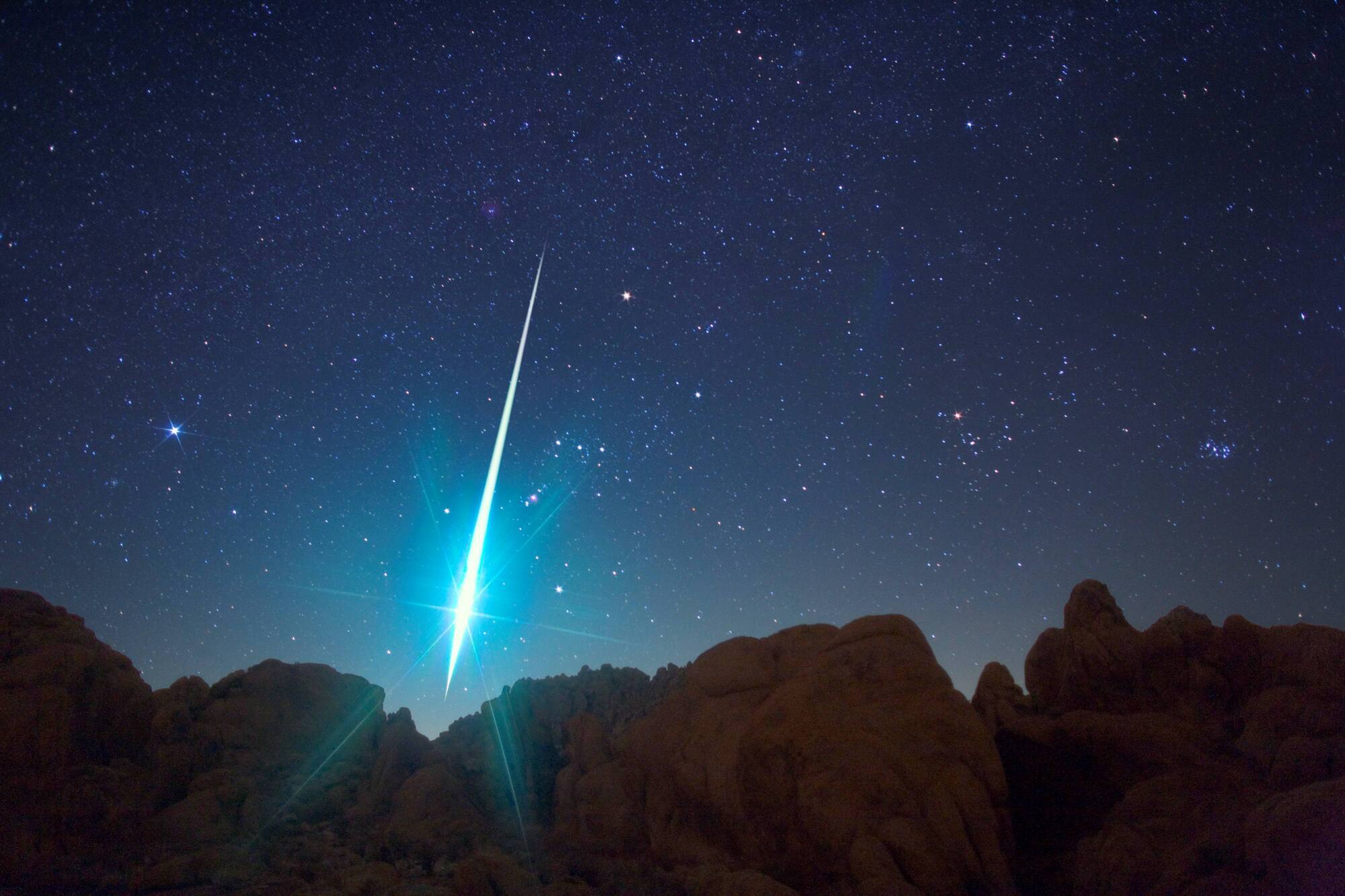
A huge meteor during the Geminid meteor shower in December 2009 at the Mojave Desert area in the United States. Picture: Wally Pacholka / Barcroft Media / Getty Images
Stargazers are in for a treat this week as the Geminid meteor shower lights up the skies, with the spectacle peaking tonight and tomorrow morning. Families in particular are being encouraged to go outdoors and see shooting stars “anywhere in the sky” this week.
Head of Blackrock Castle Observatory, Niall Smith says it’s a great opportunity for parents of young children to make some amazing memories in their own homes, even beyond the shower’s peak as the meteors will continue to appear in the night sky for a few more days.
“You don't need any equipment and you don't need any specialist knowledge of where to look. You just look up at the sky and that makes them accessible to everyone, even kids,” he says.
“It is fun for all the family and for all ages. It can be quite a sociable community thing to do as well. If you're in the countryside, then you're likely to get darker skies and see more. Sometimes parents are a bit intimidated because they say ‘I don't know where to look’ and so on. Nobody can tell you where to look because you don't know until the meteors appear.”

Mr Smith notes the bright moon may make some of the meteors hard to spot but he says at the shower’s peak each night, they will still be hard to miss, especially if you watch from as dark a location as possible.
“They’ll see meteors anywhere in the sky. You don't need any binoculars, you don't need anything fancy. In fact, the only thing you need to do is let your eyes adapt to the dark.
“Although they're called the Geminid meteor shower and they appear to come from the constellation of Gemini, they actually appear anywhere in the sky. The bad news is that the moon is three-quarters full so you'll only see some of the brighter ones.
“The great thing about the Geminids is that they are a bright shower, often the meteors themselves can have multiple colours.
The ideal times to spot the meteors are after midnight for night owls or before sunrise for early risers.
“Early in the morning is actually the best time, after 3am: if you actually get up early in the morning, it's still dark and the moon will have set.”
Astronomy Ireland is asking members of the public to take part in a nationwide Geminid watch and count the number of meteors they see on any night between now and December 20.
People should take note of how many meteors they see every 15 minutes and email magazine@astronomy.ie with a report, including a name, location, and the night they were observed.