Lindsey Earner-Byrne: Women’s history has demonstrated that silence makes a noise of its own
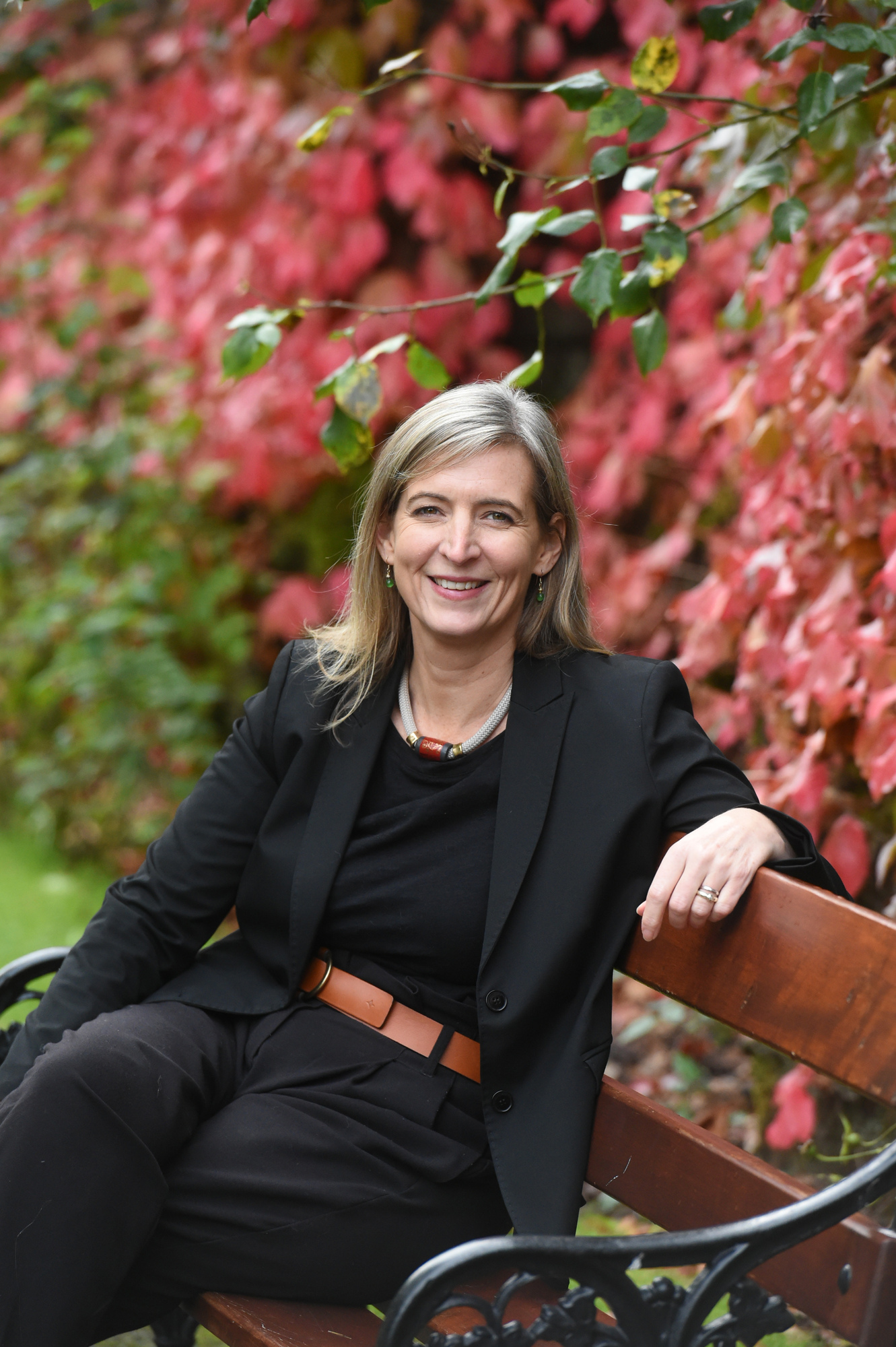
When Lindsey Earner-Byrne, the country’s first Professor of Irish Gender History, was helping Boy George uncover his Irish background, she discovered a cousin she didn’t know she had, she tells Clodagh Finn
Lindsey Earner-Byrne: Women’s history has demonstrated that silence makes a noise of its own

Lindsey Earner-Byrne,
Professor of Irish Gender History, University College Cork. Pictures: Larry Cummins

 A conversation can take many unexpected turns, yet it still comes as a delightful surprise when Lindsey Earner-Byrne, the country’s first Professor of Irish Gender History, breaks into a short rendition of Karma Chameleon, Culture Club’s 1983 number one hit.

She’s recalling the moment she was asked to flesh out Boy George’s Irish background for a 2018 episode of Who Do You Think You Are?, and her subsequent excitement at the prospect of meeting one of the pop star giants of her childhood.


“Boy George,” she says, “are you kidding me. He was my hero?” The historian later met the famous singer (and recent judge on The Big Deal on Virgin Media) at Goldenbridge Convent Industrial School in Dublin. His grandmother Bridget spent ten years, from 1919 to 1929, there after she was found wandering on a street near her home aged just six.

“She was kind of nabbed like a stray dog!” Boy George remarked at the time. He was deeply moved when Lindsey Earner-Byrne showed him a document describing his grandmother Bridget as “ambitious”, “painstaking” and “very bright”, and another confirming her account that a girl had been made to wear the damp sheet as a punishment after wetting the bed.

“It was very emotional to be involved in that process. He’s a total dote, as well,” Professor Earner-Byrne tells Weekend.

The search for Boy George’s history also led to her uncovering an unknown chapter in her own family story. A woman watching the programme credits noted the surname ‘Earner’ and got in touch. They turned out to be related.

“She had been placed for adoption by a close relative in the 1950s in Britain and we have now discovered a wonderful new family member,” Professor Earner-Byrne says.  

There isn’t a better way of illustrating the historian’s work. For nearly three decades, she has been shining a light on how ‘the Irish institution’ – be it Magdalene laundry, industrial school or mother and baby ‘home’ – was used to do the work that we should have been doing as a society.

“And I don’t think we have really started on the work of understanding that,” she says, as she finally sets foot on campus at University College Cork where she was appointed first Professor of Irish Gender History in January of this year.

 Lindsey Earner-Byrne
Lindsey Earner-Byrne

Due to Covid-19, though, she has only recently returned on campus. “I have LOVED being back face-to-face; there is nothing like the magic of the classroom and I find young people are so engaged in the issue of gender and are dealing with it in new and dynamic ways every day in their own lives. I learn so much from them.” 

Consent is a big issue. “We have had some really interesting discussions around consent – reflecting on the evolution of the idea and how much work there is still to do,” she says.

Though the focus is on gender, the continuing fallout of the last 19 months is still very much in the background: “I do feel for this generation, the pandemic has been incredibly tough, and it has left a mark. I see it, and I worry as a society we’ll rush to forget what it has done to their lives during such a key period of their development. They’ve been robbed and we need to gear policy around that truth.” 

As Professor Earner-Byrne knows only too well, policy – and the agenda of high politics – can have really devastating consequences on the individual. We have seen that most recently with the publication of the report of the Commission of Investigation into Mother and Baby Homes.

Her own interest in the past and how it continues to shape the present dates to 1996. It was the same year that the Spice Girls were breaking through with their hit single Wannabe and their message of ‘girl power’ and female empowerment. She was about to start her PhD, but was deflected by a newspaper account of the closure of a Magdalene laundry on Sean McDermott Street in Dublin.

“I just went, ‘What? What is this thing? I had never heard of it. When I said it to my mother, she said, ‘Oh yes, that was the place that everyone feared they’d go’, and yet it had never been discussed.

“It was like I had pulled a thread and this thing started to unravel and this whole idea I had of this family-oriented, pro-motherhood Catholic culture started to look much more complicated.” 

She set out to understand how a culture that valorised motherhood could subject single mothers to such treatment. Her 2007 book Mother and Child documented the cruel treatment of ‘unmarried mothers’ – to use the term of the day – and the high death rate of babies in mother and baby ‘homes’ in devastating detail.

It recounted, too, the work of Department of Health inspector Alice Litster who warned of the high baby death rates but was “howling in the wind”; her warnings ignored and censored.

Dr James Deeny, the Chief Medical Officer during the early years of the Irish State, was also ignored as were the yearly findings from the Register-General who noted the exceptionally high death rate among “illegitimate” children.

There were times, while researching in the archives, that she had to get out for air to take in the magnitude of what was being revealed in the statistics, yet when her book was published it didn’t cause a ripple.

I thought it would be an absolute bombshell, and it wasn’t. The material that shocks so deeply now barely raised an eyebrow; we were not ready to see the systemic nature of it. 

“The violence of it had been normalised and I failed to find the language to shake that complacency,” she says.

Her findings, though, deeply disturbed her vision of Ireland and she continued to examine what she describes as “the structural violence that modern Ireland had normalised to the point of invisibility”.

“What I found when I drilled down into the story of the ‘unmarried mother’ – the word had to be invented – were the key ingredients of prejudice. The things that allow people to be ostracised are all there. ‘Unmarried mothers’ were established very early on in public, official and religious discourse as the social problem that risked the respectability of the independence project.” 

The new Irish State used that idea of ‘respectability’ as a kind of social code that pushed so many to the margins.

And it continues to do so. As William Faulkner once said, the past is never dead, it’s not even past. It’s a sentiment that resonates with Professor Earner-Byrne.

So when a professorship at UCC aimed at correcting gender imbalance in academia came up, she threw her hat in the ring. It is funded by the Government’s Senior Academic Leadership Initiative.

It didn’t help that the internet was down on the day of the interview. She had to run to her husband’s office to get connected in time. “It was all quite Monty Python,” she says.

As the mother of two young women, she felt compelled to do something to dismantle the gender bias that stubbornly persists, but says managing to stay in the workplace and pursue a career with children still exacts too high a price from women.

 Lindsey Earner-Byrne
Lindsey Earner-Byrne

She recalls being totally burnt out a few years ago, when she took a career break from her job at the School of History at UCD. 

“I hadn’t stopped since having two children. I had had severe hyperemesis gravidarum [illness and vomiting] in both pregnancies, and had a devastating bereavement. My youngest brother died six weeks before my first daughter was born. He was buried on his 19th birthday, but as I was pregnant I sort of postponed the real pain of that loss, I think.” 

Now, she says, she has the energy and the support so many women don’t have to embrace her work at UCC.

Besides, misogyny has not gone away. 

“The real issue is the endurance of misogyny and the visceral hatred of women that, at some abstract level, remains.” 

She says she is still influenced by the rallying cry of the second-wave women’s movement – “The personal is political”, and her work illustrates that in the most affecting ways. Her telling of the rape of a woman known only as Mary M during the Civil War in 1923 shows in the starkest way that an ‘unmarried mother’ had no options.

Mary M wrote to the Catholic archbishop of Dublin, Edward J Byrne, looking for help to have her son adopted. In doing so, she provides this harrowing account of her rape:

“In January 1923 a party of men armed to the teeth & calling themselves Republicans forced their entrance into our house where in three people resided. My Aunt who is totally blind and is over 70 years, my Uncle 70 and I their neice [sic] an orphan. The object of their visit was money or lives. When I strove to save my Aunt from being dragged from her bed and they were furious when they did not get money one brute satisfied his duty passion on me. I was then in a dangerous state of health and thro’ his conduct I became Pregnant. Oh God could any pen describe what I have gone thro’.” 

Yet, despite the growing recognition of our treatment of women and children in the past, we have yet to rewrite the history of the 20th century, or question the narratives about gender and class deeply embedded within it.

As Professor Earner-Byrne says: “Women’s history has demonstrated that silence makes a noise all of its own and that we should be trained to hear it.” 

History is also important to what is happening today. “We can use history to question the present,” she says. “Most events have the ingredients of the past in them and I believe history can contribute to social justice.” 

Looking back, then, is key to understanding the residual and persistent threads of misogyny and, as the country’s first Professor of Gender History puts it, “to see how change, real change comes about, you need a long view.”

More in this section

Lifestyle

Newsletter

Eat better, live well and stay inspired with the Irish Examiner’s food, health, entertainment, travel and lifestyle coverage. Delivered to your inbox every Friday morning.

Cookie Policy Privacy Policy Brand Safety FAQ Help Contact Us Terms and Conditions

© Examiner Echo Group Limited