A year without Fungie: What life is like in Dingle since the famous dolphin disappeared
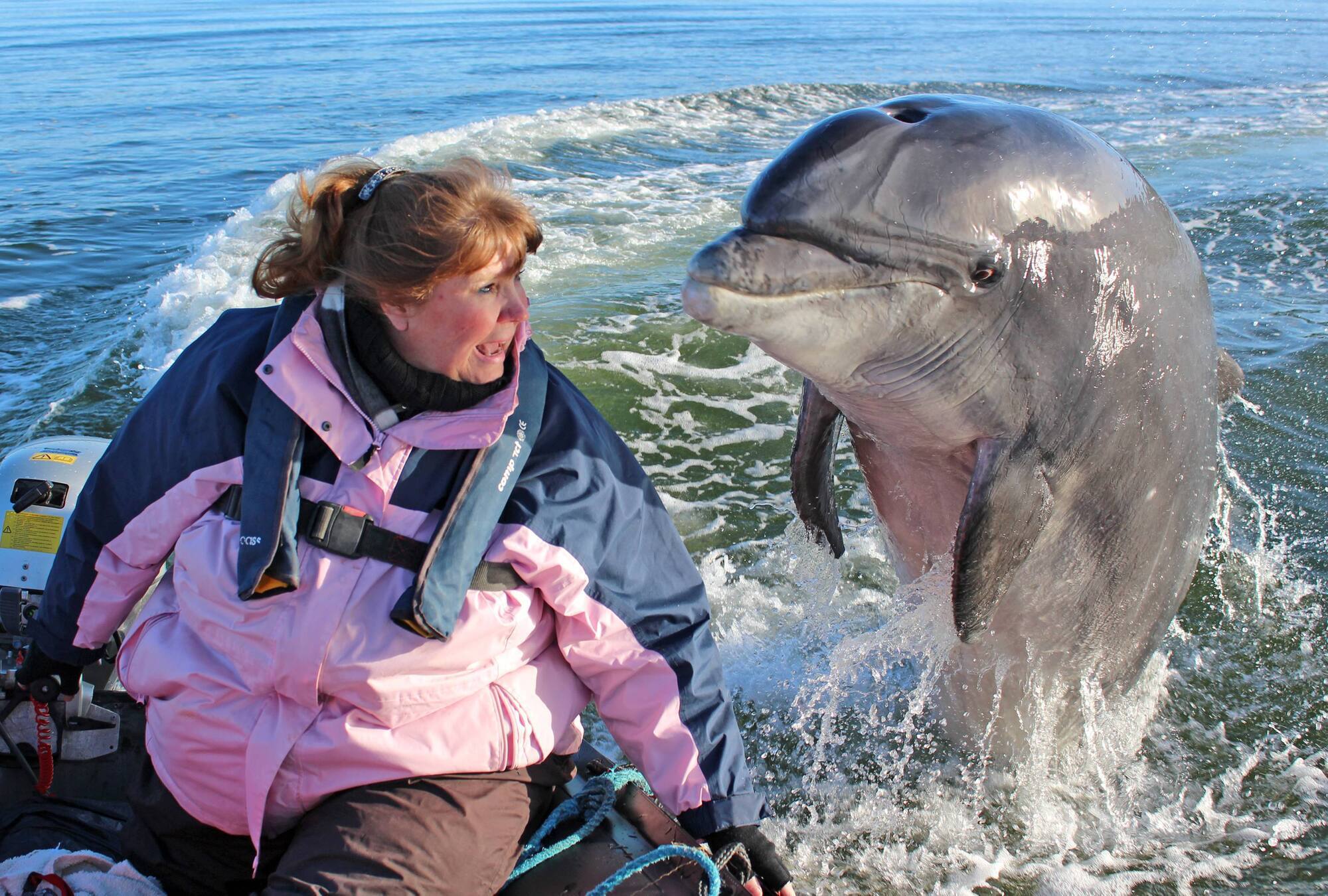
Jeannine Masset from Anascaul with Fungie the Dingle Dolphin. Picture: Rudi Schamhart
For near-on 38 years, Irish and foreign tourists alike flocked to a harbour town in southwestern Ireland for a glimpse of one particular bottlenose dolphin.
How crazy is that when you consider just how densely populated Irish waters are with dolphins? There are tens of thousands of dolphins in Irish coastal waters, of which about 300 to 500 are believed to be of the bottlenose species.
But Fungie the Dingle dolphin is special.
October 12 marks one year since the last known sighting of the popular dolphin. How has life in Dingle rolled without its number one mascot?
Long-distance, cold water swimmer, Nuala Moore, first spotted Fungie’s fin while on Bínbán Strand as a child. She would then go on to share the waters of Dingle Bay with the bottlenose dolphin for as long as he stayed around; they regularly swam alongside each other.
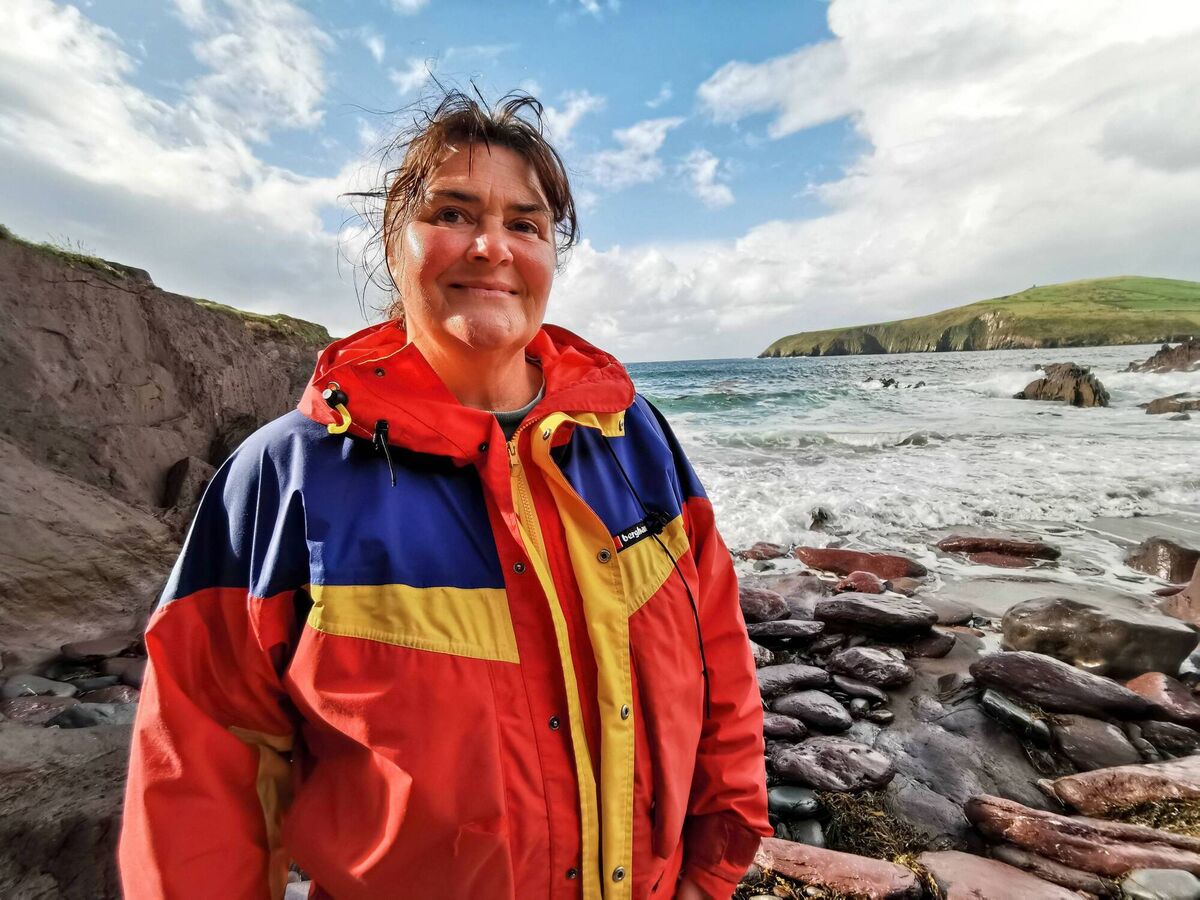
On a fairly wild and rainy midweek morning, Nuala and I meet on the rocky shore of Bínbán; a small beach, not far from town, known more to locals. Whatever the weather, it is from this rugged cove that she usually gets into the Atlantic, sometimes to train, sometimes for pleasure.
“The water here is good quality,” She explains. “I can go from here to Straidín and around by the lighthouse”. She tells me she was only going to hop in and out quickly that morning. “It’ll clear my head for the day,” she says.
As Nuala prepares to hop in for her daily dip, she reflects on her years regularly meeting Fungie at sea, and on the void felt in the bay, since his disappearance 12 months ago.
“It was an amazing experience swimming with him, and it was one I guess, looking back, that we took for granted. It was at this beach, Bínbán, that we saw him first as very young children," Nuala recalls.
For the thirty-eight years that followed, Nuala swam alongside him while preparing for her big swimming projects.
“In the summer periods, it used to be frustrating competing with the boats as the boats became many. And then in the winter months, there were these kinds of wry smiles between us and he would come closer in the winter period.”
Swimming close to Fungie, helped her find a sense of balance and peace while swimming in turbulent seas.
“When you can hear your breathing, (she takes an inward gasp) you can hear the effort. But when you can hear your bubbles, which is the blowout; that’s when you can feel your calm. And the beautiful thing about having Fungie in the water, regardless of the effort, you could hear his bubbles. And having that sound and being able to find your calm is the most important thing,” she explains.
Nuala last swam with Fungie about two weeks before he stopped showing up and says she feels a mix of emotions while swimming, without him around.
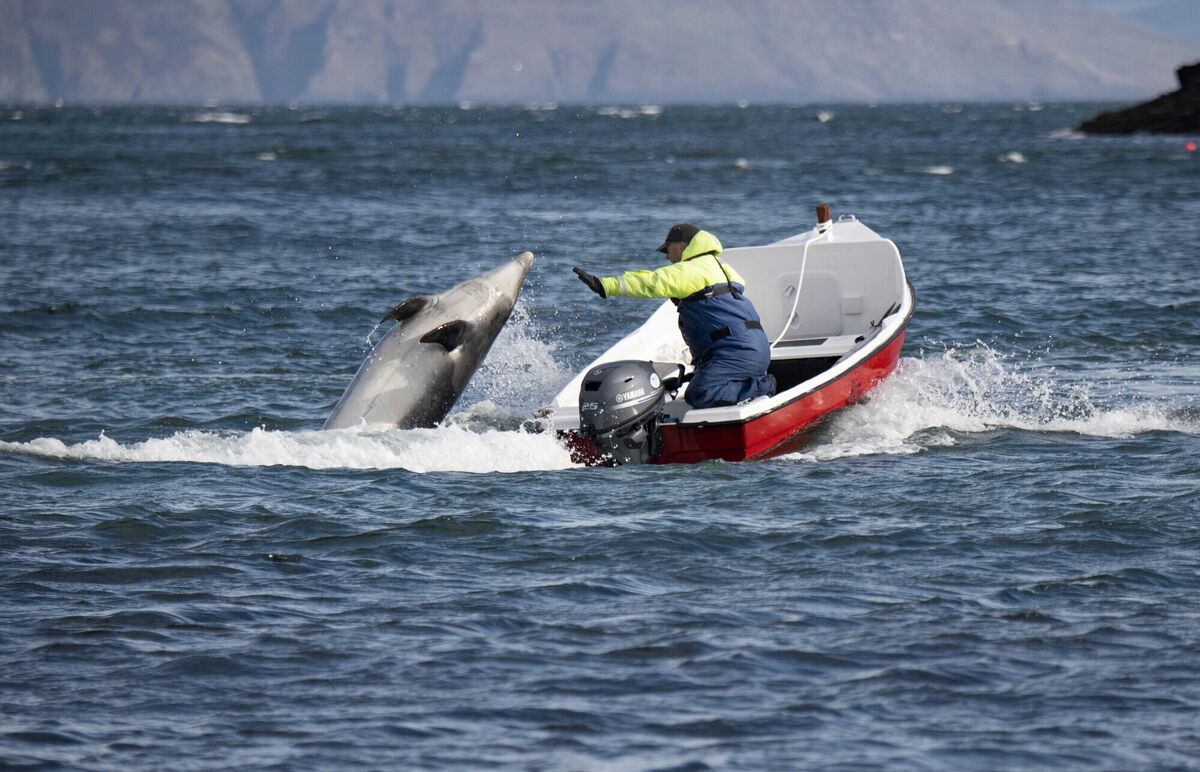
“It's a very interesting thing being in the water now and hearing the silence. It has changed the emotional balance. As over the time that you come to accept that he’s not coming back, there is a sadness attached to it. As a swimmer, I would always stop and watch the boats and listen to the boats and hear the cheers. There was always this screaming and shouting coming from the (Fungie) boats. For that to be missing, we all carry sadness. It's a love-hate for me. I love the silence, but I miss the joy,” Nuala says.
To presume that Dingle is silent or joyless without the country's favourite dolphin would be a mistake. The town and its people are a kind of brand unto itself and perhaps it always has been. If the last 12 months shows us anything about the area, it's that Dingle and its draw for tourists, continues to be as magnetic as ever. The summers of 2020 and 2021 saw the place heave with staycationers. Its vibrancy remained buoyant through several recessions and the near-collapse of its fishing industry.
Nuala remembers a town bustling with tourists long before any marine tourism took off.
“A lot of people will think that Dingle has lost an awful lot, but from a personal point of view, I mean, my home where I grew up was part of the set of Ryan's Daughter. Tourism in the ’70s and ’80s was booming. Dingle is a brand so much bigger than just one item. But we will always be very proud of the relationship that all of us had with Fungie,” Nuala says.
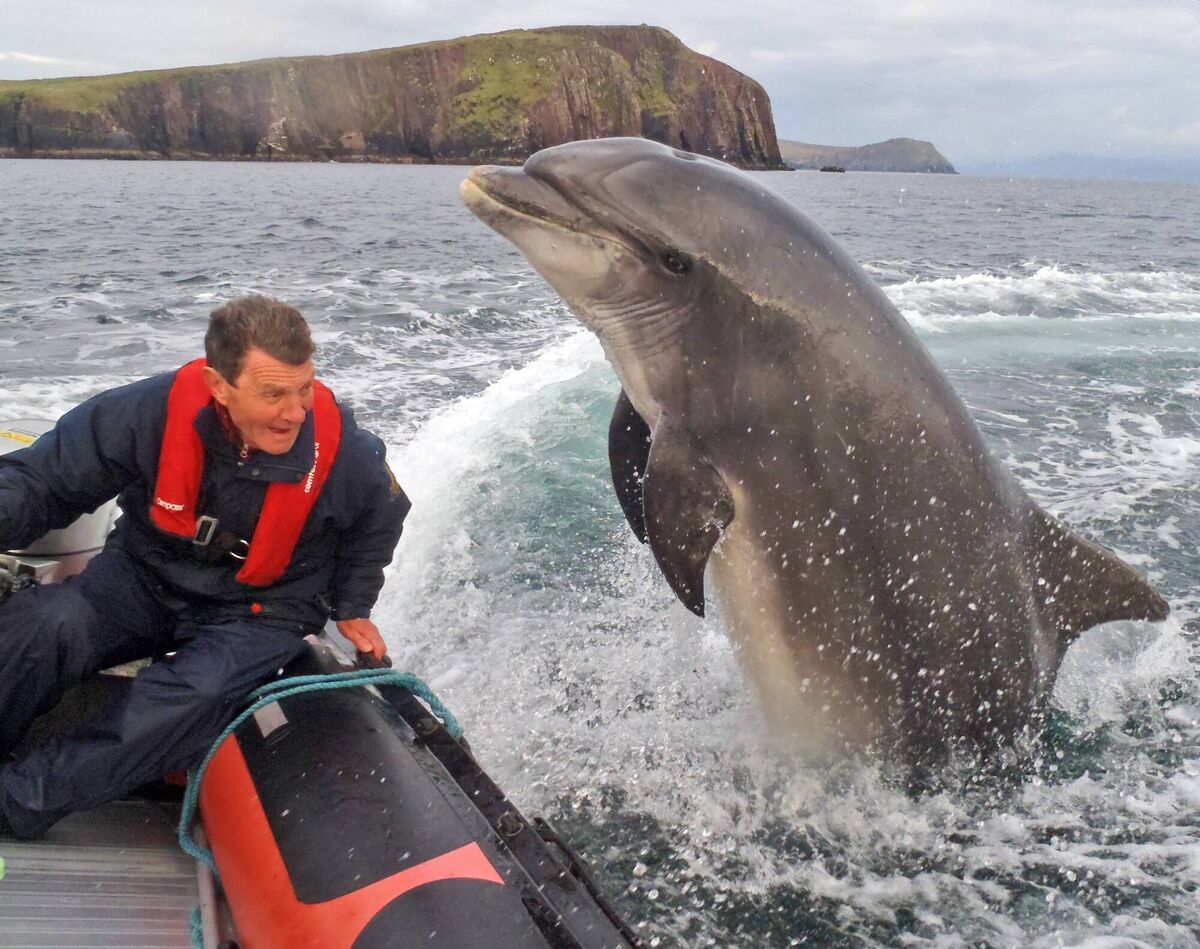
Nuala explains that the positives and negatives of a town without its biggest mascot flow between the emotional and the commercial.
“As a swimmer, of course, it was incredibly challenging sharing a small space with up to 4 boats. But I think it’s very reasonable for us to believe that a lot of this eco-tourism and the marine tours sprung from a huge amount of understanding around the commercial nature of having Fungie here,” Nuala says.
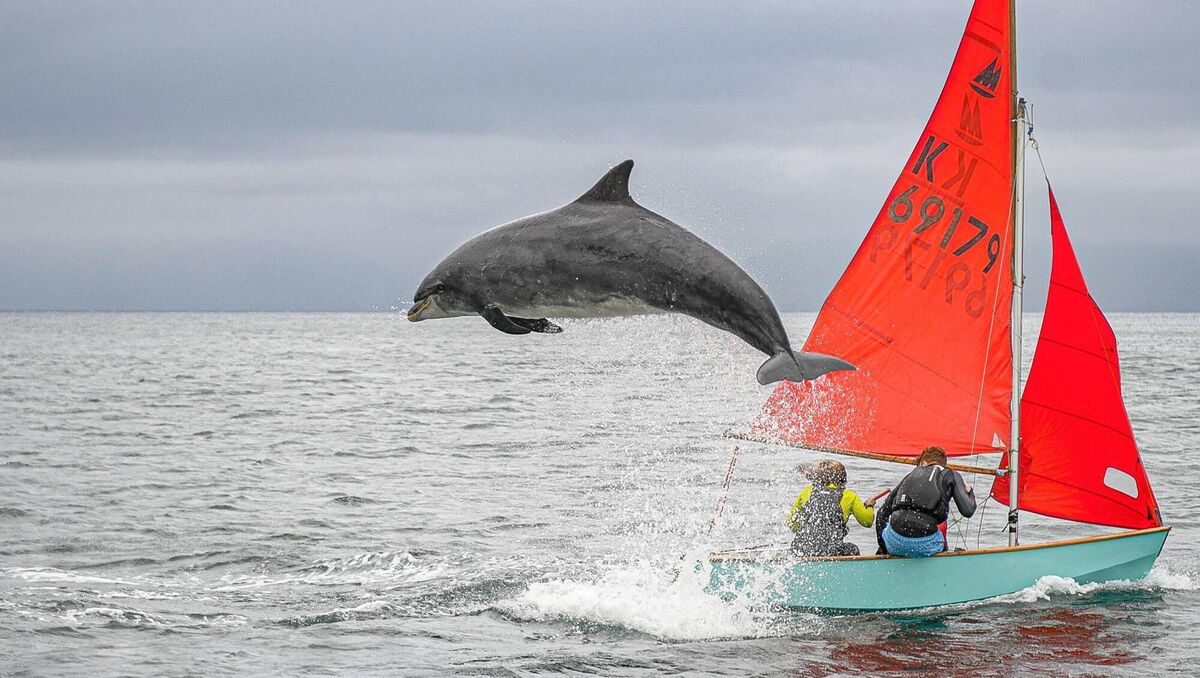
As Dingle heaved through the summer of 2020, so too did the demand for sightseeing tours. Packed boats ran from first light to dusk. It is claimed that there were sometimes in excess of ten boats contesting for a glimpse of Fungie around Dingle Harbour that summer.
Nick Massett of the Irish Whale and Dolphin Group has observed marine mammal activity off the West Kerry coast for 15 years. With a year's hindsight, he feels the type of tourism that was built up around Fungie wouldn’t be as welcome today.
“It was an interesting one,” he says, looking to the harbour from Dingle pier. “For a long time, there was a whole industry built up around that single one dolphin. And meanwhile out around Dingle Bay, out around the Blaskets, there was a whole world of whales and dolphins that were unhindered and left to their own devices.”
He says the last two years in Dingle were extraordinary.
“The last summer when Fungie was here, those boats were never busier. At any time of the day, there were lots of boats around Fungie, from dawn to dusk. It was a bit shocking to see at times. There was a constant presence around him. And up to ten boats at any one time. I would hate to see that type of tourism build up around one dolphin again, and I think most people would, with hindsight,'' says Nick.
Marine leisure tourism continued to thrive throughout summer 2021. The harbour operated at about 95% capacity.
Dingle Harbour Master, Nigel Collins says that there were only two boats that didn’t operate this year.
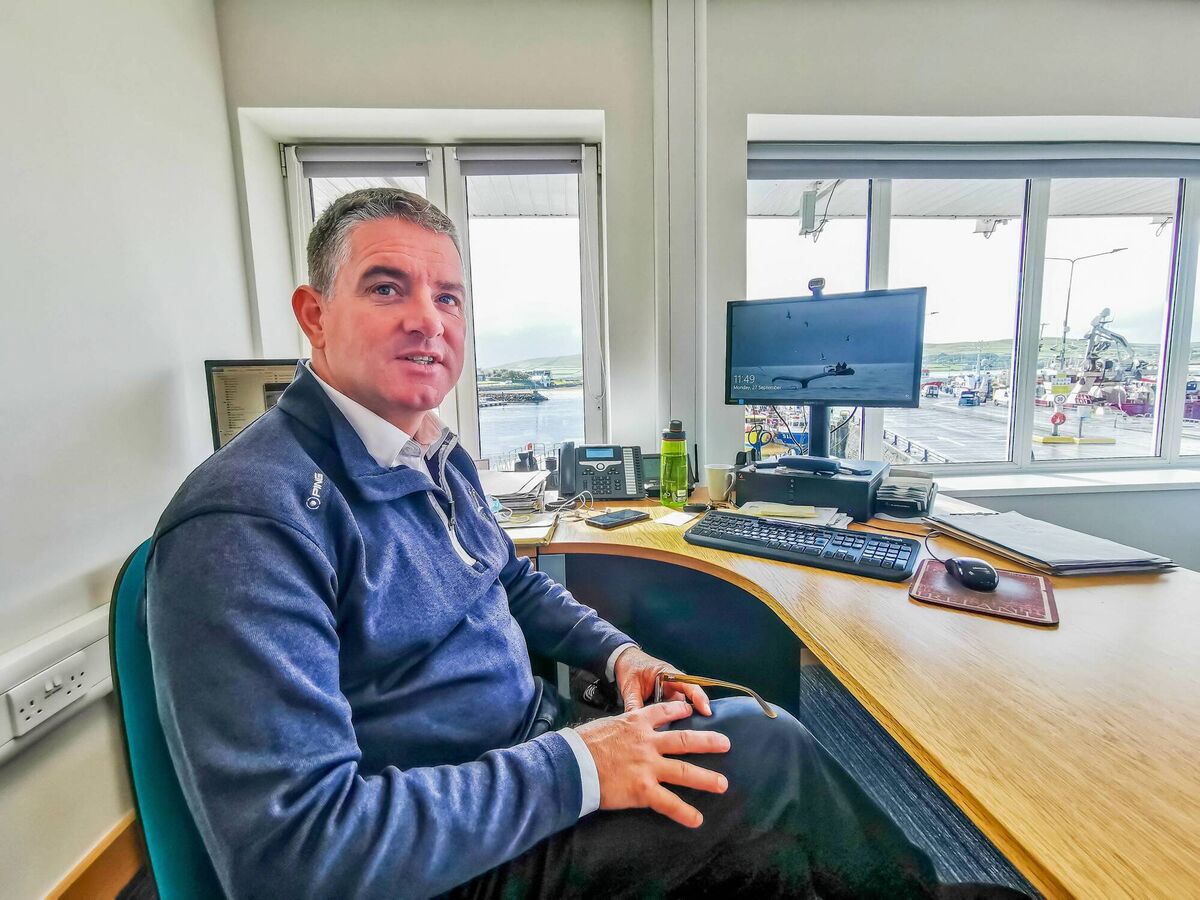
“Out of the 100% of the boats that was working (before Fungie tours ceased), we're down to about 95% of what was working now. In terms of marine tourism, we’re only about two boats short of what we had before, and they had come to a natural retirement anyway,” Nigel explains.
Most sightseeing tour operators have diversified their businesses offering private harbour tours, fishing trips, ribs offering sea safaris, whale and dolphin trips, tours of the Blaskets and mini eco-tours.
“The mini eco-tours have replaced the Fungie tours, basically” Nigel continues.
The hype and industry built around his arrival, perhaps reflected a more innocent Ireland of the 1980s. One has to wonder if the same type of tourism would be allowed to develop around one dolphin today.
It is, however, plain to see, that standards are high in Dingle and continue to evolve. As long as Dingle tour operators continue to roll with the times and remain world leaders in eco-tourism, Dingle as a brand is going nowhere.
- Local fishermen in Dingle will offer free boat trips for Fungie Day on October 17. Visitors are asked to make a small donation to the Dingle Coast and Rescue and Mallow Search and Rescue for their trip.


CONNECT WITH US TODAY



Be the first to know the latest news and updates