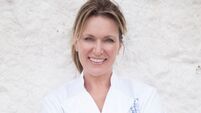
Author, Sue Rainsford: I do think I was born to be a writer

Sue Rainsford: "I’d like to be remembered as a writer who had her own relationship to language and didn't make any compromises." Picture: Ali Rainsford
I grew up down the road from where I’m living now in Sandymount with my mum, dad, and sister. We’re quite lucky that we get on — as a group of people in addition to being related by blood. My parents always gave us a lot of books growing up and my sister and I both started reading quite early.
I’ve always been very close to my sister. My earliest memory is meeting her in the hospital when she was in the little plastic crib. People always think she’s the older one because she’s more sophisticated and composed. I was quite a strange child so I was lucky to have a sister who put up with me.
I know it can sound pretentious, but I do think I was born to be a writer. My mum always maintained that I started saying I wanted to be a writer when I was eight. Growing up, I didn’t have many talents or skills but I was always really invested in reading and loved the escapism. There were times when I thought maybe I’d do other things but looking back now it was the path I was on from the get-go.
I went on to study art history in Trinity and then visual arts practices in IADT as an arts writer, but I was always reading fiction. I ended up going to Bennington College in Vermont to do a residency and that’s when I started to study literature formally.
I remember when I got there I had come straight from Zimbabwe because my partner is from there. Their summer is our winter, so I came straight from summer in Zimbabwe and arrived in the middle of the night in Vermont and woke up with all this snow and my sunburn. It took me so long to climatise but it’s so beautiful there. The liberal arts college energy is very different to Trinity or anything I had experienced before. That time is really special to me.
Right before my first book came out with New Island Books I had actually said to myself that I was going to, not necessarily give up writing, but make some pretty substantial changes to my professional life because the rejection was just so intense. I was sending manuscripts to agents and publishers and getting rejected all of the time. Pushing through that, while keeping a sense of myself as a writer, was the greatest challenge I’ve ever faced.
If the book hadn’t ended up getting published I don’t know if I would have stuck with it much longer. I had maybe another year in me of that constant rejection. I had a lot of help: my partner was giving me a lot of emotional support at that time. I had to realise that just because your writing hasn’t been published, it doesn’t mean that you’re not a writer or that you’re failing.
It felt like the book was out in the world now and had a momentum outside of me.
Honestly, I’m surprised that people want to read my books given that they’re so niche and strange. Every time there’s a favourable review, or any time someone posts about the book online, any kind of reader, it’s an enduring surprise to me.
I’d like to be remembered as a writer who had her own relationship to language and didn't make any compromises. People close to me would say I’m quite tenacious and discerning. I think it’s sort of a polite way of saying that I don’t suffer fools and can be strong-minded.
I often think of this Annie Dillard quote: “How we spend our days is how we spend our lives” and try to say it to people as often as I can. When I first read it, it made me realise that life is happening now, don’t put your desires on hold. Once I really learned that lesson it changed my life. It made me live a lot more thoroughly and made my days a lot more vibrant.
I have two pieces of advice, both given to me while I was in Vermont. Deirdre McNamer, this amazing writer, said: “Always be a good steward of your gift." I always think of it as finding ways to protect and cultivate the things that make you yourself. The best writing advice I ever got was part of a workshop with Bret Anthony Johnston. He said: “Write what you’re afraid to know or write towards the thing that will scare you”.
Those are two things that are really present in my thinking. It really changes your approach when you write like that. Like you’re writing to find something out rather than tell people things that you think you’ve already uncovered.
- Sue Rainsford’s new book Redder Days (€15.99) is out now
CONNECT WITH US TODAY



Be the first to know the latest news and updates