Trish Kearney: 'I had pitied teenage me, but she was tough, strong and brave'
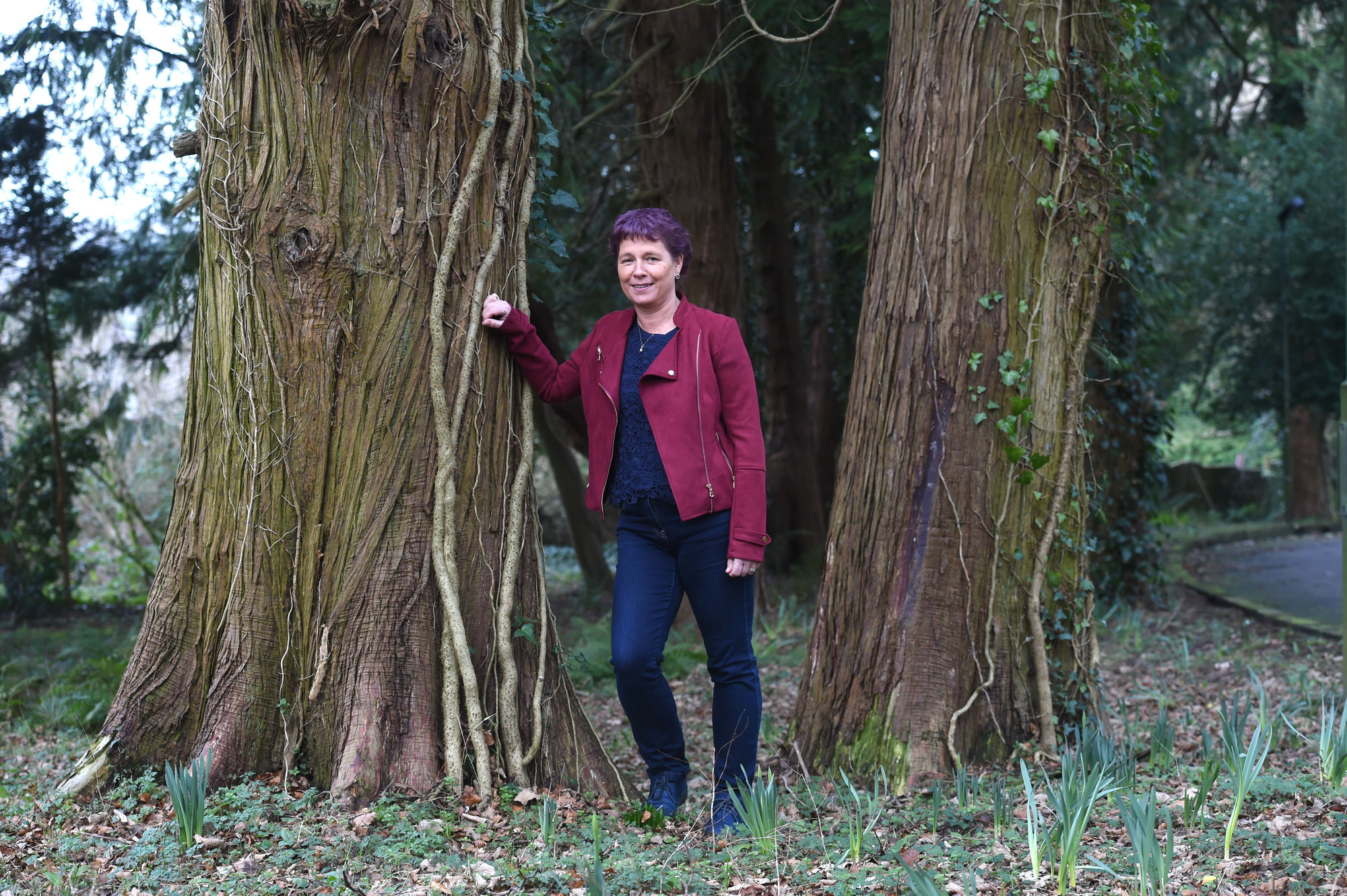
Trish Kearney has written a book about George Gibney's predatory ways as a swimming coach. Pictures: Larry Cummins
If people were to meet me today, there is little which would alert them to what lies in my past. Abused and stalked as a young teenager by the paedophile George Gibney, I have lived, along with my fellow survivors, in a world where justice was denied and our story the subject of intense media coverage for twenty-six years. For twenty-five of those years I remained anonymous, comfortable to speak of my past among family and friends only. Yet, here I am today, having published my memoir and proud to have shared my story on the podcast, What has brought about this change you may ask?
I don’t believe I can narrow it down to one thing, rather it is a combination of factors which has brought me to this point. Firstly, time has indeed healed. Over thirty-five years have passed since I was last assaulted by George Gibney. During that time, I have learned to come to terms with my past and accommodate it, and its often-unwelcome memories, into my life.
Ireland too has changed. Enormously. Unlike Ireland of the ‘80s and ‘90s, it is now openly acknowledged that child abuse in all forms exists and is spoken about. The words grooming and coercive control are understood and there is acceptance at the difficulty survivors have in speaking out and why it takes so many years for some to come forward. Nothing like the Ireland I knew.
I grew up in Dublin, the second youngest of five, with a mother and father who were loving and kind. I was a bolshy, loud, confident tomboy, who loved to swim and dreamed of making it to the Olympics. Life was as perfect as it could be, until I joined Trojan Swimming Club at thirteen years of age and George Gibney became my swim coach. Within months life changed forever and hurt, fear, shame and guilt became a part of my every day. As a young teenager, I had little understanding of what was happening when Gibney began to coerce, dominate, isolate and assault me. As I became entangled in his net, my thinking became skewed.
In order to forget, I became adept at living each day in the moment, ignoring the dread of Gibney and actively forgetting what he had done to me earlier that morning or evening. By doing so, I could smile and converse at home with family, concentrate at school and embrace the highs and lows of swimming and competing. Such was my success at actively forgetting, that on leaving swimming at 19 years of age, I completely suppressed all memories of the abuse. It was only after the birth of my first child, Aoife, in 1991, when I was twenty-five, that they began to trickle out. Initially they came in flashbacks, when I might see, hear or smell Gibney briefly before quickly dismissing them. However, with the arrival of Gary O’Toole’s letter a year later, asking if Gibney had ever done anything to me during my time in swimming, the trickle of memories became a flood. I could no longer cope with all I was remembering alone, yet speaking my secret aloud to Eamonn, my husband, was painful and difficult. Thankfully, his support was unquestioning and not long afterwards I decided to go to the guards.
My secret had been a huge, dark and dirty part of my life, synonymous with fear, guilt and shame. Finding the words to tell it to Eamonn was tremendously challenging but giving a statement to the guards was a whole other level of difficult. However, with a lot of kindness and encouragement on their part, it was done. I then told family and less than a handful of close friends. Some understood, some did not.
When Johnny Watterson exposed Gibney as a sex offender in the in 1994, after our case was dismissed over a point of law which is no longer accepted, I agreed to allow my statement to the Guards be published. As the Gibney story became daily news, I was grateful for my anonymity. Friends would discuss the story and remark how lucky I was to have escaped him, and I would agree. Looking back, it is hard to believe just how embarrassed and ashamed I was at the prospect of their knowing, yet thirty years later, it still resonates with me when I hear someone say, ‘It was not your fault,’ and ‘you are believed.’ My ‘coming out’ began in 2019, when Johnny Watterson contacted me, as he was doing a twenty-five-year follow-up on the Gibney story, in As I reflected on the years that had passed, it struck me that my children would be unable to imagine my speaking out, and not being believed. Ireland was different. I was different. As Johnny and I spoke, I heard myself say, ‘You can use my real name.’ If anyone had been listening, the moment would have gone unnoticed, my voice sounding casual and matter of fact, but in truth my heart was racing, my inner voice asking over and over, ‘Are you sure?’ I wasn’t at all sure, but a part of me felt it was time. Time to stop hiding. Time to cast off any lingering sense of shame or embarrassment.
However, I still had to see my name in the paper, knowing others were reading it and there were also the feelings of family to consider. Mum was in her eighties and I wondered at the wisdom of upsetting her. My fears were unfounded as she, and all my family, were hugely supportive and proud.
Once ‘out’ there was no going back. Within weeks, Mark Horgan of the team contacted me to enquire if I would contribute to the podcast he was making with BBC Sounds, called, ‘Where is George Gibney.’ I was very hesitant, fearful the podcast would be sensationalist, and paint me as a victim, living a sad and lonely life without justice. However, I took a leap of faith and agreed to tell my story, never thinking for a moment it would be heard by over a million people within the first few months of its release.
During the making of the podcast, in March 2019, Mum died peacefully, and as I spent time telling my story to Mark, I realised that when we lost Mum, we lost her stories. I knew many of them, but I could never tell them as well as Mum did. It made me wonder at how little my children knew of my past; my childhood, Dad dying of Motor Neurone Disease and the reality of life behind the media headlines about Gibney.
As the word got out that I was writing my memoir, many commented that it would be cathartic and healing. I flinched as they spoke. Did they not think that I was okay? Did they not value the effort I had made over the years to recover? I was annoyed at their thinking, knowing I battled my past daily, fighting minor wars they knew nothing about, as I tried not to let the legacy of Gibney’s abuse interfere with my life and parenting.
However, in truth I did gain from writing my story, because as I wrote I got to spend time with the young girl I once was. Since having my own girls, I had pitied teenage me, and on occasions I’d cried for all she had lost. However, after finishing one particular chapter, I paused. This was not the victim I remembered. This girl was tough, strong, courageous, and brave and I was filled with admiration for her. I still am.
Writing Above Water made me think of my fellow survivors, those who had come forward and those who had not and of the 1 in 4, who we are told have survived sexual abuse or assault in their lives. If such statistics are to be believed, that would mean that I encounter survivors every day, on the school run, beside me as I shop or on the road as I drive, all healing in their own way, at their own pace.
Nowadays there is tremendous encouragement for those who have been abused to come forward. The language of social media would almost insist we do so; that there is nothing to be ashamed of. I agree, but for me the most important thing is that you do so when you are ready. It doesn’t matter to whom you share your secret, your best friend, or an anonymous helpline, as long as you unburden yourself and tell someone.
When I first told my secret, I knew of no survivor of abuse I could look to and believe that there was hope. No one to assure me that one day I could live a contented, fulfilled life alongside my memories and nightmares. Today, there are many such people we can look to.
Survivors who will say that with the right help, encouragement, love, and support, it is possible to live, laugh and love again.
CONNECT WITH US TODAY



Be the first to know the latest news and updates