How to help girls stay in sport during their teenage years
Female participation in football and athletics often wanes in the teen years, despite the huge benefits of sport
How to help girls stay in sport during their teenage years

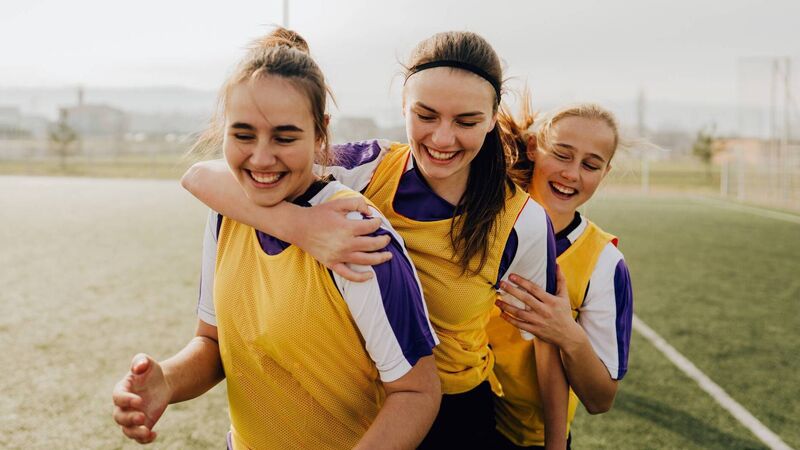
'We need to reframe ‘sport’: Just because she doesn’t want to play on her local football team doesn’t mean a girl isn’t sporty.' Picture: iStock 

RTÉ sports presenter Marie Crowe played soccer in Ennis, ladies’ football in Sixmilebridge, and camogie and community games. Growing up with four sisters, it was a sporting childhood.

Crowe says: “My father was a PE teacher and very encouraging of us five girls playing sport. He made sure we were all given the opportunity to play. Soccer in Ennis was a half-hour drive back then, but, whatever sport was on, it was very normal for us to try everything.”

But female participation in sport was less common then.

“You just weren’t seeing women play sport much. We had Sonia O’Sullivan, but you very rarely saw camogie or women’s soccer on telly.

“It was a time when more girls didn’t play sport than did. You had to work hard as a girl to play; it wasn’t a given. Not every girl was encouraged or given the opportunity to play, so it was the same group of girls on the teams for everything.”

Fast forward to today and Benny Cullen, director of research and innovation at Sport Ireland, says there have never been more teenage girls asking to play.

But Cullen says this increase must be put in the context of the growing number of 13- to 18-year-old girls in the population: In 2011, there were 171,000 girls in this age range, 185,000 in 2016, and 211,000 in 2022.

Cullen says: “The number of teenage girls in Ireland has grown by 23% between 2011 and 2022. So the challenge for teen girls’ sports participation is to increase it by about 20% relative to where it was 10 years ago.”

In primary school, whether it be community or extra-curricular sport, 97% of girls and 95% of boys participate once a week or more. But a gender flip occurs when children transition to post-primary, with 80% of girls and 90% of boys participating in sport once weekly or more often.

“And there’s higher fall-off in all-girls’ schools: One in three drop out of school sport between primary and post-primary,” says Cullen.

Why teens quit sports

The Children’s Sport Participation and Physical Activity Study 2022 looked at why young teens quit a sport. 

The first reason was loss of interest, which boys were more likely to report. The second was sport taking up too much time, equal for boys and girls. Schoolwork commitments came next, with girls more likely to report this.

Although sport being too expensive was reported by fewer teens as a reason for quitting, girls are more likely to cite it than boys. 

“This could link to the kinds of sports girls are more likely to [participate] in: Swimming, dance, horse-riding, gymnastics,” says Cullen, adding that sports participation dips in exam years for all teens. 

“Rather than dropping out of sport in exam years, we should be looking to create a good balance between time to pursue the academic and time [for] physical activity.”

Marie Crowe believes girls drop out of a sport because they do not get the same level of support to stay with it as boys.
“If a boy says, ‘I don’t want to play soccer anymore’, the parents are more reluctant to have him drop out.”

Anyone going through a difficult time in a sport needs encouragement, she says, and, sometimes, the difficulty may signify this particular sport doesn’t suit the girl. “She mightn’t be in the right sport for her. There is much you can do that involves exercise, but doesn’t require being on a team.

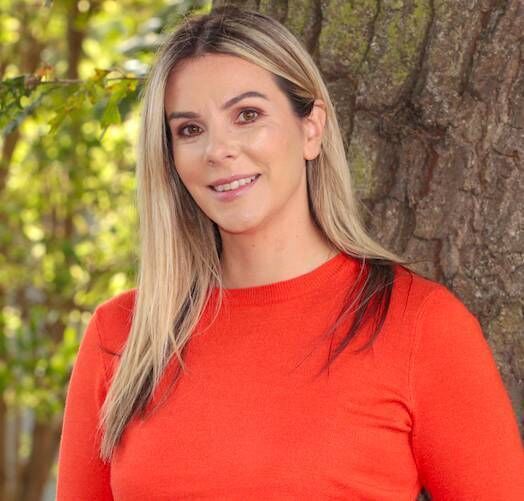
Marie Crowe: 'My father was a PE teacher and very encouraging of us five girls playing sport.'

“We need to reframe ‘sport’: Just because she doesn’t want to play on her local football team doesn’t mean a girl isn’t sporty.

“I know a girl who does baton twirling; she’s practising all the time. It’s about parents having an open mind and the creativity to find something that suits the girl.”

Cullen says if a girl is moving out of a sport, it’s not helpful to interpret it as giving up sport. “What she needs is support transitioning in to the next one.”

He advises keeping it interesting: “Best achieved by offering multiple opportunities to try different activities.”

He urges avoiding specialising too soon, because research shows that only 10% of people stay in the same sport long term.

“Most people transition through two, three, four different sports at different stages. It’s not a story of loyalty, but of diversity.”

Body taboos

Bethany Carson, women in sport manager at Sport Ireland, asks: “Does society feel men and boys belong in sport more than women?” Whether the answer is yes or no, she says sport has been very male-dominated for years. 

“We need to look at it through a female lens.” This includes creating openness around puberty and body image issues; taboo subjects, yet big barriers to female sport participation.

“If we can’t talk about these issues, how are we to support girls to navigate through them,” Carson asks.

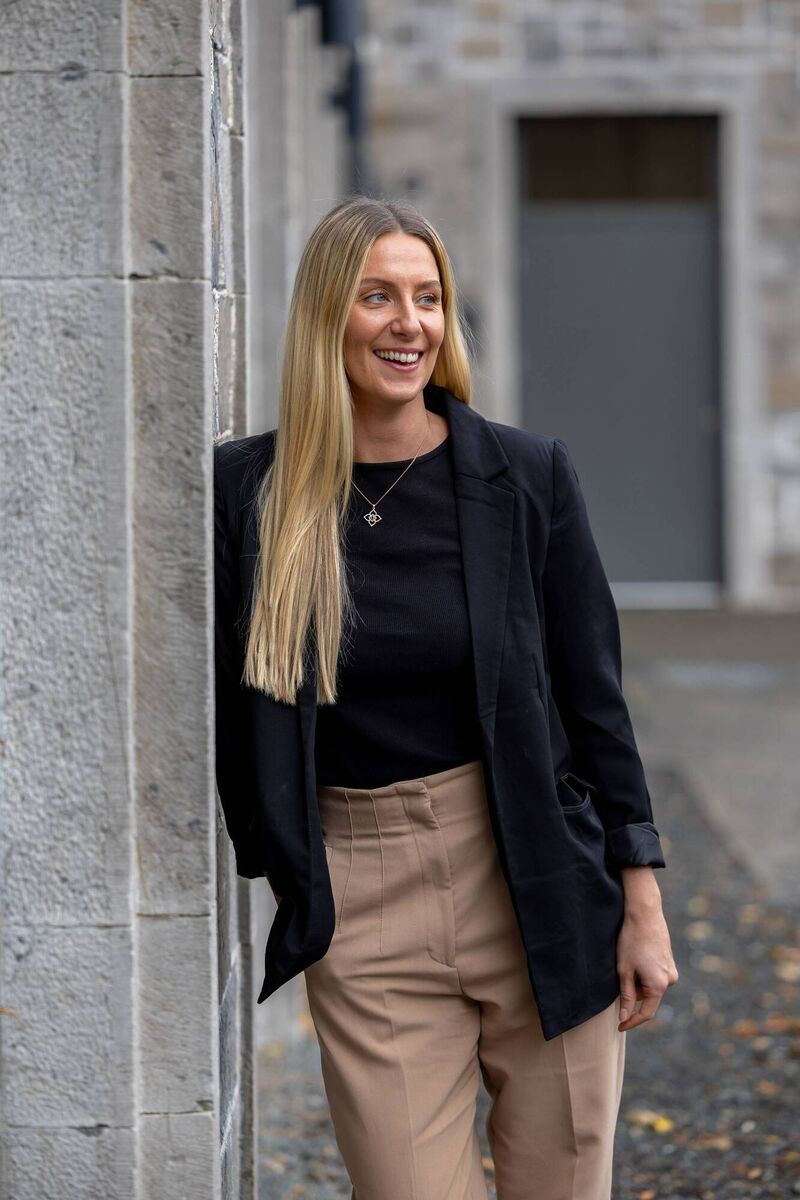
Bethany Carson of Sport Ireland, Photo: INPHO/Morgan Treacy

Supporting girls can mean dispelling unhelpful myths. “There are conflicting messages out there, especially on social media, about what you can and can’t do. Such as, ‘I’m on my period: I can’t do exercise’. Not true.

“Or, ‘I can’t perform to the best of my ability when I’m having my period’. Not true: Women have won Olympic gold medals while having their period.”

Carson emphasises the importance of educating girls about options they have around playing sport during their menstrual cycle. Through the Her Moves Campaign — a Sport Ireland initiative to inspire and support teenage girls to be active — girls are supported to track their menstrual cycle.

This builds their awareness of what happens to them that could be a potential barrier to sports participation.

“They’re able to prepare then,” says Carson. “For example, women often have [food] cravings. It’s about being organised and preparing food for the day. So, if you’re heading to your after-school sport and you get that impulse to eat, you’ve got your food ready and it’s healthy and nutritious.”

Carson highlights big pubertal changes that can impact how a girl feels about playing sport. “Breast development, acne, muscle-development: Girls experience a lot more taboo around these.”

Benny Cullen: 'Most people transition through two, three, four different sports at different stages. It’s not a story of loyalty, but of diversity.'

She points to one issue that has a practical solution: Education about sports bras. Approximately 80% of females are wearing the wrong-fitting one. “Not feeling [properly] supported affects how they run, their stride, their confidence.”

Sport Ireland research found ‘eight principles for success’ when encouraging adolescent girls’ participation in sport. These include ‘no judgement’: Taking away performance-pressure and giving freedom to simply play and move. 

“Yes, they want to achieve skills and do better, but winning the medal isn’t the be-all,” says Carson.


Another principle is to build on existing habits girls have beyond sport — for example, nail art, photography — somehow letting these have resonance in their sporting world.

Carson says: “Girls often paint their nails in the club colours; some programmes [encouraging girls in sport] bring in a nail technician to teach them how to do nail art.

“It’s about playing on the feminine flair that can be part of sport for girls.”

Yet another approach is to ‘champion what’s in it for them’, helping them see sport as more than just about health, or being the best or fastest.

Carson says: “There are lots of skills beyond sport: Leadership, communication, team-bonding, time-management. I was a competitive swimmer. Learning to manage pre-competition nerves is something I leaned on [throughout life].”

Crowe — mum to three sons and one daughter — would like 13-month-old Jessie, if she’s into sport, to have the same opportunities as her brothers and to have access to good coaches and facilities. 

She believes whatever motivates a girl to play sport should be honoured. “Some girls want to play football, others want to be footballers.

“It’s important to recognise that just wanting to play football with your friends is as valuable as wanting to play for Dublin.

“There’s a level, a sport for everybody; it’s about finding what sustains you, so you enjoy it, and there’s no feeling of pressure.”

x

More in this section

Cookie Policy Privacy Policy Brand Safety FAQ Help Contact Us Terms and Conditions

© Examiner Echo Group Limited