‘KPop’ girls show it’s OK to live with your demons
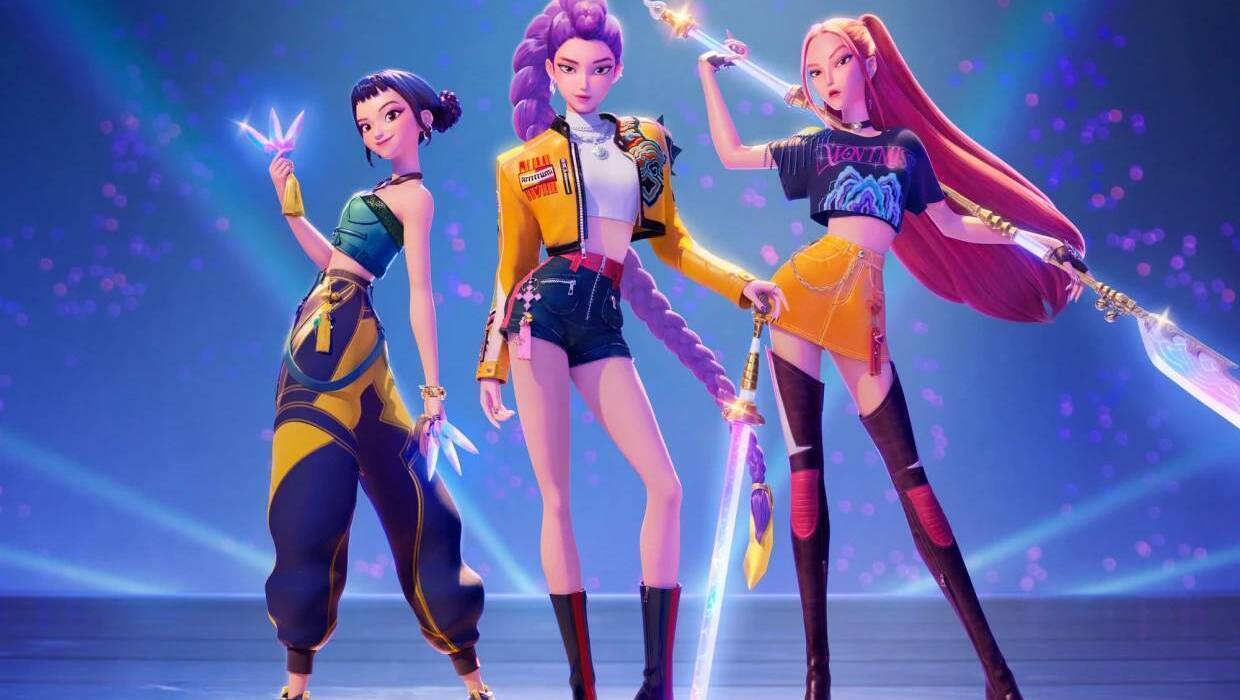
KPop Demon Hunters: The characters are not only hugely popular with viewers, but the movie is praised by critics for its themes of friendship and resilience.
In a world where we are bombarded by content, is a unicorn — that rare thing with universal appeal. The characters are not only hugely popular with viewers, but the movie is praised by critics for its themes of friendship and resilience.
Rumi, Mira, and Zoey are a KPop girl group called Huntr/x (pronounced Huntrix). On the side, the trio are also demon hunters, tasked with protecting the world from a group of demons disguised as a rival KPop boy band, the Saja Boys. What follows is a showdown between the Saja Boys and Huntr/x, where the fate of the world is at stake.
The girls are trained in martial arts and the fight sequences showcase their skills, but humorously for a younger audience. With their tight friendship, singing and performing chops, and physical abilities, it’s little wonder the trio have proven such a hit with young girls.

Child psychotherapist Bethan O’Riordan says KPop Demon Hunters has given children inspiring characters and empowering scenarios to experiment with in real-life play.
“Playing, for a lot of children, has gone online through the likes of iPads or gaming with their friends,” O’Riordan says.
“ has given children, maybe more so girls, something new that they can play in real life. Play is the language of children. It’s how they figure out friendship, how they act things out, how they try to become something else. With , they can ‘play’ characters like Rumi, Mira, or Zoey — actual characters they can become.”
And become them they have, in their droves. At my seven-year-old daughter’s Halloween school disco last year, I lost track of the number of Rumis (the lead character) who strode into the hall.
And when the DJ played 'Golden', the runaway hit from the movie, the scenes were glorious: Dozens of young girls, arms around each other, jumping up and down, screaming the lyrics, ‘We’re goin’ up, up, up, it’s our moment. You know together we’re glowin’. Gonna be, gonna be golden.’
The soundtrack is a key part of the movie’s success, with anthems like 'Golden' and girl-power battle cries like 'How It’s Done' topping charts around the world. 'Golden' also took home the best song award at the Golden Globes and has been nominated for song of the year at the Grammys this year.
For my young daughter, Daisy, the characters’ physical strength is highly appealing. “They’re so strong, and they’re so good at fighting the demons,” she says when I ask her what she likes best about the movie.
“In therapy, we talk about the different parts of a person. And, for me, this movie is a really good representation of that idea,” says O’Riordan. “So, we’ve got the part that wants to hide, we’ve got the part that wants to fight the demons, we’ve got the part that can be an idol, and what the movie shows is that you can be a bit of everything.
"Having self-doubt doesn’t stop you from having a great life. It’s just one part of your life. And this is something that’s great for kids to see and great for them to know, that if you have a problem in one part of your life, you can still enjoy other bits of your life.”
What does well, says O’Riordan, is emphasise friendship and a support system. “We all have ups and downs, we all struggle. What’s helpful about this movie is its compassionate approach to those struggles: Rumi’s friends are there to help her get through. If we teach kids to fight their emotions, then it tells them they have to be tough or to just get over it.
Normoyle says she is conscious of trying to build her daughter’s resilience “by praising her for taking on a challenge or for persisting with something. She’ll often then make the connection back to the characters she admires doing similar things.”

Psychotherapist and author Stella O’Malley says movies can play an important role, particularly in helping parents connect with their children and start conversations about difficulties they might be having.
“Films like , , and are ideal for parents who are worried about their children. They can offer them a way in,” she says.
“Often, if you kneel in front of your child and ask what’s wrong, they might not respond to that. They’ll either go blank or feel scared that their mother or father thinks things aren’t OK. And so a film like [ ] opens the door. It allows you to sit beside them and chat as the movie is playing, or, afterwards, you might say something like, ‘That kind of reminds me of x or y’. It’s the way in.”
O’Malley says she will often suggest specific content or films for her clients to watch if they are concerned about their child. “I would say, watch this piece of content or this movie first on your own and then watch it with them — don’t let them know you’re watching it a second time.
“By doing this, you’re ready, you’ll know what you want to say and when you want to say it. For example, with and its theme of friendships, you could easily pause it and say, ‘Do you ever think that maybe some of the friendships you’re experiencing, they’re not as loyal as we’re seeing here?’”
In this way, says O’Malley, you’re not necessarily pointing something out and saying, “Isn’t this great?”; you’re pointing to this group of loyal friends and suggesting that this is something your child may not be experiencing in their own friend group. Exploring emotions and enabling conversations about their storylines make movies a valuable tool in any parent’s arsenal.
“Having emotions in the movie is really great, and I think it can be a nice way for parents to talk about scenarios and feelings,” says O’Malley. “But it’s really the in-the-moment stuff of how the parent responds to the child when they’re struggling that has the most impact.
“ normalises emotional struggles, but the role of the parent is to keep that normalisation at home. There’s a lot for everybody to learn.”

CONNECT WITH US TODAY



Be the first to know the latest news and updates