WHEN historians look back at 2025, I suspect they will describe it not merely as a year of technological acceleration but as a psychological turning point.Ā
As a psychotherapist and a parent, I have experienced the past year less through headlines and more through the quiet confessions in my therapy room and around my kitchen table.Ā
Big statements like āI donāt know who to trust any moreā; āI might seem connected to everything, but I feel close to no oneā; āI feel confused by what I see, that I donāt know what to believeā, are just some examples of the statements I have heard that capture young peopleās struggles in 2025.
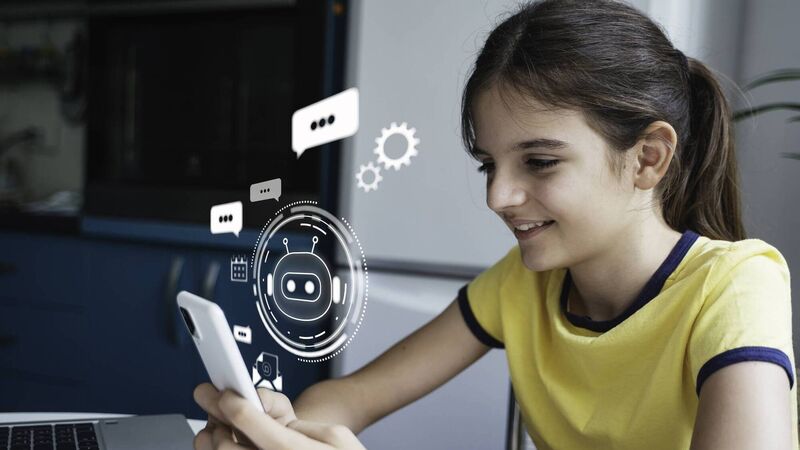
The main reason these issues continue for young people is advances in AIĀ (artificial intelligence). Although AI did not appear in 2025, this is the year it accelerated.Ā
What changed was not only what AI could achieve, but also how deeply and widely it became part of our emotional lives. In little time, it became our tutor, companion, editor, entertainer, therapist, and invisible decision-maker.Ā
For parents, the question should no longer be whether our children will engage with AI, but who they will become because of it.
AI promised efficiency, personalisation, and support. And in many ways, it delivered. Children learned faster, and content adapted seamlessly to individual preferences. Yet, as a therapist, I am trained to notice not only what soothes but also what quietly erodes.
Our reaction to ChatGPT is eerily similar to our responses to the iPod and Facebook over a decade ago. We marvelled at seeing pictures of our cousins in Australia, were impressed by how a little iPod could hold up to 1,000 songs, and we are similarly romanticised by how ChatGPT can create an image on demand and write our essays for us.
But, as with social media, the romanticised view of these new technologies may change over time.Ā
Emotional monocultures
One of the most profound psychological shifts of 2025 was the move towards radical individualisation. AI infiltrated our childrenās lives faster than any adult could. It mirrored their language, predicted their desires, curated their worlds, and removed friction. On the surface, it felt compassionate.Ā
Why force a child to struggle when a system can adapt perfectly to them?Ā
But what AI platforms donāt understand is that development requires imperfect conditions. Children grow through being stretched through negotiation, boredom, disagreement, and an awareness of other peopleās needs, limits, and perspectives that differ from their own.Ā
AI individualisation, when unchecked, creates emotional monocultures: inner worlds that feel safe, optimised, and controlled, yet fragile when exposed to human complexity.
In my therapy practice this year, I saw more children struggling with frustration tolerance and social anxiety than ever before. Not because they faced rejection, but because they lacked practice. When everything is customised to the individual, the shared middle ground, which is the space where relationships grow and flourish, begins to diminish.

We must ask whether the continued use of AI platforms, designed to agree with you no matter what, will result in adult children who are acutely aware of how they can be accommodated but unaware of their responsibility to create belonging.
The other significant issue emerging in 2025, especially among young adults, was loneliness. Although loneliness is an age-old experience, in 2025, it became a prominent concern for young people.Ā
In my therapy rooms, they talked about feeling lost, empty, and rudderless. Loneliness in 2025 was quiet and ambiguous. Young people were rarely truly alone in the traditional sense, as they described constant interaction through messaging, gaming, creating, and consuming. However, many reported a hollow quality to their connections, leaving them feeling unfulfilled.
AI companions provide lonely young people with a highly responsive system that is always available and vulnerability-free. These bots do not misinterpret cues, withdraw, disappoint, or need repair. However, relationships are not defined by constant affirmation; they are defined by rupture and repair. Without that cycle, emotional resilience weakens.
The Age of Illusion
A more worrying unintended consequence of AI is the erosion of trust between people. This is perhaps the most destabilising psychological effect of 2025.
Thereās growing uncertainty about what and who to trust. The rise of convincing deepfakes, AI-generated voices, synthetic video, and automated persuasion has led us into what many now call the Age of Illusion. This shift has children asking questions that previous generations never had to consider. They now ask: āIs this real?ā āDid they actually say that?ā.
We must recognise that when perception itself becomes unreliable, anxiety rises.Ā
Trust is not an abstract value ā it is a felt sense within the body.Ā
When that sense is undermined, hypervigilance follows. For adolescents already navigating identity formation, the absence of trust is especially destabilising. If images can be fabricated, narratives manipulated, and personas endlessly curated, how does one know who to be? Or who to believe in?
Parents are also facing challenges. Authority, whether parental, institutional, or governmental, seems less solid. When algorithms appear to āknow betterā, human judgement is quietly undermined. Nonetheless, trust cannot be delegated. It must be built through consistency, accountability, and shared understanding.
The biggest challenge for parents in 2026 will be maintaining a sense of reality. Children need adults who can say: āThis is real. This is happening now. This is us, together.ā
They require embodied anchors in a world where images drift free from truth. They need rituals, rhythms, and relationships that cannot be simulated, and my concern is that we are not doing enough to provide these in-person opportunities for young people to gather.
In therapy, I advise parents to concentrate less on controlling content and more on fostering presence by eating together without devices, walking without headphones, and talking without multitasking. These small moments may seem insignificant, but they train the nervous system to recognise genuine connection.
The antidote to loneliness is connection, and we need to give young people every opportunity to gather in person and build these connections that will be vital for their psychological development over the next decade.
Setting a good example
As 2025 draws to a close, I want to advocate for an AI counter-movement. I believe young people are yearning for physical gatherings. Many of the teenagers I speak to are craving spaces where they can just be without being recorded or judged. But we, as adults, need to set that example for them.
A problematic issue that arose in 2025 was the concept of Jomo. While most of us are familiar with Fomo (Fear Of Missing Out), the more modern version is Jomo (Joy of Missing Out). We saw a trend in which people celebrated when plans were cancelled and glorified avoidance as cool or aspirational.
If I may ask one thing of parents in 2026, please stop doing this. You are sending your child the message that social connection is a chore and a burden, which is the last thing this lonely generation needs to hear.
I do not see 2026 as a year to fear, but one that will ask us to make choices.
Technology will continue to advance. Illusion will become more convincing. Personalisation will grow more seductive.
But meaning has never come from convenience. It has come from commitment, showing up, being known and knowing others, and from sharing physical space, time, and vulnerability.
As parents, our task is not to shield our children from the future, but to root them deeply enough in the present that they can meet what lies ahead without losing a sense of themselves. To teach them that while machines can simulate connection, only humans can sustain it.
- Dr Colman Noctor is a child psychotherapist
CONNECT WITH US TODAY
Be the first to know the latest news and updates