THE song You Are My Sunshine was sung every day by Leona and Fintan Lacey to their newborn for the six weeks he spent in a neonatal intensive care unit (NICU).
The Co Louth-based parents never expected Sunnie would arrive 10 weeks early and spend time in NICU, first in the Coombe, then in Our Lady of Lourdes Hospital, Drogheda. Leona says: “In the early days, I wasn’t allowed to change his nappy or feed him. He was six days old before I was allowed to hold him. There’s only so long you can sit there and look at your child in an incubator.”
Reading and singing to her son became a way for Leona to pass the time and to bond with him. “I asked my nephews and nieces, aged from 10 down to two, to bring in their favourite books, so I could read to their cousin.”
Sitting in NICU, reading books by Richard Scarry and Roald Dahl to Sunnie, Leona was approached by Deirdre Bradley, a speech-and-language therapist and co-ordinator of the BabyTalk programme. “Deirdre said she’d seen me with Sunnie and she’d love to talk to me about this new initiative, called BabyTalk. I said, ‘Of course’… She gave me a list of books I could read to him, simpler books with repetition, and a lovely book called On the Night You Were Born. I bought all the books on the list, and we read them all.”
A HSE Spark Innovation initiative, BabyTalk develops the language skills of all babies admitted to neonatal intensive care units by focusing on three elements: Singing, reading, and talking. Piloted in Drogheda Hospital over two years, it recently launched nationwide, with resources and mentoring offered to all 19 NICUs across Ireland.
Exposure to singing, reading, and talking is essential to build language, literacy, and social-emotional skills at a critical time in a child’s life, Bradley says. Observational studies of pre-term infants show that the amount of speech that babies experience in the NICU is related to language outcomes at two years old.
Studies have shown, Bradley says, that exposing babies in NICU to speaking, singing, and reading improves their neurodevelopmental outcomes and cardiorespiratory stability, while also enhancing parental and infant mental health. “We say to parents: ‘It’s never too early to use your voice to help your baby’s development’.”
But premature or unwell infants are at increased risk of language delays. A 2023 study, comparing language exposure of ‘typically developing’ babies and pre-term infants in an NICU setting, found that pre-term babies were exposed to five times less parental language per day compared to those not admitted to NICU.
Not alone that: A 2013 study found that pre-term infants had significantly more exposure to electronic sounds and airborne language than to adult language.
Bradley says: “Babies in NICU are hearing a lot less parental language and voices than if they’d gone straight home from hospital. They’re missing out on having family with them 24/7. They’re hearing the beep of machines, environmental noise. We’d have babies up to 100 days in NICU: They miss out on key sounds and vocabulary, and on the bonding and settling effect of family’s voices, the voices of [siblings], of grandparents.”

It’s good to talk
Before starting BabyTalk in Drogheda NICU in 2023, an initial audit of 33 babies found their exposure to singing, reading, and talking was significantly lower than international research recommends.
Some 44% of babies were spoken to directly by a parent, four per cent were read to by a parent, and none were sung to by a parent. Bradley says: “We measured how many sentences the NICU babies were typically hearing. On average, only six sentences per baby per day were directed specifically at the baby.”
BabyTalk was developed by a cross-functional team to increase the quality and quantity of speech exposure. Speaking about how it evolved in Drogheda NICU, where 500 babies a year are admitted, Bradley says there’s an automatic opt-in. “Every baby admitted is enrolled in BabyTalk. It’s now very much embedded in the routine there.”
A post-project audit of 30 babies confirmed BabyTalk’s impact, with 77% of babies now being spoken to directly by a parent, 53% being read to, and 27% sung to. This amounted to a more than six-fold increase in talking, reading, and singing to NICU babies.
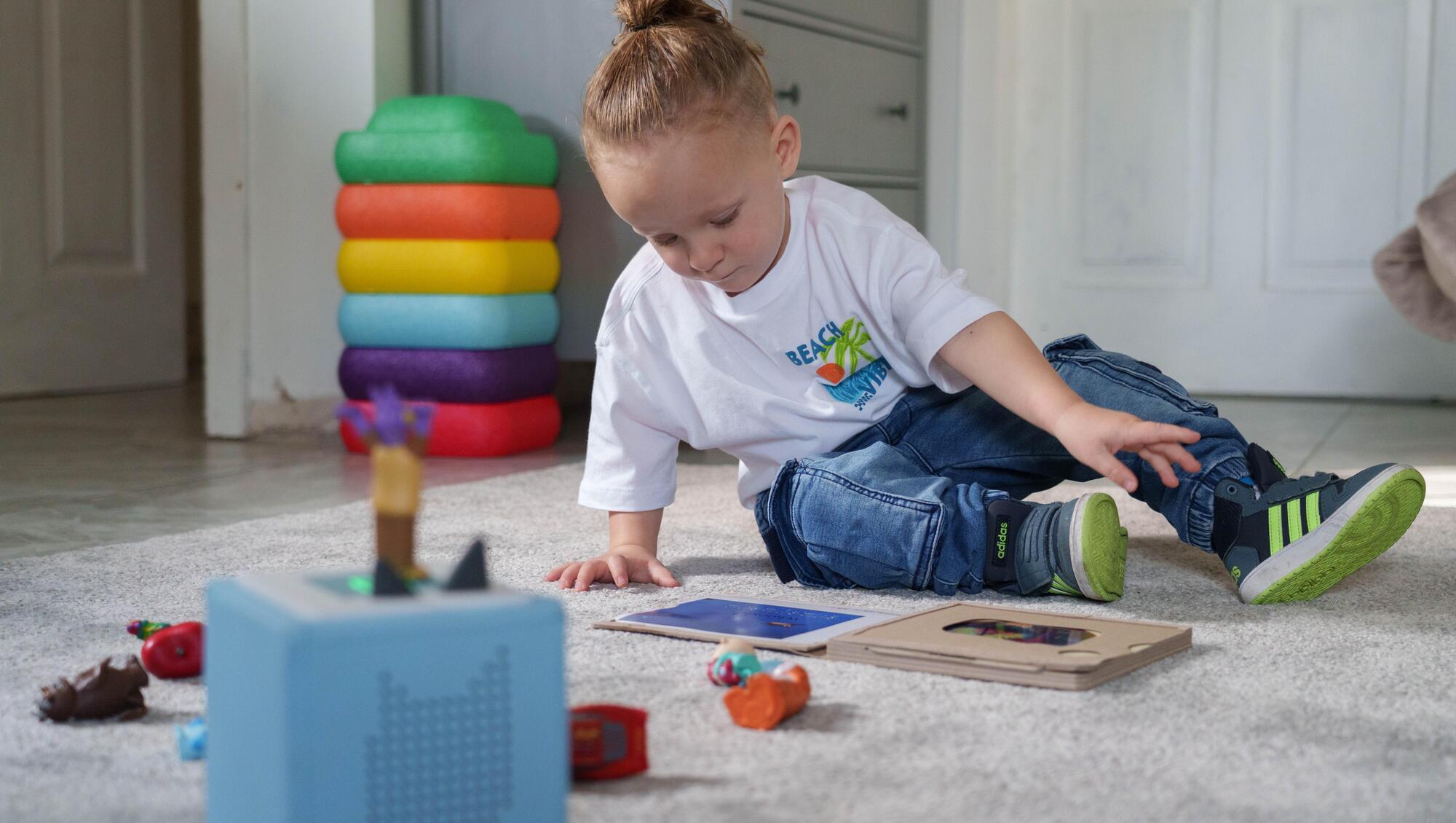
A key priority was to improve access to books and music boxes: Tonies storytelling and lullaby boxes were introduced in each NICU room. Bradley says: “These are pre-recorded, baby-friendly stories. Parents can also opt to record their own made-up story or read a story for when they can’t be there. We put on the lullaby music to soothe the baby if they’re having a blood test or any time they’re unsettled.”
Parents are encouraged to read to their babies at least once a day, as well as to sit and talk to them. Initially, parents often say: ‘But my baby can’t talk yet.’ “We explain that a baby’s brain is developing and responding to the parent’s voice; they can hear their parent’s voice — it’s helping their long-term learning of words, their language development.”
Parents can be self-conscious when reading and speaking to their babies with others around, Bradley says. “But very quickly they become more comfortable taking the lead with their baby,” she says, adding that the initiative changed the NICU atmosphere. “Before BabyTalk, it was very quiet, parents sitting quietly, not knowing what to do. With BabyTalk, they were reading, and if they were singing, the staff would be singing along, too, or humming. There was a lot of talk between parents and staff about the particular books. NICU babies were hearing a lot more talk flying around them.”
Bradley has seen a father read to several babies at once and a doctor pull up a chair and read The Gruffalo during a quiet time in his day. “It has helped the environment for everybody.”

Soothing words
Two years old now, Sunnie still loves the books he first heard in NICU. “One of them we still read at bedtime. He knows it off by heart,” says Leona, recalling how the BabyTalk initiative helped her feel less embarrassed about reading and singing to her baby in front of others. “You feel a bit silly reading and singing to your child when someone’s over in the corner looking at you, and the nurses are in and out, and other families are sitting, chatting together or on their phones. I used to crouch over and whisper to him.
“But Deirdre being there was really encouraging. I realised: Once you have a baby, you just embrace the silliness. And if you see one person doing it, you feel more encouraged. The time in NICU is a worrying time, so BabyTalk was very positive to focus on.”
Bradley says parents reported feeling more comfortable speaking and singing with their babies, because BabyTalk made it the norm. “They felt more connected and bonded with their baby. They felt less helpless — using their voice to speak and read, they were noticing their baby becoming more alert.”
BabyTalk also had a positive impact on parental mental health. “The improved connection reduced stress levels. Parents said it gave them something to focus on besides their baby being unwell or early. And the babies were less unsettled, more content during difficult procedures — they were being soothed as they were read or talked to.”
BabyTalk also involves collaboration between hospital-based teams and libraries, with community libraries continuing the benefits when families are discharged from hospital. “For the initial programme in [Drogheda Hospital], we offered a library card and membership to each of our NICU babies on discharge. This opens up another world of reading and learning beyond the hospital.”
The aim, Bradley says, is to engage local libraries across 26 counties. “Local libraries will have specific NICU graduate events, such as song-and-storytelling for vulnerable babies.”
Leona — expecting twins in March — says milestones are not the be-all and end-all. But with Sunnie having arrived at 29 weeks, she and her husband are always conscious of “giving him 110%, so he’s where he’s meant to be”.
She says Sunnie has a lot of language, a lot of words. “He’s putting them together piece by piece. He’s very interested, very curious — if I move furniture, he’s asking why. He picks up books and ‘reads’ them. As a result, he knows words you wouldn’t expect.”

Subscribe to access all of the Irish Examiner.
Try unlimited access from only €1.50 a week
Already a subscriber? Sign in
CONNECT WITH US TODAY
Be the first to know the latest news and updates