The kindness we seek in strangers starts in our own homes
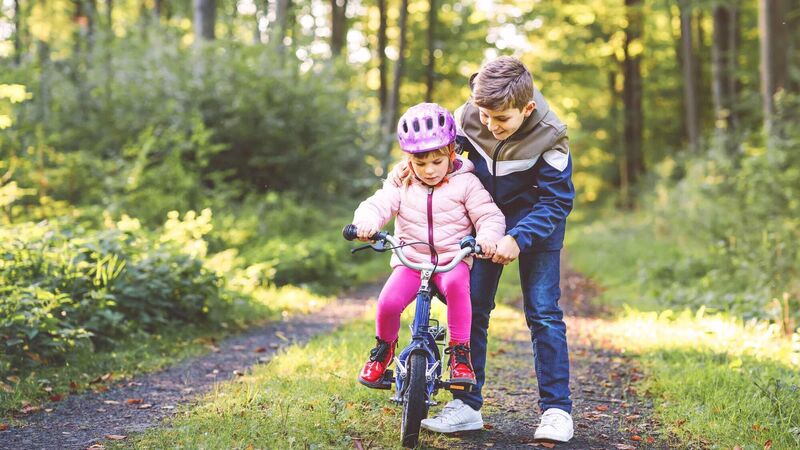
If we want our children to be kind to others, we must start by teaching them to be kind to themselves and their siblings
The kindness we seek in strangers starts in our own homes

To learn more about encouraging kindness in our children, we asked our parenting experts for their advice.


A GIRL aged nine grows her hair and donates it so children with cancer can get wigs. A seven-year-old gives her new Christmas decoration to her granddad, who is unwell. A teenager keeps a protective eye on his younger, non-verbal, autistic brother, often speaking on his behalf.

These are a few heart-warming examples of children’s kindness submitted to us at the Irish Examiner last year for our Little Acts of Kindness initiative in aid of SVP.

Once again, we are inviting parents, relatives, coaches, teachers, and babysitters to share examples of children being kind. And no act is too small, from sharing their favourite teddy with someone sad to always helping out at home.

On Saturday, December 20, we will publish as many names and stories as possible, with all names entered into a draw for a voucher and each child will get a complimentary Certificate of Kindness. The Irish Examiner also make a donation to SVP in recognition of these acts of kindness.

Psychotherapist and author Dr Joanna Fortune is a fan of acts of everyday kindness.

Psychotherapist and author Dr Joanna Fortune is a fan of acts of everyday kindness. “I’ve seen children pick up a dropped toy and return it without prompting. Or, just recently, a small child stopped to hold the door for the person behind them, without verbal prompting, simply mirroring the action the adult ahead of them had done for them.”

To learn more about encouraging kindness in our children, we asked our parenting experts for their advice.

How soon should you start cultivating kindness in your child?

“As soon as they’re born,” says child and adolescent psychotherapist Dr Colman Noctor. “Parents need to role model kindness for their child, show them what it is and how to be kind, but without expectation. They’ll be able to understand it, mimic it, or emulate it until they’re older. Once children see kindness all the time, they’re better able to do it.”

Fortune agrees: “Children cannot be too young to experience kindness; it’s by experiencing it they learn how to practise it themselves as they grow up.”

Dr Richard Hogan, psychotherapist and clinical director of Therapy Institute, says it is crucial that parents double down on kindness when siblings come along. “I work with many families where the sibling relationship is fractious and conflicted.”

As a dad to three girls, Hogan wanted to ensure they would be kind to each other. “I promoted it from a very young age. When I’d be out in the shop with Hannah, I’d say to her, ‘What could we get for Lizzy?’ Thinking about what Lizzy might like got Hannah thinking about her sister in a different way

“And when we’d get home, I’d say, ‘Lizzy, Hannah got this for you. She didn’t want to leave the shop without this for you’. And Lizzy would run over and give Hannah a big hug.

“They’re 14 and 11 now and I still do it, and they smile because they understand what’s going on, but they’ll still give each other a hug. And there’s a lot of kindness in how they look out for each other.”

Richard Hogan. Photograph Moya Nolan

Does kindness come easier to some children?

Hogan believes there can be a predisposition towards empathy and kindness and it might not occur in all children in a family. “If one of your children’s struggling with it — and this is normal — it’s about having a conversation.

“The adolescent viewpoint, for example, becomes quite narrow: The world revolves around them. It’s really important to get them to think about others, how they’re being perceived by others, how they’re interacting with others.”

To encourage empathy, Hogan recommends asking questions such as, ‘When you said that, what were you hoping for? Were you hoping your sister would feel awful about herself? Why would you want her to feel bad about herself?’

Pictured at Waterford is Colman Noctor. Photograph: Patrick Browne

Noctor says temperament often plays into whether children find it easier or not to be kind. “If a child has a calm temperament, they can often see opportunities to be kind, more than others. Whereas, a child very fiery temperament may miss those opportunities.”

He believes, however, that we can cultivate kindness, teach it, and encourage it in children.

Fortune says, as with adults, some children are more sensitive in nature, more in tune with others’ thoughts, feelings, and experiences. “This can lead to them being more overtly responsive to others in a way that seems kind.”

But highly sensitive people are prone to emotional overwhelm, which can result in defensiveness or even withdrawal from others.

Fortune says: “Being an innately good listener, always tuned in to others’ feelings, can burn someone out and that doesn’t result in kindness.”

She says a more accurate perspective is, “We are all, with perhaps some rare exceptions, capable of practising kindness towards ourselves and others when that capacity has been nurtured within us by kind others.”

How can we encourage kindness in children?

Hogan says there is no greater tool for promoting kindness in your child than by modelling it yourself, by being empathetic and supportive of other people.

“It’s very easy to treat people you need something from nicely. But how you, as a parent, interact with people you need nothing from is a sign of your character. If you treat [such] people poorly, you can’t expect your children to behave differently.”

Hogan says one of the worst things a parent can do is speak negatively about others — for example, laughing at someone because of their weight, or because they’re lowly paid. “Our children are looking at us and then think this is a way to behave towards others.”

Noctor sees an onus on parents to promote kindness, but with awareness of true kindness. “The only intention in true kindness is to help the other. It’s not done for recognition or reward. Giving a euro to a homeless person and taking a picture of yourself doing it for Instagram isn’t kindness: It’s performative.”

He says kindness is a broad term. “It’s an openness to things. Listening to somebody is kind. So is being courteous, welcoming, and supportive. It’s not just about giving something to somebody. It’s openness to wanting to help another human being, wanting them to feel better.”

He encourages parents to ‘catch’ their children being kind, so they learn that, ‘When I do a kind thing, it makes me feel good, and other people around me seem to like it’.

Hogan says: “Acknowledging them in those moments of kindness, they’ll want to do more of it. Whereas, if their kindness goes unnoticed, they’re less likely to keep doing it.”

Fortune urges parents to model kindness towards themselves. “Model good self-care; speak kindly to and about yourself. Our children take their social, emotional, and behavioural cues from us.”

Hogan says we can be very unkind and unforgiving to ourselves. “We can speak so [harshly] to ourselves. When I’m working with teens, I’m always saying, ‘Would you speak to me like that?’ They’ll say, ‘Jeez, no!’ And when I ask why not, they’ll say, ‘Because I like you’. And I say, ‘Shouldn’t your responsibility be to like yourself. How can you like others if you don’t like yourself?’”

How does it benefit children to be kind?

“They’re happier for it; they experience the fullness of life,” says Hogan. “Caring about other people, about humanity, sharing and being complicit in this journey through life, there’s no greater endeavour.”

Being kind is not just a win for humanity, he says. “It’s a win for us. When you’re kind, you’ve much more potential for joy in your life.”

Noctor says kindness makes us feel better about ourselves. “When someone turns to you and says, ‘Thank you’, and means it, there’s no better high than being the recipient of that. It’s really good for your mental health when other people acknowledge your kindness in a meaningful, authentic way.”

Fortune sees kindness as a pro-social gain for a child. “They feel good observing how they’ve made someone else feel good. It can strengthen confidence, self-esteem, self-efficacy, and observational skills, as well as social skills, [like] empathy and friendship.”

  • To enter a child’s name into Little Acts of Kindness, see  www.irishexaminer.com/lifestyle/parenting/arid-41748582.html
  • Richard Hogan is founder of charity EMBRACE Badjao: .embracebadjao.com/who-are-we

More in this section

Cookie Policy Privacy Policy Brand Safety FAQ Help Contact Us Terms and Conditions

© Examiner Echo Group Limited