Colman Noctor: Are young people underestimating the power of striving to achieve a goal?
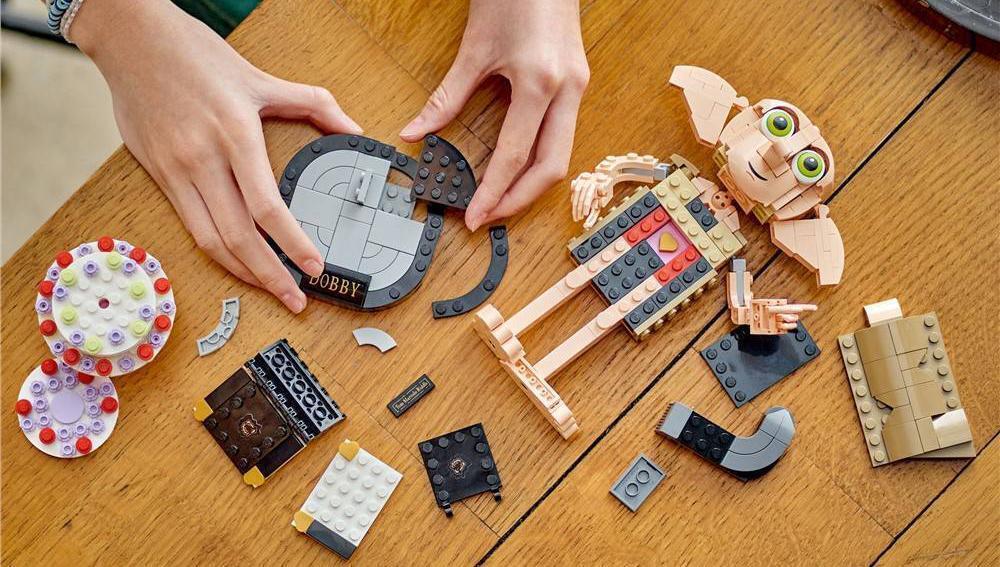
Dr Colman Noctor: "This experience led to me having a conversation with all my children about the importance of the process and trying to get them to value their route to somewhere or something as opposed to a sole focus on the destination or end product." LEGO Harry Potter Dobby the House-Elf Figure Set

Despite never being a big Lego fan as a child, my 11-year-old daughter has recently shown an interest in it, so we often play with it together. Her older brother never showed an interest in it, so this is my first experience doing this activity, which is really enjoyable. Neither of us engage in any deep conversations or anything while we are making Lego, we mainly discuss and dispute where various pieces should or shouldn’t go and playfully enjoy when either of us misunderstand the booklet of instructions and get it wrong. Neither of us is especially good at it, which adds to the fun of the challenge — and thankfully, neither of us takes it or each other too seriously.
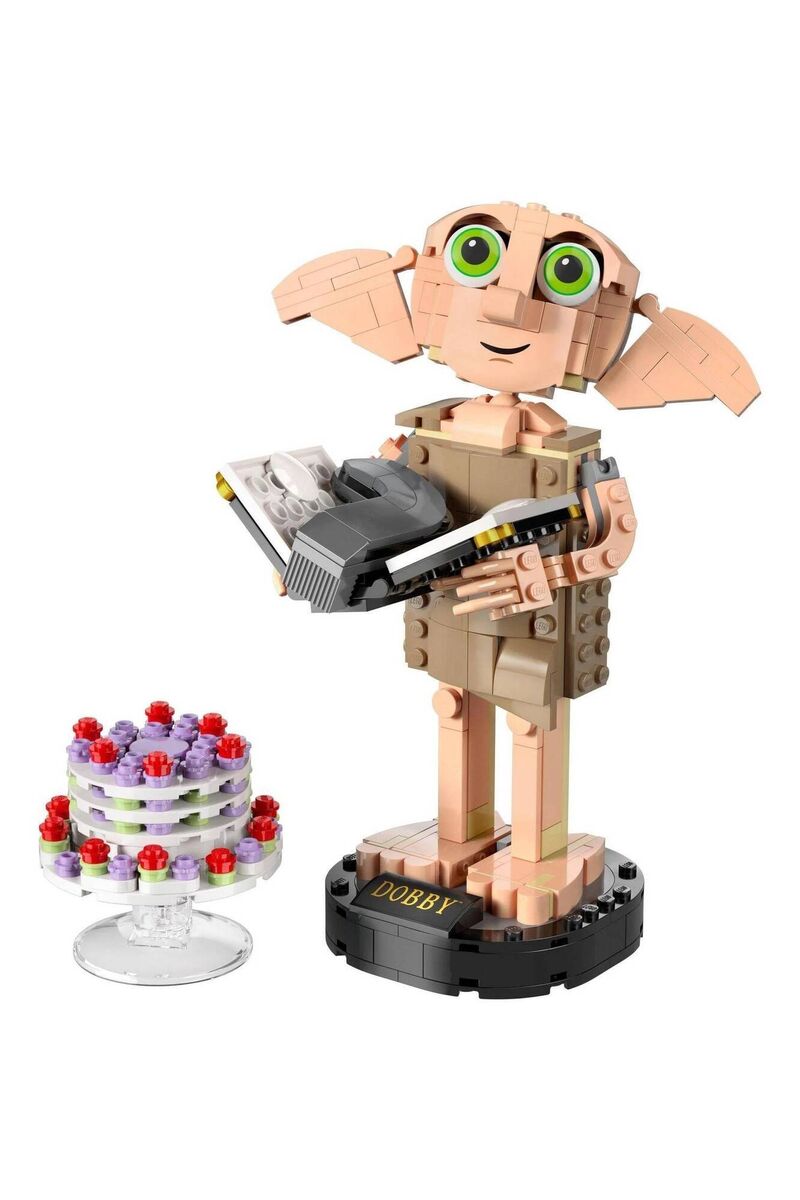
Last week, we were assembling a Lego model of the Dobby character from . After a couple of hours, when we completed the piece, we both did our customary ritual of sitting back, admiring it and congratulating each other on a job well done. My daughter said, “That’s a pity”, to which I gave a confused look, and she said: “It’s a pity that it's finished because I enjoyed doing that”. I could relate to what she said because that’s exactly how I felt. My daughter’s comment inadvertently aptly captured the existential concept of how sometimes the process of doing something is more important than the result.
In our world of ‘touch of a button’ or ‘swipe of a screen’ immediacy, we are often allowed to skip or minimise the process of things. Whether it’s online dating apps, online food delivery apps, or the capacity to work from home, we can now skip many of the rituals that went before.
With the capacity to find a date, order a meal and complete a day's work from your sofa at home, there is an ever-growing risk of disconnectedness from each other, but is there also a risk of becoming disconnected from the process? I worry that this ability to skip the process of the effort involved in working together to achieve something as well as the human connection involved in the teamwork aspect. In a future that looks forward to a world of generative AI (Artificial Intelligence), is there a risk of further disconnectedness from the joy of a process? And are children missing out on a really important developmental experience?
My daughter’s comment about our Lego activity reminded me of Chris Guillebeau’s work, where he suggests that we should not focus on the pursuit of happiness; instead, we need to be aware of the happiness involved in the pursuit. There is something important in this message. Having something doesn’t teach us much, but getting something does. We often apportion value to things according to what they cost instead of what sacrifices we had to make to acquire them, and there’s something important in that knowledge.
There is a misleading narrative that young people are being exposed to, which says that we should be passionate about things all the time, but in reality, to master something, we need to go through a sometimes tedious process where passion plays no part. I play a bit of guitar, and I tried to teach my son to play some years back. He gave up quickly because he said he was ‘no good at it’. He had played for about 30 minutes. The reality is that if you want to master anything like a musical instrument, you need to repeat the same action over and over again, and when you are trying to play ‘three blind mice’ at the start, believe me, there is little or no passion involved. It is perseverance that is called for... an awareness that this process will reap some benefit with further effort and time.
I speak to many young people in my clinic who describe a lack of purpose or meaning. When they talk about their lives, they seem to ‘have’ a lot already, so the emptiness they feel can be hard to identify. But perhaps meaning and purpose are not achieved by having something; instead, they emerge as we pursue, seek or work towards something.
I wonder if contemporary life has created a misunderstanding or under-appreciation of the ‘process’, which means young people expect more immediate outcomes and dismiss the potential value in the achievement process. This can lead to unrealistic expectations of life and an unmerited amount of disappointment that can occur when things don’t turn out as we hope.
I wonder if younger people are underestimating the power and importance of striving to achieve a goal. There is a belief that we should be able to skip the process and move straight to the end result. Many young adults lament that they are not further on in their careers when they are only in their early 20s. I often remind them that careers are hard and a sense of accomplishment can be achieved in the process of working hard.
When I chat to young people about their goals and ask them what they want to do or to be, I follow that question with a further query about ‘what are you willing to sacrifice to get that?’. Many of us may want to be a rock star and play arenas, but we are not willing or able to sacrifice what is required to achieve it. If I want to be a rock star I need to learn how to play an instrument very well and play a series of small bars and clubs and pack up the gear every night, be there early to set it all up, then take it all down afterwards and pack it in the van, and do the same the next night.
Often it is the sacrifices that turn us away from choices like that. But an awareness that those sacrifices exist is important. They are part of the process. They shape us and provide us with the learning required to progress and develop.
As I have gotten older I have realised that the end product is less important than the journey or the process. I have always loved cars and would change my car almost every year and for six months I would research and visit garages looking at my options. As time has progressed I have realised that maybe I don’t love cars, I love the process of buying a car. As soon as I would buy any car, regardless of how nice it was, I would begin looking again. This wasn’t the pursuit of happiness, this is the happiness of the pursuit.
Which was much like what my daughter observed with our Lego exploits. The goal was not to have a finished piece of Lego, it was the process of building it. Incidentally, the finished work was placed on a shelf in her room and has not been touched since.
This experience led to me having a conversation with all my children about the importance of the process and trying to get them to value their route to somewhere or something as opposed to a sole focus on the destination or end product. Maybe that’s a conversation and value system we could all remind our children of — as the world is so keen to promote fast-tracks and shortcuts, they miss out on the most important part.
It is like our children have come in half-way through a chapter and it is up to us to inform them of what has gone before. In a TikTok and Instagram world where we are bombarded with the success stories of others, it is important that young people are aware that there is a process involved in almost every achievement and that this is not something that we should aim to bypass or skip. Instead, we need to savour it, as it is almost always in the process where meaning and purpose emerge, not in the end result. Let us value effort and not only outcome and inform young people that it is not always the pursuit of happiness, but the happiness of the pursuit.
- Dr Colman Noctor is a child psychotherapist
CONNECT WITH US TODAY



Be the first to know the latest news and updates