Why do we turn into our mum or dad when we have children — and should we try to fight it?
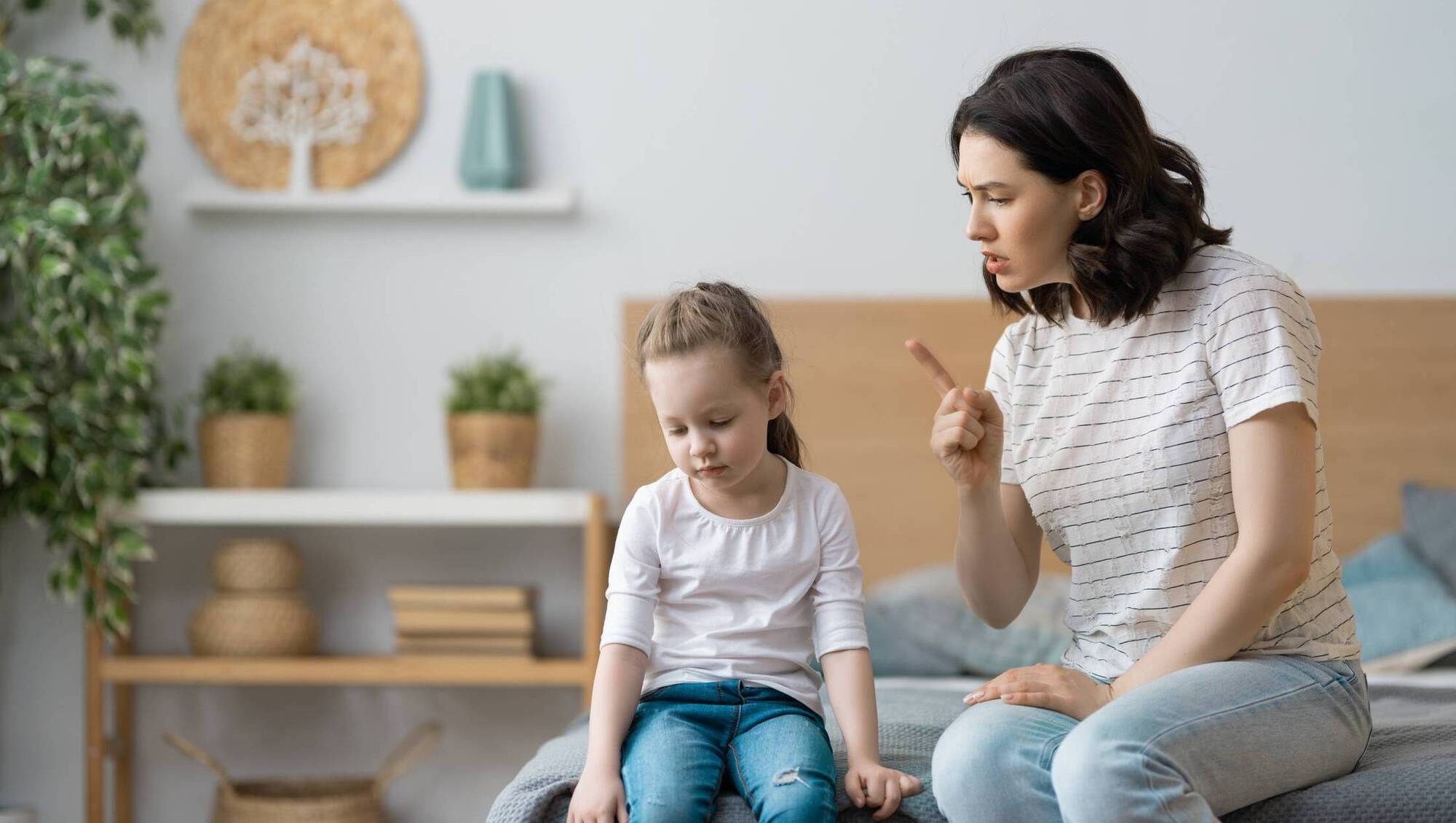
Pre-parenthood, you never thought you'd channel your parents' gestures and facial expressions and use phrases straight out of their parental script book
YOU hear it in the ultimatum you just issued: ‘No ice-cream ‘til you eat those vegetables’. It’s in your tone of voice as you tell your child, ‘How lucky you are…in my day.' Pre-parenthood, you never thought you'd channel your parents' gestures and facial expressions and use phrases straight out of their parental script book.
That we turn into our own parents when we become parents ourselves is practically inevitable, says psychotherapist Bethan O’Riordan (bethanoriordan.com), who specialises in parenting support.
Our parenting blueprint comes from our parents, she says. "The body remembers, though not consciously, everything we’ve ever experienced. When we’re relating to our children, memories are activated as to how we were treated and responded to. Our brains and our bodies go with what’s familiar — inevitably we go with what we know, and our mother or father 'fall out of our mouth'.”
It is in the moments of frustration, anger and losing the cool that people find themselves most like their mum or dad, says O’Riordan. “And for most people, that doesn’t feel great — because, simultaneously, while you’re giving out in their voice and tone, with their facial expression, you’re also feeling how you felt as a child, being given out to.”
Such moments — of recognising our parents in our parenting — represent an opportunity, says O’Riordan to pause and ask: Is now the time I act and behave differently?
In 2019, British-based surgeon Dr Julian De Silva polled 2,000 men and women and found that, on average, women start turning into their mothers at the age of 33, while men begin imitating their fathers at age 34. More than half of the women surveyed noticed that they stopped rebelling against their mothers once they themselves had children — with men similarly pinpointing their ‘turning into my dad’ realisation soon after the arrival of their first child.

Dr Ray O’Neill, assistant professor in psychotherapy at DCU, also finds it inevitable that, after people become parents, they find themselves remarking ‘I sound just like my dad or mum’.
“I’d be more alarmed if a parent didn’t make that remark. We are our parents’ children, socially and psychologically. So much of our cultural values, our personal values, are embedded in things we learned from our parents.”
O’Neill sees this as a good thing. “We’re always looking for evolution, and evolution is grounded in what happened before. It is better that change evolves, rather than be a reaction against.”
Early last year, the Pew Research Center asked more than 3,700 US-based parents if they were trying to raise their children in a similar or different way to the way they themselves were raised (exa.mn/parenting-generation-divide). The result — about the same number of parents said they were bringing up their children similarly to how they were brought up (43%) as said they were doing it differently (44%).
Sometimes the realisation ‘I sounded just like my parents there’ may be reassuring and affirming, and a gift, says O’Neill, who cites Mark Twain’s perspective on his father: ‘When I was a boy of 14, my father was so ignorant I could hardly stand to have the old man around. But when I got to be 21, I was astonished at how much the old man had learned in seven years.’
“So it’s not all ‘I’m not going to make the mistakes my parents did’ — but instead ‘maybe they didn’t make so many mistakes, maybe they did things with good intentions’.”
Hearing yourself manifest your mother or father in gesture, comment or action, can feel like a blessing or a curse, says O’Neill, whose mum passed away 12 years ago. “When I manifest her behaviour or personality traits, it comes with such a wave of love, because I have lost her.
“But if a parent finds themselves saying something like ‘I nearly lost the rag, exactly as my father would have done’ – and they can see the not-so-great side of their parent in themselves, the not being patient, frustration, being prone to anger – it can come with feelings of surprise, shame, shock, anger.”
Yet, what’s really important for every parent, says O’Neill, is to look at themselves and ask: what am I bringing from my parents that is valuable, useful, has worth, that I can carry forward? And what can I let go of that might not be worth carrying with me? Do I really need that now?
“And to do all of this while still being human. Because it’s really important for parents to be fallible. Fallibility allows us to be human and to have the potential to learn.
“When we reflect on what we have just said – or our partner, child or friend points it out — we can hopefully take some responsibility. I like to split up the word ‘responsibility’ to ‘response’ and ‘ability’ — we have the ability to respond. Responses are always better than reactions,” says O’Neill, who appreciates that today’s parents — unlike many of those of previous generations — allow themselves to be more humble and fallible.
“The parents [of some decades ago] were beyond reproach — and their parents too. Their ways were the only ways. Whereas now there’s more negotiation — everyone needs to be listened to, but parents obviously need to lead.”
Channelling the less-than-favourable parenting traits of our mum/dad is not an occasion for beating ourselves up – what we’re doing is fine-tuning, says O’Riordan, who explains that in the parent-child connection, there has to be somebody who makes a move to a better way of being.
“And that is always the parent. I get calls – ‘Can you help my child with their anger?’ I say, ‘No — it is you who has to change your response to their anger’. That way we pass down less ‘stuff’ to the next generation.”
O’Riordan, who co-hosts the podcast with preschool/toddler behaviour specialist Stef McSherry, suggests that perhaps the best thing to do is not to immediately open your mouth at all — or open it and take a breath. “The art of keeping your mouth closed is so powerful. Then you don’t have to react. You offer yourself a moment, and in that moment you can respond rather than react.”
She advises not saying the first thing you want to say. “Not even the second. Maybe wait for the third thing you want to say. Because then you will have filtered through the layers of reacting to responding. And instead of ‘what did you do that for?’ you’re saying ‘can I help you with that’ or ‘don’t worry about it — we’ll figure it out’.”
But hearing yourself ‘being your mum/dad’ can also help connection and understanding. “As a mum, I know how hard it is to be a mum,” says O’Riordan. “So I can nod my head to my mother and say ‘Well, it was hard for you too’.”
O’Neill agrees that there can be great strengthening of bonds between us and our parents once we become parents. “It can be a huge point of connection. As we become earners, taxpayers, partners, and family-makers, we meet our parents in an adult space, and we have more compassion, appreciation and understanding. We have joined the parenting club and we can meet our parents in that club.”

CONNECT WITH US TODAY



Be the first to know the latest news and updates