'Why am I so proud my own children are autistic, but can’t say I am?'
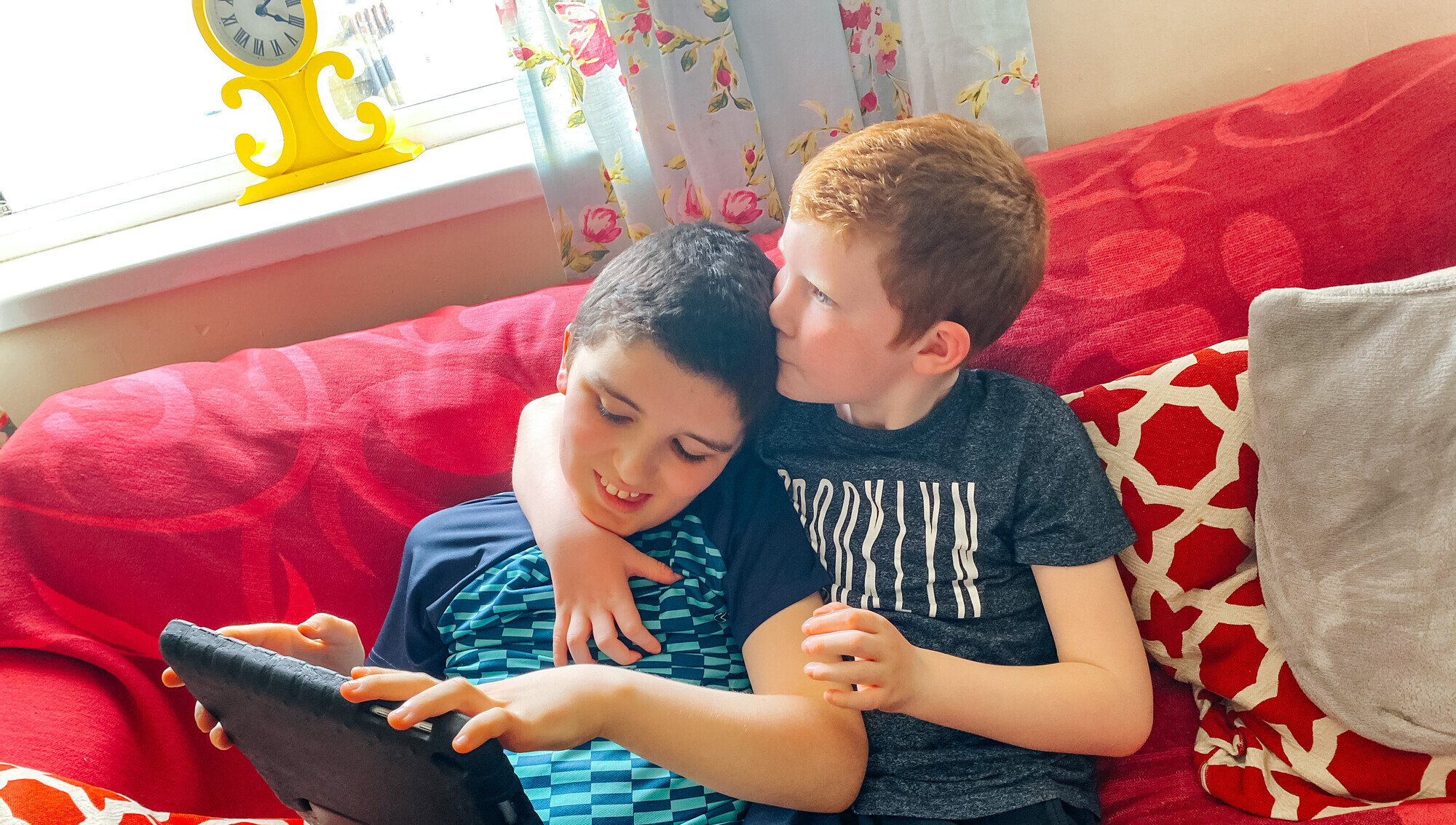
Amanda McGuinness has three sons all of whom are autistic. Her fascination with data as a child began to make sense when she was also identified as being neurodivergent aged 39
Conor, left, was identified as autistic before he was a year old. Amanda sensed that Jack, right, was also autistic before he this was formally identified.
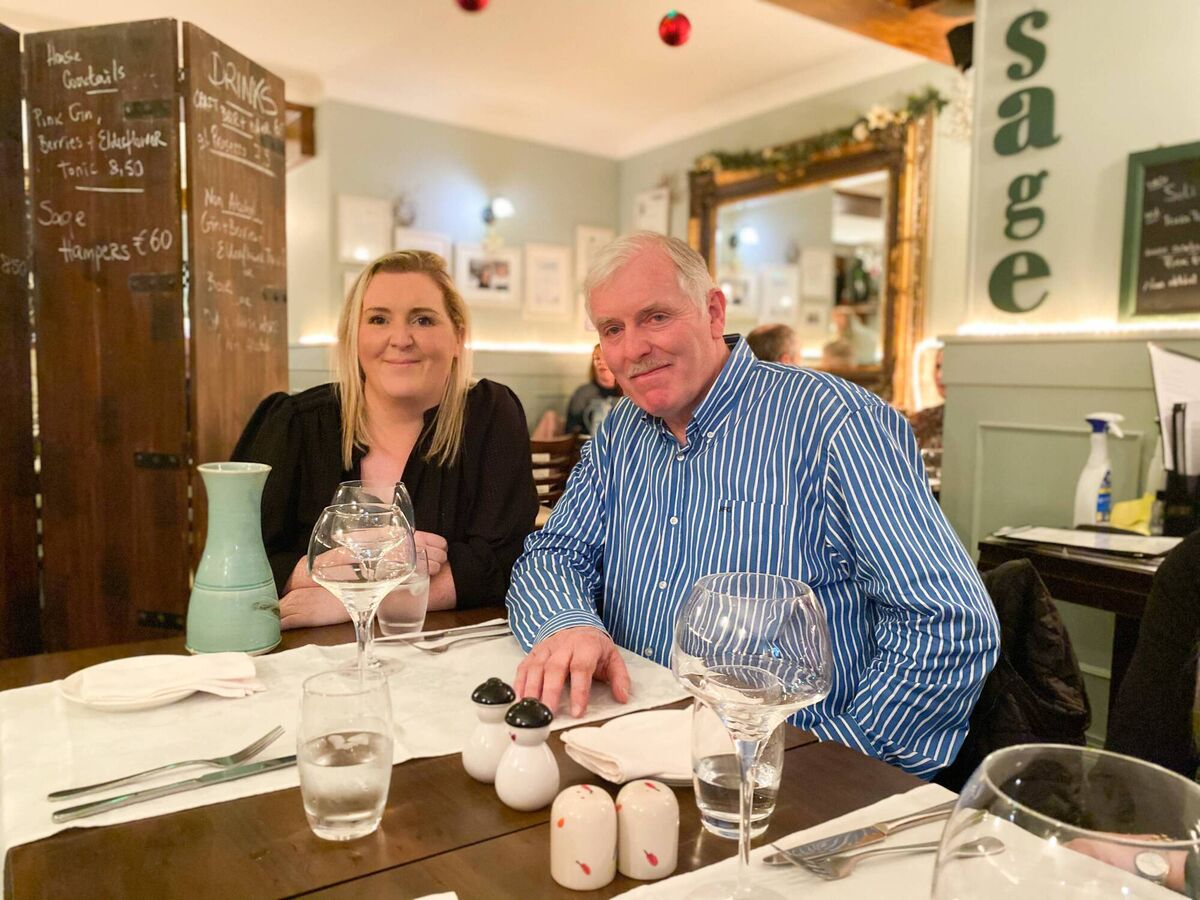
Conor, left, was identified as autistic before he was a year old. Amanda sensed that Jack, right, was also autistic before he this was formally identified.

WHEN she was five-years-old, Amanda McGuinness would balance herself on an armchair and reach up to pull down the Encyclopedia Britannica from a high shelf.

The eldest girl in a family of 11, her siblings played around her while she devoured all kinds of information.

“I felt most myself when I was doing that. There are loads of photos of me with pen and paper. I was taking in data all the time. I was just always into research and studying.

“I had a great interest in language — in learning lots of different ways of saying things — so I used to buy thesauruses. I was interested in biology, engineering, anything to do with information.”

In her large, “very busy” Co Mayo home, her dad, Sean, was quiet and reserved. 

“We’re extremely similar. He was a builder and had an office in the house. He gave me a key to his office and said to go in there anytime I needed. He had a huge desk and I’d sit there researching whatever I was interested in at the time. I was always encouraged to be myself.”

Nobody taught Amanda to read.

“I went to school able to read. My mum always said I was very capable — she never had to teach me.”

Now a 42-year-old mother of four children — Hailey, 15, Conor, 13, Jack, nine and Max, six — Amanda was identified as autistic when she was 39. 

Amanda McGuinness with her dad, Sean, who always encouraged her to be herself.

The question as to whether she might be autistic — whether this might answer why she “always had a feeling of being misplaced” — began to occur to her after her son Conor became “the youngest baby in Co Mayo identified as autistic, before he was one-year-old”.

Amanda — a trainee solicitor before Conor was born — is now doing a Master's in speech and language at University of Galway and works for the autism charity AsIAm.

She knew early on that her son was “different”.

“He found sleep and communication very difficult. He had sensory overload and was very sensitive to sound. People would comment on him being a strong, healthy gorgeous baba but I’d think no, he’s struggling,” she said.

Once Conor was identified as autistic, Amanda did what she always does — she started researching. 

“The information available then about autism, almost 14 years ago, was very negative. I’d think, ‘this doesn’t describe my son’, though elements were true. I kept saying, ‘this isn’t my son — my son’s a beautiful authentic person who gets up every day to live in a world not suited to him.”

But while doing this research — so she could be the mom her boy needed her to be — Amanda found herself.
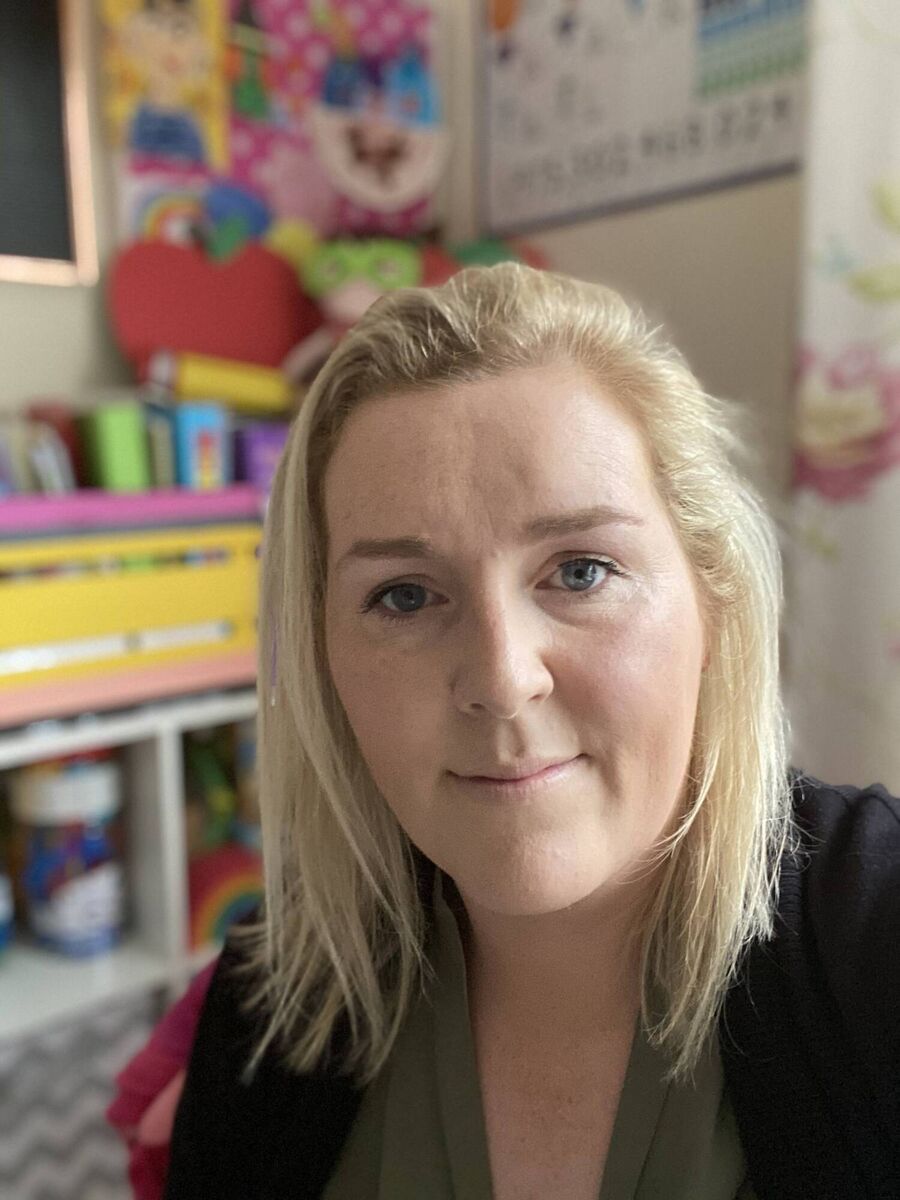
“There was a lot about special interests, stimming and sensory overload. I remembered how I used to cry a lot as a child because of the noise in the house — I had this need to get away from the busyness. And now I understood this was sensory overload. Like Conor, I’m very sensitive to sound and light.”

She also connected with another aspect — feeling out-of-step in social interactions. 

Where I found life difficult growing up was in socialising — I’d take language so literally and people would think I was rude if I took them up wrong. The world at home was a lovely safe place to be, my brothers and sisters were so lovely to me and I’m very close to my sister, Claudia.

“But even recently Claudia got a new pair of shoes and she said ‘they’re so comfortable, I can never take my feet out of them’ — and I said ‘Oh, you’ve got to! You might get a fungal infection’. I still take things literally.”

Describing how she found friendship confusing, Amanda recalls: “I didn’t have a lot of close friends, though there were many I was friendly with. Everybody else managed the social side very well. I was always trying to figure out things like what to do at lunchtime at school. I wish I’d understood friendship better.

“Now I’ve an incredible friend and I see the value of a real friend who accepts me as I am. I didn’t realise what I was missing until I had it.”

All three of Amanda’s sons are autistic. Recalling how she sensed her second boy, Jack, was autistic before this was formally identified, she says: “My mother would say ‘do you know you’re doing the same things [to mind] Jack as you do for Conor?’”

And so the thought began to strike Amanda that “gosh, maybe I’m autistic too.”

But when she mentioned this to people she had met through her children’s activities she got such a negative reaction that on three separate occasions, she put off going for assessment. 

Eventually after hearing AsIAm founder Adam Harris speak and after she’d heard AsIAm deputy CEO Fiona Ferris give a webinar, Amanda asked herself: “Why am I so proud my own children are autistic, but can’t say I am?”

She went for an assessment and found it “one of the loveliest experiences” of her life.

Amanda asked herself: “Why am I so proud my own children are autistic, but can’t say I am?”

“Someone I didn’t know was able to talk about me as if he just knew me. He helped me reframe my understanding of myself. 

"I think very quickly and I speak so fast — there’s so much information in my head because I’ve spent a lifetime researching and cataloguing information. He said my mind was cinematic and like a circuit board and that I’m cerebral — I live in my mind.

“And this is great, but he told me I have to remember that the body holds up the mind and that I need to look after my body, my health.”

But Amanda’s big focus is her children and educating them on autism (she has a family blog for parent/family support: littlepuddins.ie) — as well as making change happen for the autistic community.

“My biggest achievement is working for a charity that’s effecting real change.”

Recalling when Conor was still very young, she says: “I wouldn’t have attempted going in a supermarket because of the hostility towards a child who did stuff that people couldn’t understand. I’d leave a restaurant, embarrassed that, as a mother, I couldn’t express to others that my child just needed a little time to acclimatise.

“Now, people have so much more awareness and acceptance of difference.”

She feels very lucky to live in Balla, Co Mayo. 

Jack is “so into research and learning, so like myself”, his mother says.

“It’s the most wonderful town to live in if you’re autistic or your children are. The community is in the middle of building a sensory park.

“AsIAm has hang-out groups all over the country for autistic teens and pre-teens. Balla immediately gave us a room when we asked.”

I invite her to describe her children and — all cerebral elements aside — she becomes emotional, just thinking about them. 

“I always do,” she says, before telling me that when she thinks of Hailey, she thinks of courage. 

“When the children were small and things were more difficult going out and about, Hailey was there, but she was small too. Hailey watched people be unkind to Conor, teens making fun of him, and she’d ask ‘why did they do that Mom?’

“Now her teachers say she’s the first to notice a student among the crowd who needs help — she has a strong sense of social justice.”

Conor, who is non-speaking, is “the happiest child you’ll ever see — he loves music, Westlife, country music”. 

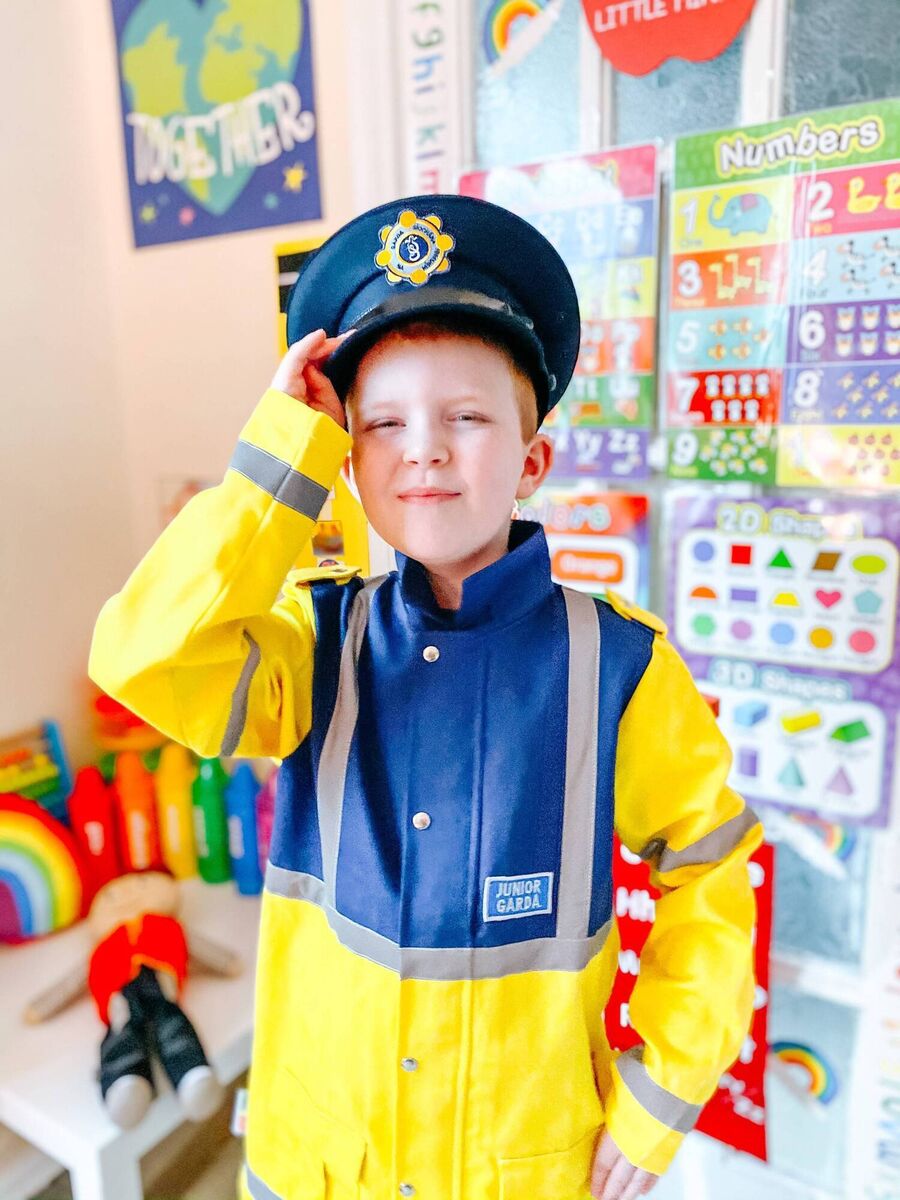
Jack is “so into research and learning, so like myself”, and Max, she describes as a firecracker. “He’s just pure energy, activity and joy.”

Max, Amanda describes as a firecracker. “He’s just pure energy, activity and joy.”

If she hadn’t heard Adam and Fiona speak, Amanda wonders if she would ever have got herself assessed.

“It’s why I think representation matters so much, that we can see ourselves in the different arenas of life where everyone belongs. For younger autistic people, it’s important to see autistic people on TV, in the media, in books…”

Her work with AsIAm is not just a job, she says. “I call AsIAm a movement. When I ask myself what I can do now for my children, for after I’m gone, I think: I’m going to change the world for them. That’s why I do what I do.”

Check out AsIAm’s new teen resource and AsIAm support for families

The AsIAm Inspire Challenge Hike takes place this Saturday, September 9 – click here for all the info


x

More in this section

Cookie Policy Privacy Policy Brand Safety FAQ Help Contact Us Terms and Conditions

© Examiner Echo Group Limited