Tots to Teens: Connect with nature at free family events

Plus - scratchable maps of Ireland, disability supports in our schools and colleges, and studying smartphone use
A curious red fox looks at photographer Michal Kostrzanowki's camera

A curious red fox looks at photographer Michal Kostrzanowki's camera

It's National Biodiversity Week. From now until May 28, free events are taking place nationwide, offering families a chance to connect with nature and learn from experts working to protect our heritage.

These events focus on the wildlife found along our coasts and in our rivers, estuaries, hedgerows, wetlands, woodlands, and marine environments. 

They include guided nature walks and field trips for children to introduce them to pollinators and other biodiversity, as well as workshops covering topics such as the building of bat boxes and and of ponds.

Families can also participate in Biodiversity Week from home, through events such as the Biodiversity Scavenger Hunt. This is a self-guided activity to inspire families to explore the wildlife in their garden or local park.

A scratchable map of Ireland

Scratchable map

Think back to the summers of your childhood and you’re likely to remember trips to beaches, windy walks to scenic sites, and dozing contentedly in the car on the way home.

Summertime day trips are what memories are made of and this scratchable map of Ireland is an excellent way for you and your family to keep those memories alive.

Paul O’Dwyer came up with the idea in 2017, to keep track of the places he had visited in Ireland and he went online looking for a scratchable map to allow him to do so.

When he didn’t find one, he asked his friend, artist Cian Corcoran, to design a map.

His mother, Vera, and father, Seamus, came on board to help him and now it’s a small family business.

“We hope our map inspires you to travel the length and breadth of Ireland,” says Mr O’Dwyer. “You can use it to help you decide where to visit next and to remind you of all the places you’ve already been.”

Disability support

The transition from second- to third-level education can be challenging for students on the autistic spectrum, and it can be a worrying time for their parents, too.

University College Cork’s Disability Support Service will dispel some of this anxiety at a day-long workshop on Monday, May 29. The students and their parents will learn about the disability access route to education, an alternative third-level admissions scheme for those whose disabilities have had a negative impact on their second-level education. They will also be told about the supports available to them and be given an opportunity to talk to students with disabilities who are currently attending the university.

  • Further information is available from Deirdre Madden at deirdre.madden@ucc.ie.
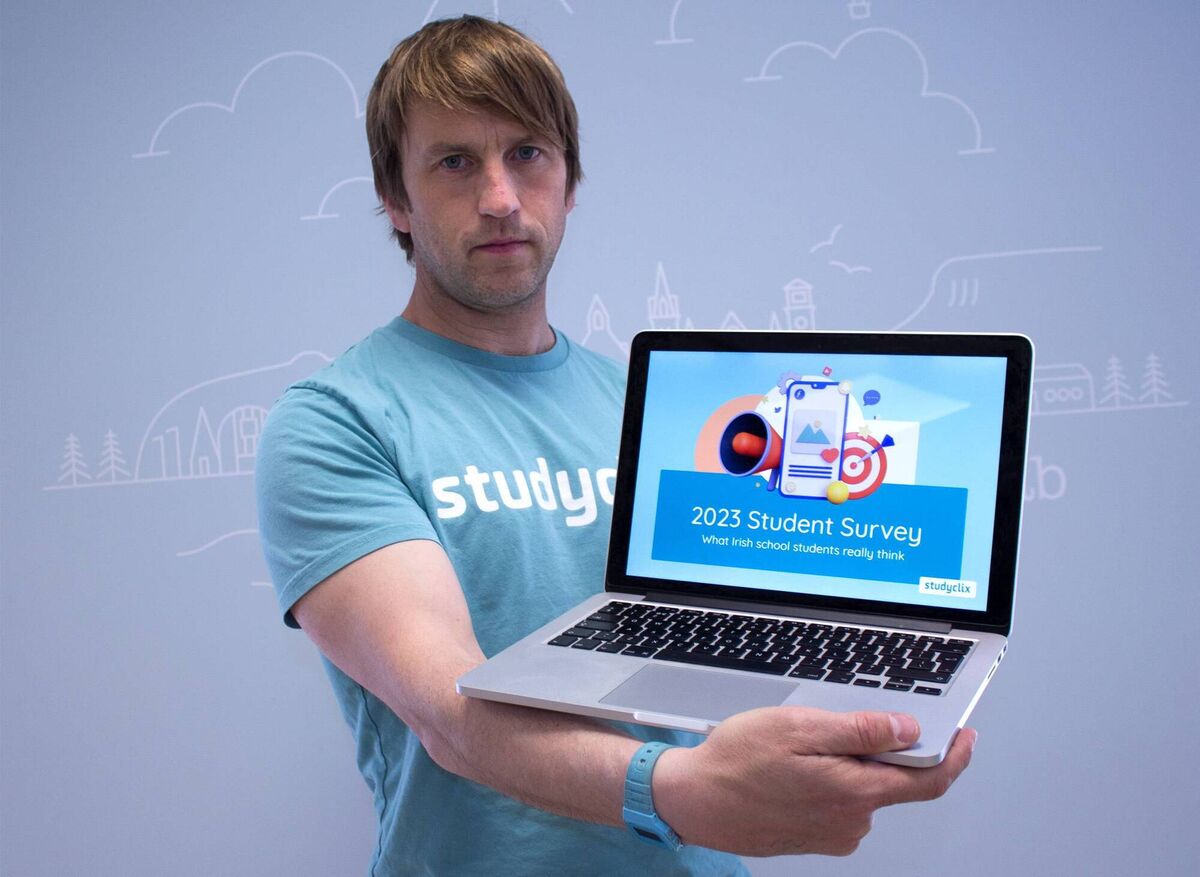
Luke Saunders, co-founder of Studyclix.

Smartphone use

According to a new survey, secondary school students are worried that their use of smartphones is ruining their ability to focus and study.

Eighty-three percent of the 1,000 students surveyed by the website Studyclix were concerned that they were using their phones too much, with 38% reporting that they used them for more than four hours daily and 16% saying they spent more than six hours every day on their phones. Also, 54% said that apps such as TikTok and Instagram had affected concentration.

These findings show a need for greater support in managing the impact of technology on students’ academic performance, according to Luke Saunders, a former secondary school teacher, and co-founder of Studyclix. “Students want to do well in their exams, they know they use their phones too much, but need help in managing distractions,” he says.

“Rather than taking a hard-line no-phone approach, I would suggest parents try to make their child become self-aware of their phone use and try some distraction-blocker apps to manage their phone in a healthier way.”


Cause for concern

According to a new survey, secondary school students are worried that their use of smartphones is ruining their ability to focus and study.  

Some 83% of students in website Studyclix's survey were concerned they were using their phones too much, with 38% reporting that they used them for more than four hours daily and 16% saying they spent more than six hours every day on their phones. 

Also, 54% said that apps such as TikTok and Instagram had a negative impact on their concentration levels.

These findings show a need for greater support in managing the impact of technology on students’ academic performance, according to Luke Saunders, a former secondary school teacher and co-founder of Studyclix.

“Students want to do well in their exams, they know they use their phones too much but need help in managing distractions,” he says. “Rather than taking a hard-line no-phone approach, I would suggest parents try to make their child become self-aware of their phone use and try some distraction-blocker apps to manage their phone in a healthier way.”

x

More in this section

Cookie Policy Privacy Policy Brand Safety FAQ Help Contact Us Terms and Conditions

© Examiner Echo Group Limited