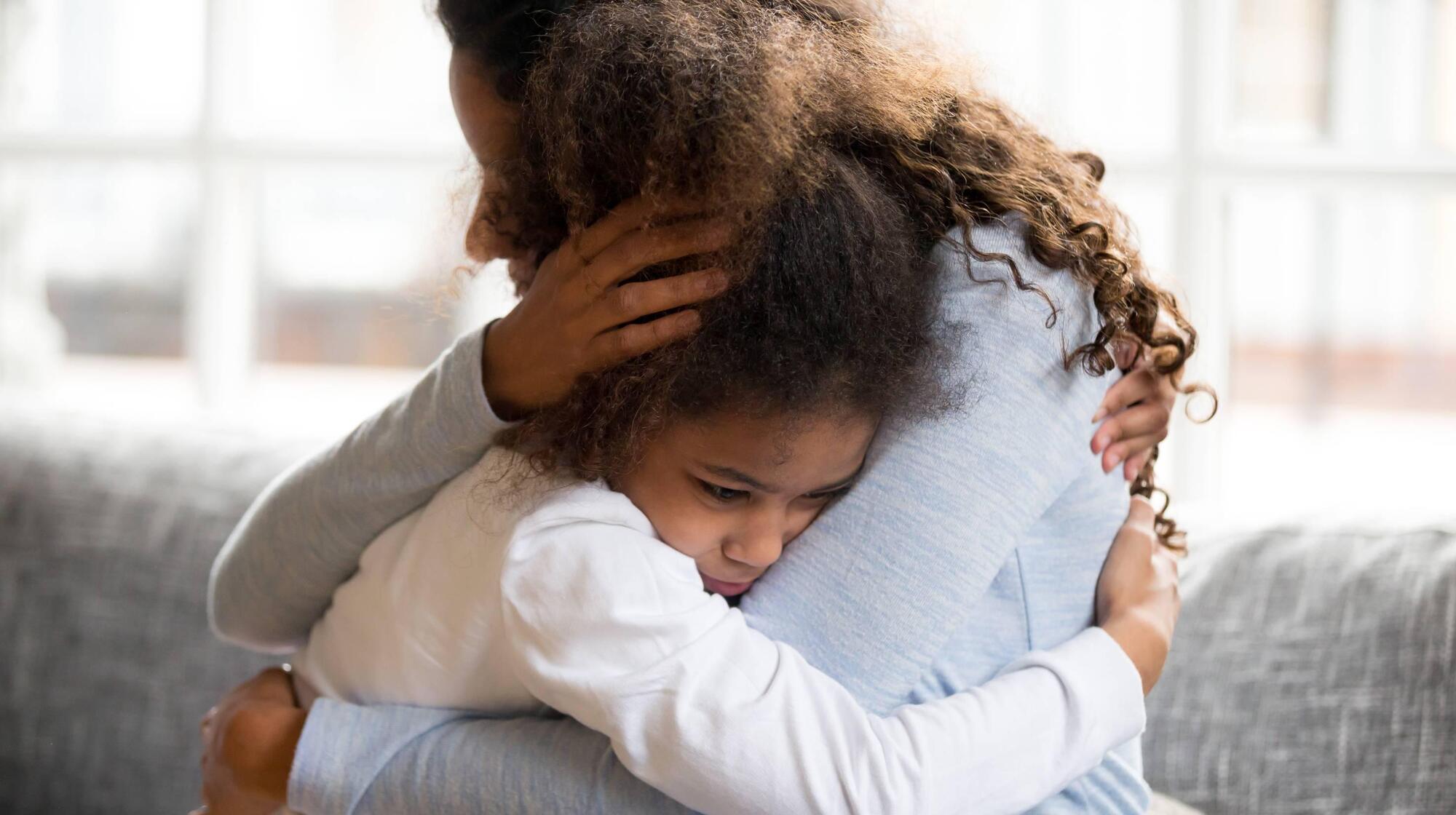
When your child comes to you, clearly anxious and seeking comfort, how do you feel? Like your own anxiety has been ratcheted up by a factor of 10? Like you have to immediately solve the problem so it can be quickly dismissed?
It’s good if parents take a pause, do a self-check, before attending to an anxious child, says Dr Anne-Marie Casey, senior clinical psychologist in Children’s Health Ireland at Crumlin and member of the Psychological Society of Ireland.
She recommends parents ask themselves: How am I doing? Do I remember feeling anxious as a child? How was I parented then? Was my anxiety dismissed?
“Before approaching your anxious child, look at your own inner child. Ask what’s my urge to do right now? This self-check can really influence your response to your child.”

Clinical psychologist and author of Love in, Love out: A Compassionate Approach to Parenting Your Anxious Child Dr Malie Coyne agrees. She points out that a child’s anxiety can trigger discomfort in the parent, leading to a less-than-helpful response.
“A parent’s reaction can be to smooth it over quickly, to judge the feeling, minimise it or try to solve it like they would any other problem. Unfortunately, these responses miss the mark and can increase a child’s sense of threat because they feel disconnected from the one person they relied on as their support.”
Casey urges parents not to be afraid of anxiety. Anxiety isn’t all bad, she says. “We need to feel anxiety. We need it as motivation – to get to the start line, to get prepared. Sometimes we can fall foul to the pathology, feeling we should be even more worried about how anxious our children are. But that can perpetuate the loop.”
Once you’ve identified your child as anxious, Coyne says a child needs to know that anxiety is a normal, natural response to a real or perceived threat.
“To know that anxiety is a sign our strong and healthy brain is doing exactly what it’s designed to do to protect us from danger, can help [a child]. Realising they’re not the only ones who experience anxiety can be a huge relief.”
Understanding anxiety
GP and author Dr Harry Barry says it’s important to demystify the physical symptoms of anxiety for children.
He believes in teaching even very young children the mechanics of how our body behaves when anxious.
“Talk about what happens in the body – butterflies in the tummy, getting tensed up, faster heart rate and faster breathing. Explain this is all normal.
“Problems happen when children begin believing these physical symptoms are dangerous and that something terrible is going to happen – like ‘I’m going to faint, lose control’.”
Coyne likes to explain to children that anxiety is like a wave and, like any feeling, it comes — and it goes.
She recommends saying: “Although it feels like one of the most horrible feelings in the world, it doesn’t last long and it goes away after a while, especially if you tell someone how you’re feeling, try to ride the wave, take some deep breaths or jump around a few times to let all the tension out.”
While anxiety has a good side, it becomes an issue when it starts interrupting a child’s life — their sleep, their routines, says Casey, who believes there’s always “a crossroads of contributors” to someone feeling anxious.
She says about one-fifth of children are hardwired to feel threat and potential danger more intensely, and to have more worries than peers.
“They can absorb more threat than other children, almost like a sponge.”
At the school gate, she’s also hearing more talk of children being anxious than previously.
“Post-Covid, children have more choice again, where all their choices had been taken away — schools and playgrounds closed. There was a threat to health, a level of uncertainty that children held. Now, we’re entering a settling period, a time to sit and see what the impact of Covid has been.”
The big marker for anxiety in children, she says, is a change in behaviour.
“Are they eating, sleeping? Are they a bit more irritable, not wanting to go to school or activities? Overthinking things and predicting outcomes is another sign: what if I’m late for school tomorrow? What if I get a low grade in that test?”

Barry says young children’s anxiety often presents in physical symptoms. “They’ll have tummy pain, limb pain, tension headaches and very occasionally cyclical vomiting for no obvious reason.”
He points to research undertaken by Crumlin Hospital where, over a period of time, children admitted with abdominal pain were analysed. “They found just 3% of the children actually had an organic cause for the pain, for example, appendicitis.”
When a child is overwhelmed with anxiety, stay with them, urges Casey.
“Our nervous system needs to soothe to come out of that overdrive, to be able to think straight. When the brain is in threat, that’s not the time to tease out why they’re anxious.”
She recommends parents know what their child finds comforting, something particular to them.
“Some children down-regulate through a fidget toy, others through movement — going for a walk or a run. Sometimes a warm cup of milk signifies safeness or hugging a teddy.”
When the child is comforted and their nervous system reset out of that hyper-alert state, only then can you think of talking with them about their anxiety, she says.
Safe space

As the Christmas holidays end this week, the return to school can trigger anxiety for many children. Coyne would like parents to recognise their role as their child’s anchor in helping them feel safe and secure.
She advises encouraging your child to release built-up tension and adrenaline by engaging their senses in activities like ‘shaking on purpose’ (making noises, jumping up and down), ‘dragon fire breath’ (inhaling and exhaling like a dragon blowing fire), or ‘figure-8 breathing’ (drawing figure of 8 using their finger or toe, breathing in for the count of three, holding for one, and breathing out for three). The exercises, she says, release built-up tension that first day.
She also suggests creating a “soothing box” of toys (squishies, kaleidoscope, shaker) to engage your child’s senses on the way to school.
And if your child shares a worry with you, listen to their feelings and validate their experience – ‘you feel a bit nervous about...’
“Respond warmly and empathetically and unpack the source of their worry — ‘what part are you most worried about?’” suggests Coyne.
“Try not to smooth things over (‘you’ll be fine’) to make them – and you – feel better. Supporting them in their feeling is an important step in helping them move on from it, for example, ‘that sounds really tough for you’.”
Coyne says empowering your child to be resilient in anxiety means finding a middle ground between empathising with their worries and encouraging them to face their fears — ‘I believe you can do this. You managed it before and we will work through any challenges together’. “This is what builds true resilience,” she says.
Connection and relationship are at the core of parenting, says Casey, and go a long way in seeing you— and your children — through their anxious times.
“Relationship is the key. The more time you have to develop the relationship, to sit and wonder with your child, the better. These are times of connection and you can’t take connection for granted. What’s important is quality time with them — try to land in it as much as you can.”
No obligation. Ts&Cs apply.
CONNECT WITH US TODAY
Be the first to know the latest news and updates