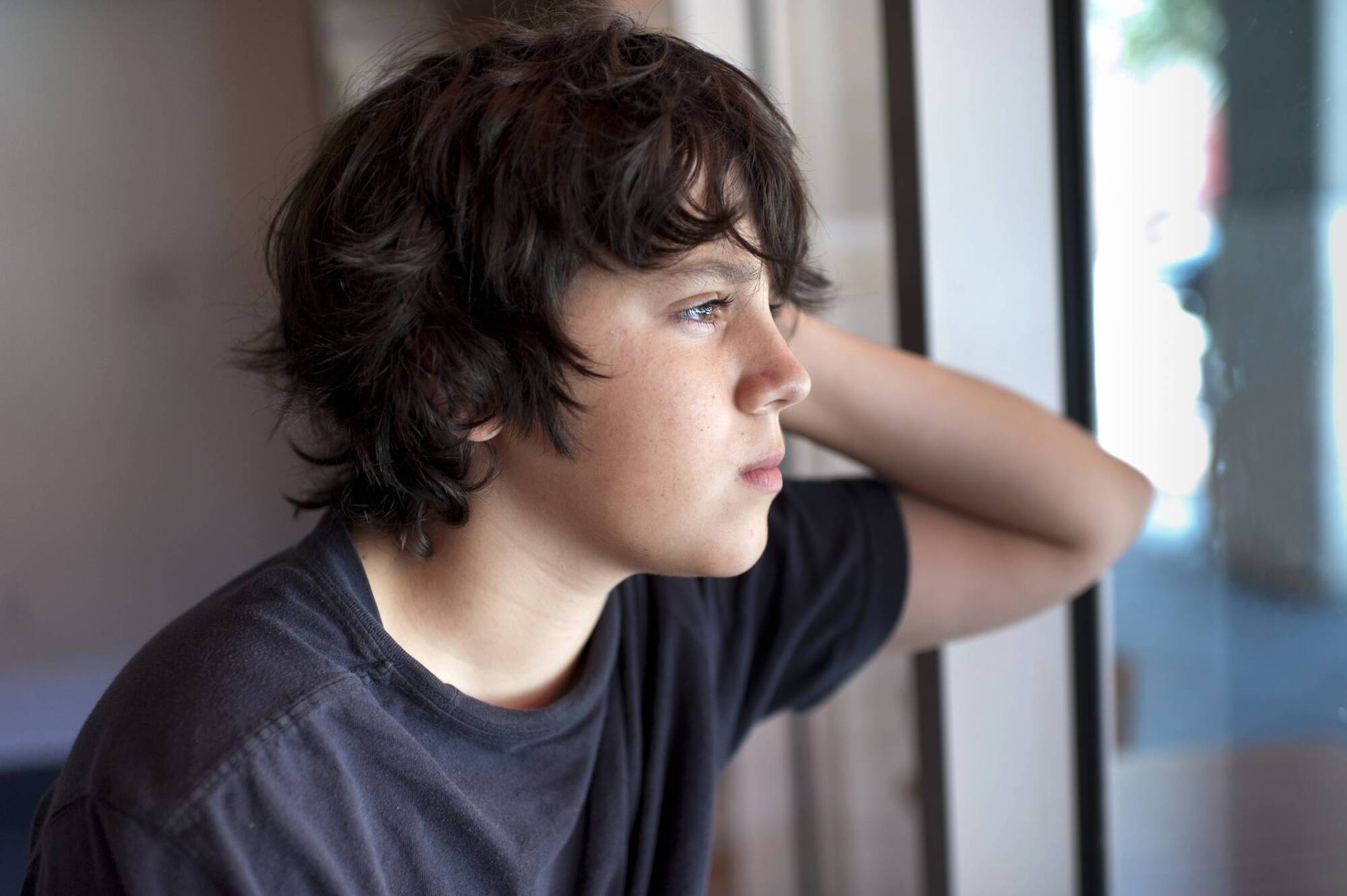
The presence or absence of good friendships can be crucial in determining how a child journeys through childhood. I have met many children who experienced significant loss or trauma in their lives, and the presence of a strong friendship group was the most protective factor in their negotiation of those challenges.
I have also met young people who would have been spared significant trauma if they had not been excluded from peer groups or had to negotiate childhood without a meaningful friendship.
Forming and maintaining good friendships can also protect our children’s mental health. And while some children seem to have a natural skill set for establishing friendships, it does not come so easily to others. A child’s temperament is crucial, and shyness can be a considerable barrier to creating these connections.
A willingness or ability to put yourself forward to create opportunities for friendships is a personality feature that significantly improves sociability and, consequently, the probability of forming connections.
Socialising is far more daunting for reserved or introverted children who often miss out on opportunities to form friendships due to their shyness. Some are quite content in their introversion, but others desperately want to make friends but can’t.
I have heard many examples of children who joined a junior theatre group, scouts, or a film-making group who found it life-changing. Within the school and community environment, the options for extracurricular activities are mostly sport-dominated. There are considerably fewer options available to a child who does not enjoy the rough and tumble or competitiveness of sport.
Painting outside the lines
The school environment is relatively narrow, and there appears to be less space for children who are left of centre. The ability to paint outside the lines is likely to attract more ridicule and slagging than any acknowledgement of creativity. Oddly, in a time that claims to celebrate diversity and inclusion, individuality seems less desirable.
I have also witnessed a change in the friendship landscape in recent years. There appears to be a cruelty or disposable nature to friendships that did not feature as much in the past.
This development makes me wonder about the impact of the shift in communication from face-to-face to screen. Research tells us that communication via technology lacks the richness of in-person contact, and the absence of visual or atmospheric context can lead to a lack of empathy.
It’s unsettling that children and adults type words on a screen that they wouldn’t say to someone’s face. Could the influence of screen-based communication add to the harshness of some interactions and a lack of appreciation of the value of friendship?
Social media has undoubtedly affected children’s social and emotional development. This was not helped by the pandemic, which forced many to go online to connect with others, and one wonders if this will have long-term consequences.
The social skillset of children of all ages seems to be less refined than before, and Amanda Speilman of British education watchdog Ofsted has found that there is nervousness or anxiety in children around making small talk.
I wonder whether our forced reliance on technological platforms as social communication vehicles has helped to shape this development.
There are other ways in which children and young people communicate baffle me. I am told it is not unusual for young people who use Snapchat to snap pictures of each other without captions. It may just be a picture of their shoe or a wall sent to another person without words.
The receiver then replies with a similar picture with no words, captions, or context. This can be how two people communicate for several days. When I enquired about the purpose of this seemingly ‘empty speech’, the young people struggled to explain it. One child suggested it was just a way of staying connected when unsure what to say. It seemed like something akin to a wave. I find this form of communication sad, an indictment of the social emptiness of contemporary living.
Social and emotional development
So what can be done to help improve the opportunities for meaningful social and emotional development? Perhaps we should explore a more extensive and inclusive menu of extracurricular activities such as the youth clubs of old.
The clubs could be set up to match young people with similar interests, not dissimilar to film clubs and scouts, but with less of a vocational focus and more widespread availability. If special interests become extensions of school and sports environments, there is a risk socially dominant children will thrive and the more reserved children will exist on the periphery.
A British-based Centre for Mental Health report published this year suggested that mental health services should reach out to youth clubs to support young people struggling. Also, Norwegian researcher Marie Eriksen’s 2020 study identified that youth clubs are effective in fostering wellbeing when they provide a safe place to be and facilitate positive relations with others and possibilities for growth. While most of the research supporting the connection between mental health and youth clubs revolves around groups of young people identified as ‘at risk’ and ‘protection’, surely the basis of being able to ‘hang out’ in adult-supervised but otherwise unstructured space would provide the majority of youths with much-needed safety and belonging.
Post-lockdown children require extra support to develop their social and emotional development. This needs to happen in real-world circumstances and not just by filling out wellbeing workbooks on what friendships should look like. Children have enough theory — what they need is the opportunity to practice.
I also wonder if we underestimate the value of young people simply hanging out. There seems to be a belief that everything our children take part in must have a ‘purpose’ or they must be doing something ‘productive’ and learning a ‘skill’, but the ability to form relationships is one of the more critical skills we can acquire over our lifetime.
I am convinced of the pervasive benefits of children having meaningful friendships. We have to do what we can to encourage, support and offer opportunities for children to create these connections, which I believe will help them navigate our fast-changing world.
- Colman Noctor is a child psychotherapist - email parenting@examiner.ie with questions or feedback.
CONNECT WITH US TODAY
Be the first to know the latest news and updates