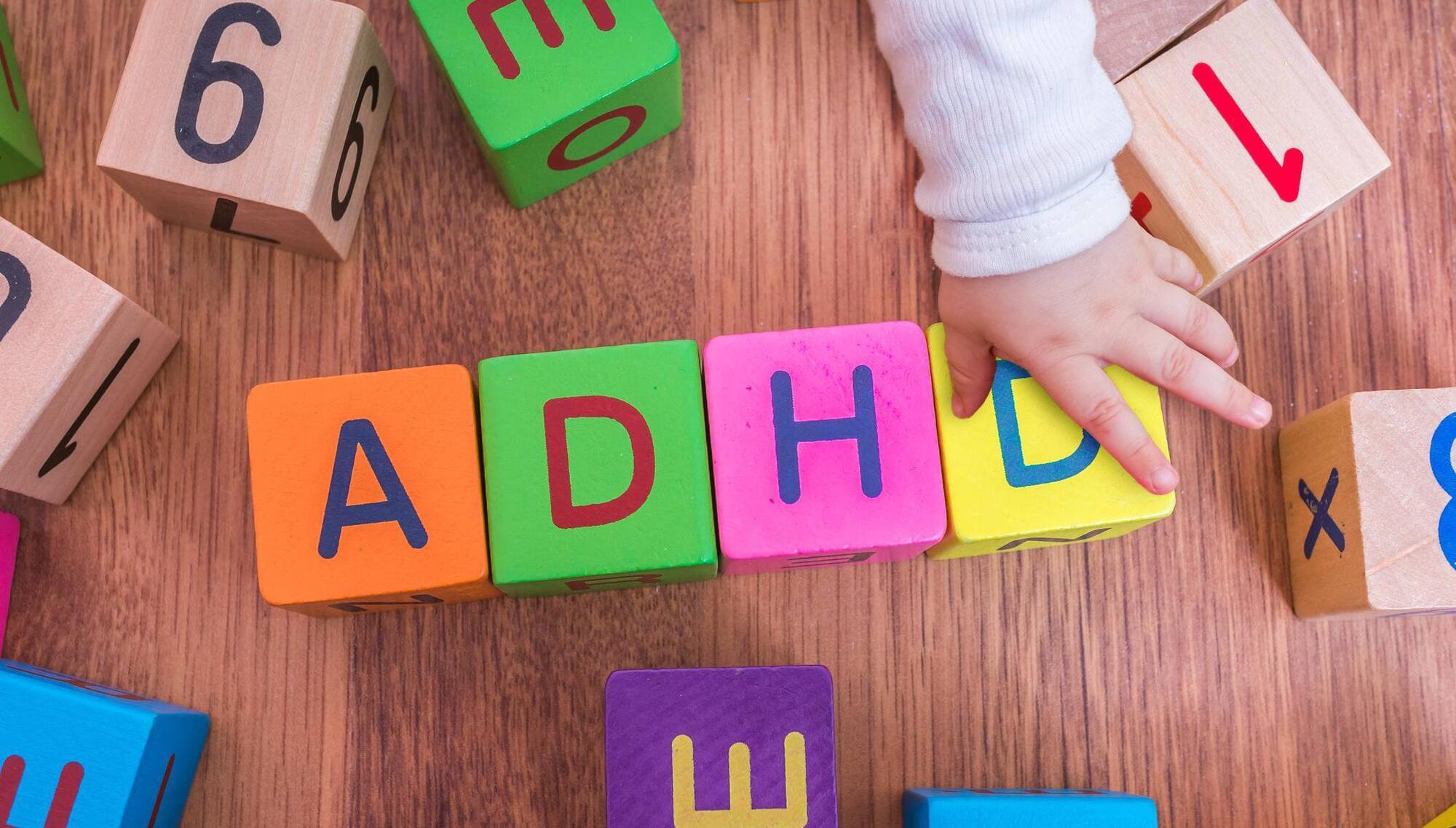
Home-schooling her son during the pandemic was torture — but it was also an eye-opener for Ellen*, a Waterford-based mum of two.
“It was our game-changer. It opened up our world to understanding and recognising that our son has ADHD,” says Ellen, whose son, Sean*, is now 10 — she also has a seven-year-old daughter.
“I noticed Sean was extremely restless. He’d be leaving the table, chewing pencils, constantly fidgeting, his legs constantly moving. He found solace going frequently to the toilet, getting up for a drink.
“He loved when my phone rang because he knew if I was distracted he could flee — and he’d be gone, up the garden. To get him back in the house was so difficult — he’d thrash on the ground, roll around.
“Sitting at the table, looking at him, and he struggling on so many levels, it was like a lightbulb went off and I realised: My child has ADHD, I need to help him. It was the biggest eye-opener.”
With schools and services closed back then, Ellen went on ADHD Ireland’s website. It was a lifeline, she recalls. “I didn’t feel alone.”
But while she knew the source of her son’s struggles, she had no diagnosis.
“I spotted ‘assessment’ on the website and I booked an assessment for him. He was put on a waiting list and eventually, during Covid, he saw a psychologist one-to-one and was diagnosed with ADHD.”
Embracing ADHD
ADHD Ireland CEO Ken Kilbride says the prime age for children to get a diagnosis is between eight and 12. Explaining that those affected or touched by the condition don’t like the term attention deficit hyperactivity disorder because with ‘deficit’ and ‘disorder’ it has a double negative, Kilbride says: “It’s actually neither a deficit nor a disorder. It’s not a deficit of focus. The key driver is an inability to retain focus.
“The other two behaviours are impulsivity — ‘I have to say it and I have to say it now’ — and hyperactivity, where the child is always on the go. These behaviours then cause an impairment in day-to-day life.”
For Ellen, the ADHD signs were there from early on. “He was an incredibly busy boy from a very young age. It didn’t matter what type of weather, he wanted to be outside. Inside, he was constantly climbing on furniture, running down the hall. Getting him to bed was a mammoth task — he had such high energy.
“He was very impulsive and wasn’t a great listener — you’d ask him to do something and he’d do his own thing. You’d hold his hand at traffic lights and if he wanted to go, he’d just take off. He had no sense of danger.”
Ellen recalls looking forward to family events and social occasions. “I’d have this lovely romantic view that the day would go well.” But often, because Sean didn’t like enclosed spaces, he’d lash out, hit, and slap other children. “They’d come to me, saying ‘Sean is screaming, taking my toys, hitting me’. We had to leave so many events.”
Primary school teachers expressed some concerns and when her son was in senior infants, Ellen heard about a drop-in clinic, where parents could explore any worries. It was suggested that Sean see a psychologist but Ellen declined. “I thought it was a sign I wasn’t performing as a mother, I had this self-critical view, that I was to blame. So I said we’d be OK.”
Eventually getting the diagnosis was a relief, but Ellen also needed to grieve. “I grieved because this was a label on our child. It took some weeks to pass through that stage and then we came to see that we needed to follow recommendations and be open and honest with Sean, that he had ADHD, and to embrace this.”
She and her husband did parent training with ADHD Ireland, got occupational therapy input for Sean, learned to break down tasks for him and talk him through the steps, and switched him to a different school. “That was life-changing. He has a fantastic teacher who guides him through recommendations. There’s amazing support and he has made huge changes. He’s making friends and learning at his level.”
About 5% of children in Ireland have ADHD, amounting to 60,000 children and young people. Within the eight to 12-year age range, four to five times more boys than girls get diagnosed. “Public perception around ADHD is of young boys bouncing off walls; very visible. Because boys externalise, while girls internalise. It’s why we have that disparity in diagnoses rates between boys and girls,” says Kilbride.
He explains that girls tend to have more attention deficit behaviour than hyperactivity. “They tend to be more inattentive, not pay attention at school, be more day-dreamy. And because they internalise, it can increase anxiety.”
Adding that girls in puberty do a lot of camouflaging and social masking around ADHD, Kilbride says this can increase anxiety and depression. “Any girl presenting with depression around puberty should also be checked for ADHD.”
While teachers can miss ADHD signs in girls, GPs do too. “It’s one reason why girls don’t get diagnosed. The GP says, ‘Well, she’s doing fine at school, she isn’t moving around the surgery here today — she doesn’t have ADHD’. There can be high numbers of undiagnosed or mis-diagnosed people going through the GP service.”
Different neural pathways
A big challenge is the low self-esteem and stigma that often accompany the condition. Kilbride says: “Because of the impulsivity, children don’t always conform to rules of social behaviour. They’re quite good at getting into peer groups. But they don’t take turns in conversation — just jump in — and can be over-physical, so they often don’t get invited to playdates or birthday parties. Children can spot these differences and say, ‘why me?’”
He recalls how ADHD used to be seen as “naughty child syndrome” caused by “bad parenting” and lack of discipline. “Now there’s lots of science to say people with ADHD have different neural pathways, but that knowledge hasn’t fully filtered through — there’s still a way to go.”
Even in the last five years, he has seen increased interest from schools seeking training. Last year, ADHD Ireland began its school accreditation programme to help schools become ADHD-friendly. “We had 10 last year and 40 have signed up this year. The first school to complete accreditation was Beaumont Boys’ National School in Cork.”
Professor Jessica Bramham, professor of clinical neuropsychology at the School of Psychology at University College Dublin says society needs to become much more accepting of ADHD. “We need to recognise that ADHD is not a choice. We need to be much more flexible in adapting to people’s needs — changing the environment to suit better, rather than expecting people to conform to our neuro-typical standards. There’s a lot of judgment around ADHD, which stops some coming forward for help.”
She says the hyperactivity element of the condition can manifest as inner hyperactivity. “The person can’t control their thoughts. They have this internal restless energy that can affect sleep and their ability to keep a train of thought going.”
People with ADHD have certain challenges but they also have great strengths. “They can be more creative. They don’t have the same mental breaks to stop them thinking in more creative ways. Some people out there are brilliant in their field,” says Bramham, who has plenty of hope to offer.
“Time makes a difference. Brain maturation can change how ADHD presents. Some grow out of symptoms,” she says, adding that 8% of people still have some difficulties as adults, having been diagnosed as a child.
Environmental changes — adapting the environment to better suit the person — can make a big difference, and so can psychological support to help with low self-esteem. “Addressing that can help people flourish as well.”
In Waterford, Sean is doing “incredibly well”, says his mum. “He’s an amazingly creative child and fantastic at sport — it’s his lifeline. He has a beautiful garden where he loves growing vegetables.
“We take everything stage by stage. This is a good year. Sean’s in a very good school. He has supportive parents who embrace his ADHD. We get really tough days, and we get really good days, and that is OK.”
*Names have been changed.

Continue reading for €5
Unlock unlimited access and exclusive benefits
Already a subscriber? Sign in
Cancel anytime
CONNECT WITH US TODAY
Be the first to know the latest news and updates