Eating disorders: It was the first time in a while I’d seen my daughter’s frame... I got a shock when I saw her torso
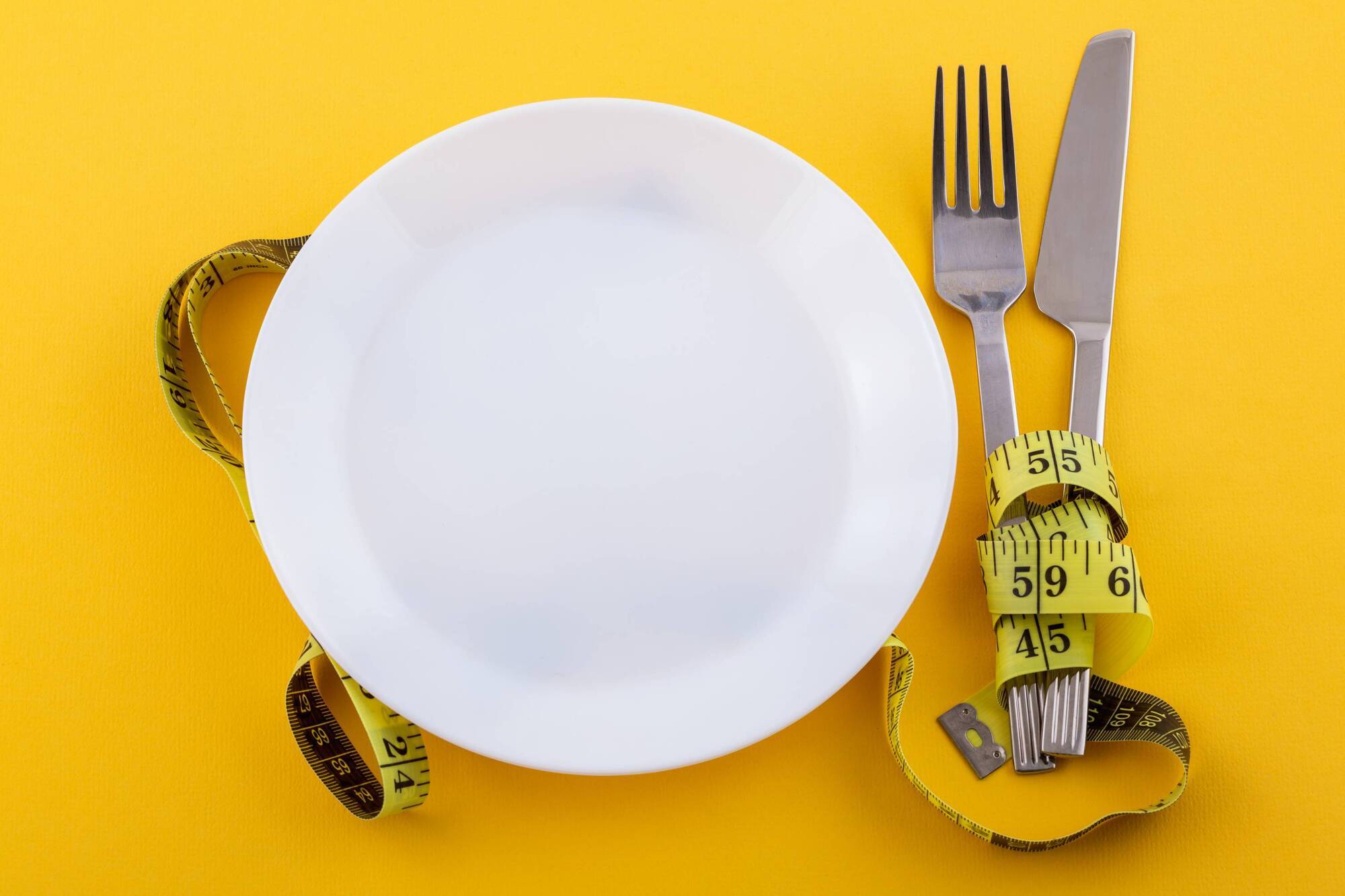
One 11-year old girl's eating disorder started soon after the first lockdown began — she was the same weight she had been four years earlier. Lockdown had a devastating effect on people with eating disorders whose care urgently needs to be prioritised, experts tell Helen O'Callaghan  
Eating disorders: It was the first time in a while I’d seen my daughter’s frame... I got a shock when I saw her torso

Following Big Brother star Nikki Grahame’s death, the teen and adult online groups run by Bodywhys – the Eating Disorders Association of Ireland -  saw their highest attendance so far this year.

Nikki Grahame’s death in London earlier this month due to complications from anorexia spread ripples of shock and dismay among those suffering from eating disorders — and their families. The 38-year-old TV personality had battled an eating disorder since she was eight years old.

Following Nikki’s death, the teen and adult online groups run by Bodywhys — the Eating Disorders Association of Ireland — saw their highest attendance so far this year. People contacting Bodywhys services said her death had prompted them to seek help. “Others who contacted us expressed feeling afraid when they heard the news,” says a Bodywhys spokesperson.

Shortly before Nikki’s death, her mum described the lockdown impact on her daughter as “hellish”. It’s had a devastating effect here too. According to a January HSE briefing, hospitalisations for eating disorders are up 66% compared to 2019. Between March-September 2020, 40% of admissions were males, which the HSE says is “notably higher” than any previous year.

“Children who required hospitalisation were more unwell and more medically compromised. Paediatric hospitals and acute hospitals have also reported increased acute presentations,” the statement said.

Likewise, Bodywhys saw a 111% increase in their online groups between March-December 2020 — and a 145% increase in January-March 2021. The April-December 2020 period saw a 54% rise in helpline calls and a 45% increase in email contacts. The organisation’s PiLaR programme experienced a 98% increase in family members seeking support.

 “We had 139,845 page views on our website in March 2021, a 350% increase compared to the figures for March 2020,” reports a Bodywhys spokesperson.

Lockdown stress

When Covid struck last year, throwing the country into sudden lockdown, the collective anxiety hit people with eating disorders very hard, says Harriet Parsons, Bodywhys training and development manager. “They like to have rules, to do their best all the time – they’re high achievers,” she explains.

So the many ‘shoulds’ expressed throughout lockdown — ‘I should be learning an instrument/a language/running a marathon in the back garden’ — were all very triggering for those with eating disorder, says Parsons. “They were internalising and magnifying these messages – messages around ‘eat healthily’ and ‘get moving’ — taking them and applying them in very extreme, all-or-nothing ways. In normal times, it’s easier to filter out such messages but now they were all over radio, TV, social media — ‘how can I not gain weight during the pandemic?’ ‘How can I exercise when my gym’s closed?’ Many young people started to limit treats, to slowly increase restriction of food and to have exercise regimes. All these rules created boundaries and made the person feel safer.” 

Many, struggling with eating disorders, suddenly found their supports thrown into jeopardy. It compounded the pressure. “They weren’t able to see their therapists face-to-face. They were on Zoom or on the phone. And sufferers were worrying: ‘is it private — there are other people around, will the internet drop?’ Some people aren’t comfortable receiving therapy like this — and some therapists aren’t comfortable providing it this way. Add into the mix that people were suddenly at home, with everybody around them — or alone and not able to see anyone — and the situation was primed to make it really difficult for anyone struggling with eating disorder,” says Parsons.  

Under-resourced services 

“It’s like Stockholm syndrome, like an abuser in my head, and yet I’m loyal to it.” 

North Dublin woman Amanda Lynch, 32, started restricting food at the age of 22, though she believes the eating disorder was present even as a teenager. Living with her mum, the pandemic caused her to worry intensely about her mother’s safety. Stories of panic buying made her anxious that foods she deemed ‘safe’ wouldn’t be available.

“I was having face-to-face therapy for an hour a week. In March 2020, all my appointments went on the phone. It was a real disconnect, not being in the room with the person.” 

Last September, Lynch’s therapist was redeployed to do Covid-testing. “It was supposed to be for four weeks. That was over seven months ago and she’s still not back. I’ve no idea when she will be.” 

Emma Murphy, psychotherapist and clinical director with Eating Freely, a specialist programme for emotional and binge-eating, says eating disorder services are “woefully under-resourced”. 

Her programme saw a significant increase in enquiries over the past year. “We also saw a significant increase in parents talking about their teenagers and we saw a rise in parents contacting us about their boy, as well as their girl.” 

Murphy saw the pandemic impact across the spectrum of where people are at in terms of eating disorder. “Some who might’ve been starting to feel better, who’d had previous treatment, went off track and were coming back looking for follow-up support. It was also a tipping point for those whose eating disorder finally got out of control — they now realised they needed support.” 

Model of care 

Last week, Social Democrats TD Holly Cairns spoke in the Dáil about the non-allocation of funding in 2020 under the National Eating Disorder Plan. Describing the situation as shocking, she added that none of the €1.6m allocated in 2019 was spent.

 In February, Mary Butler, Minister of State at the Dept of Health, said she’s “committed to ensuring the total funding of €3.94m allocated to the programme will be spent in full this year”.

Bodywhys has been a partner to the National Clinical Programme for Eating Disorders since the beginning. When the plan launched in 2018 it envisaged 16 specialist eating disorder teams around Ireland by end of the five-year implementation period. 

It’s a model of care that ticks all boxes, says Parsons. “It meant wherever you were in the country you’d have access to a specialist eating disorder team. It’s based on a step-care system, with the team following the person. It has consistency, expertise and time to recover as central. Patients need consistency and expertise across the team — so, for example, the nurse sitting with them as they eat their meal isn’t going to say something triggering. It acknowledges that people need time to recover to get better.” 

So far, just three of the specialist eating disorder teams are in place. “The model of care’s an excellent document. Its scope is really broad, with input from many different areas of medicine,” says Parsons, adding that it’s “absolutely frustrating” to have a model of care that you know addresses the gaps and works for people, yet not see the momentum continuing. 

The HSE has said recruitment of three additional eating disorder teams across Ireland will be progressed in 2021. On the three teams already up and running, Parsons points to the short waiting time for treatment. In 2020, 138 people started eating disorder treatment – two in three urgent cases were seen within a week, and 81% of those under 18 were seen within four weeks.

Difficult to treat

"We must be very careful about the language we use around the condition. She calls into question the use of the word ‘disorder’."

Lynch describes the eating disorder as having her in a chokehold. “It’s like Stockholm syndrome, like an abuser in my head, and yet I’m loyal to it.” 

Her description captures what Parsons says about why eating disorders can be difficult to treat. “It’s the ambivalence it causes within the person. You expect someone who’s suffering to want to feel better. The really destructive thing about eating disorder is — for the person suffering — getting better feels worse, so a part of them doesn’t want to change, to let it go.” 

She says getting better is in part about separating out the eating disorder from you as a person — extracting it from the person’s sense of who they are and seeing it as like, for example, a manipulative, destructive gremlin on your shoulder.

Eating distress practitioner and founder of the Marino Therapy Centre Marie Campion believes we must be very careful about the language we use around the condition. She calls into question the use of the word ‘disorder’. “The people I work with are not disordered. They are super-intelligent. They are experiencing distress.”

Campion encourages those struggling with eating disorder to watch their language – instead of ‘I should’, it’s better to say ‘I have a choice’; instead of ‘I have to’, think ‘I will’; and rather than saying ‘I’m trying’, just practise the positive behaviour. She does not run ‘support groups’, instead she calls them ‘recovery classes’.

Recovery is a choice, she says. And it’s about discovery. “As a therapist, I teach people to discover themselves, who they are, and so they recover themselves.”

Eating disorder at age 11

Dublin-based mum-of-two Niamh* says the signs of her daughter’s eating disorder started soon after the first lockdown began.

The then 11-year-old was having very healthy meals, eating them very slowly and not having treats. At the start of lockdown, she’d save baked treats her mum made for weekends — a few months in, she was completely forgoing them.

“She was very keen on making her own food. I let her — with lockdown there was nothing else to do. She started making the family dinner — we looked at it as a positive thing.” 

The young girl took to wearing baggy jumpers, hiding how much weight she’d lost. “I knew she’d lost some and that something was up — I tried to talk to her about it.”

Niamh’s worry became full-blown when a friend messaged her following a walk.  “It was July and she hadn’t seen my daughter in months. My friend had got a fright — seeing how withdrawn and pale my daughter was, how she was clinging to me. When someone on the outside says it, you realise there’s definitely a problem.”

A visit to the GP confirmed the 11-year-old was the same weight she’d been four years earlier. “Her bloods came back normal so we knew there was no physiological reason for the weight loss — it had to be psychological.” 

With services hard to access due to Covid, the GP gave a letter of referral for Temple Street Hospital. “They did all the tests. It was the first time in a while I’d seen my daughter’s frame, when the consultant asked her to take off her jumper. I could see from her face, wrists and legs she’d lost weight but I got a shock when I saw her torso. I’d no idea she’d lost this much.” 

Her daughter cried on just two occasions: when she realised she’d have to stay in hospital and when a “whole team of doctors” visited her next day. “She said ‘I didn’t know what I was doing was so bad’,” recalls her mum.

The child spent 31 days in hospital, re-learning how to eat — she was fed seven meals daily. Meanwhile, her parents were given the tools they’d need to help her once she was discharged. 

“We had weekly meetings with her full team to discuss her progress – and a second meeting with the social worker. They prepped us as much as her, so by the time we went home we knew how to continue the programme with her.” 

Now 12 years old and starting secondary school in September, she’s in a “safe weight zone”. She’s had two growth spurts, showing her body’s working again. The family feels lucky on two counts. “It’s a dangerous age for her to be doing this [eating disorder], but at this age she’s more willing to listen to parents and doctors. A 17-year-old would be more independent and resistant.

“And it all started in the hospital, so it was taken out of our hands. We were in hospital with a dietician, clinical psychologist, social worker, paediatric consultant — a whole multidisciplinary team, which I now know is what’s needed.

“I feel for people on waiting lists. Eating disorder needs early, effective treatment, with a full team of trained people.”

*not her real name

More in this section

Cookie Policy Privacy Policy Brand Safety FAQ Help Contact Us Terms and Conditions

© Examiner Echo Group Limited