Does our climate policy have inequality by design?
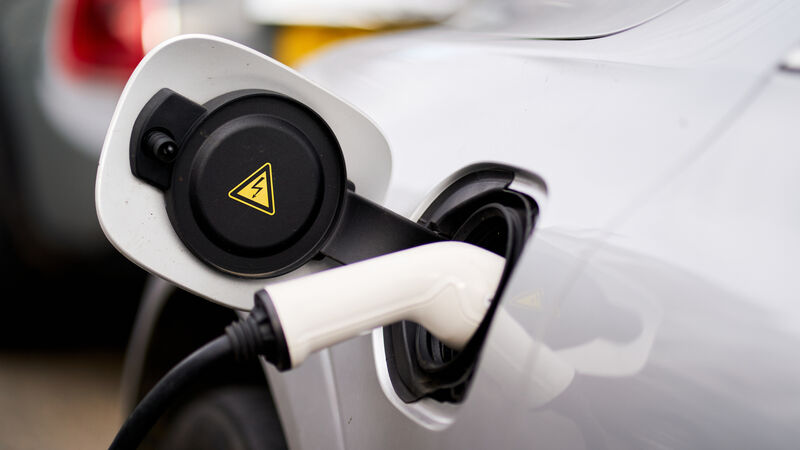
Michelle McKeown: "EVs rely heavily on convenient charging, and in Ireland, the majority of charging still happens at home, usually overnight on cheaper electricity rates. This home-charging convenience is a major factor in EV adoption."
The Irish driveway is quietly disappearing. Walk through any new housing development and you’ll see narrower streets and fewer car spaces. This is not a design oversight.
It is deliberate policy. Across Ireland, councils are reducing car parking provision in new homes to cut emissions, ease congestion, and encourage a shift towards public transport and active travel.
The 2024 Sustainable Residential Development and Compact Settlements Guidelines support minimising, substantially reducing, or even eliminating car parking in new residential developments, particularly in areas well served by public transport.
The logic is that less space for cars should mean fewer cars. In practice, however, everyday realities are proving more complicated.
While policy is designing out private parking, the Government continues to promote a switch to electric vehicles. The Climate Action Plan targets a significant increase in EVs, with an original ambition approaching one million zero-emission vehicles by 2030. Recent assessments acknowledge this will be challenging, with Ireland reaching around 196,000 EVs on the road by early 2026.
EVs rely heavily on convenient charging, and in Ireland the majority of charging still happens at home, usually overnight on cheaper electricity rates. This home-charging convenience is a major factor in EV adoption.
Reducing off-street parking undermines that advantage. Public charging infrastructure has grown, with roughly 4,000 public charge points nationwide as of early 2026, including new high-power hubs along key routes. However, coverage remains geographically uneven. Users continue to report reliability issues, queuing, and higher costs compared to home charging.
Even when a car is parked on the street directly outside a home, running a cable across a public footpath is often restricted by policy for safety reasons. This creates a practical barrier for households without driveways or private parking. What seems like a simple workaround is frequently unworkable in practice.
This is where planning becomes a question of fairness. EV ownership in Ireland remains skewed towards higher-income households, typically owner-occupiers with access to private driveways.
These households can install home chargers, avail of lower energy tariffs, and benefit fully from government incentives. In contrast, renters, apartment dwellers, and those in higher-density developments (precisely the types of housing now being prioritised) face a different reality.
Without private parking, they must rely on public charging, which is often more expensive and less convenient. The result is a two-tier transition, those with space can adopt EVs more easily and cheaply, while others face structural barriers.
The case for reduced parking assumes viable alternatives exist. Outside major urban centres, however, public transport remains limited, with infrequent or indirect routes in many areas. Rail serves only parts of the country effectively, and while cycling infrastructure has improved in cities, it is still fragmented elsewhere.
Ireland retains high levels of car dependency, especially in rural and suburban areas. For many households’ juggling childcare, long commutes, or shift work, the car remains essential. In these contexts, cutting parking does not eliminate car use, it simply shifts costs and inconvenience onto households.
That pressure is only increasing. The ongoing conflict in Iran has pushed global oil prices higher, with knock-on effects felt across Ireland and the world. As fuel costs climb, households are being asked to navigate both a costly present and an uncertain transition.
A spatial divide is also emerging. In rural areas, where space is more available, new homes still typically include parking, supporting easier EV adoption.
In cities, however, parking reductions are most aggressive. While urban areas generally have better transport options, they are also where access to home charging is most restricted.
Towns are caught in the middle. Increasingly subject to urban-style planning policies without matching investment in transport alternatives. This risks embedding inequality through design.
At its core, this is a question of timing. Ireland is simultaneously reducing parking, promoting EV adoption, and encouraging a shift away from private cars. But these transitions are not progressing at the same pace. Charging infrastructure is still catching up.
Public transport improvements take time and investment. Behavioural change cannot happen overnight.
In the meantime, households absorb the cost. Some delay switching to EVs because it is impractical without home charging. Others face higher transport expenses. And many are left navigating a system that is not yet aligned with their daily needs.
None of this means the overall direction of policy is mistaken. Ireland must reduce fossil fuel dependence and redesign how people move in towns and cities.
But the transition must be equitable. Public support for climate action is fragile if costs and benefits are not shared fairly.
Households with driveways can charge cheaply overnight and enjoy long-term savings. Those without private parking are pushed toward costlier and less reliable public options.
In some cases, running an EV without home charging can cost as much as a petrol or diesel car. That is not an equitable transition. It risks a system where those with the least flexibility end up paying the most to do the right thing.
Ireland is right to rethink its relationship with the car. However, we are currently asking people to give up convenient car space before the full alternatives are universally in place.
These include reliable and accessible home and public charging, frequent public transport, and safe active travel options. In that gap, inequality can take root. The driveway may be disappearing in new developments. The real question is whether fairness is disappearing along with it.
CONNECT WITH US TODAY



Be the first to know the latest news and updates