The many ways to be a wild bee — and what we can do to help them
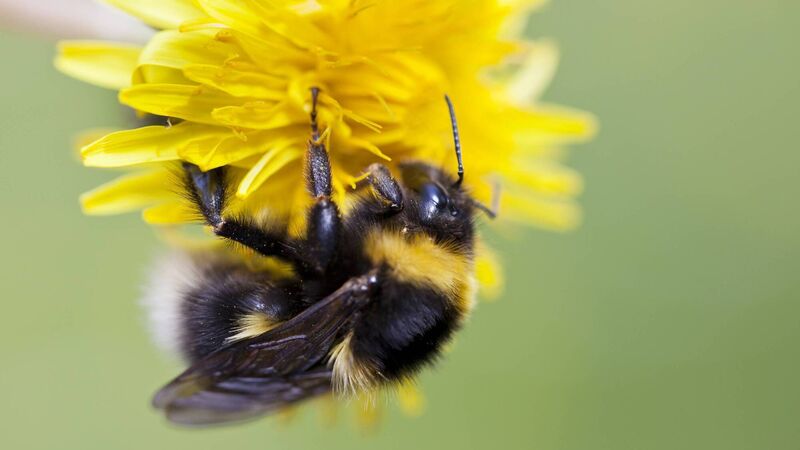
During the month of April, observe how bees are drawn to wildflowers for their generous offering of nectar pollen. Dandelions are one of the best food sources for bees, so leave them be. Don’t spray herbicides or pesticides.
Last week I saw a great big bumblebee, the first of the year for me. She was flying low across the well mown grass of a city park. Likely a queen bumblebee just emerged from hibernation, seeking out flowers, eager to drink of their nectar to keep her energy levels up whilst gathering up pollen to bring back to her nest.
But being an urban park in March, there are few wild flowers for her to find. Fastidious mowing means that dandelions are few and far between. The colourful swathes of spring bulbs that have burst in to bloom are of little use to wild bees. Daffodils, for example, have been selectively bred over centuries, so that now their flowers are bigger and brighter than their natural, wild ancestors, all frilly petals and double blooms, with scant offering of the nectar or pollen that wild pollinators need. Most of the flowers we plant in gardens and parks a great big disappointment for hungry bees in springtime. The pretty blue hyacinths that are also widely planted in parks are reputed to have a little more to offer foraging bees than daffodils, though pale in comparison to the quantities of nectar and pollen provided by wildflowers such as dandelions.
While bumblebees are big and noticeable, solitary bees are smaller and much more subtle in their ways. Worldwide, the vast majority of bees are solitary rather than social, and Ireland is no different - we have 78 different species of solitary bee compared to just 21 species of bumblebee. Bumblebees work collectively to support the queen, bringing nectar and pollen back to the nest to feed her and her many offspring. Solitary bee species, on the other hand, are not sociable, there’s no queen or collective hive. Those emerging now in spring have spent the winter as a cocoon, and when they hatch in spring, they gobble up the stash of pollen left for them by their mother before emerging as a fully formed adult bee.
Mining bees make up a quarter of all the native wild bee species in Ireland, and these are also solitary species. They burrow out little holes in the ground, often in hedgebanks and sandbanks, then construct a nest inside. Each of the 24 species of mining solitary bees has its own specific habitat niche, with particular preferences for the substrate they ‘mine’ their burrows in and specific feeding needs. One species -Clarke’s mining bee – times their life cycle precisely in tune with the emergence of willow catkins in spring, as willow pollen is they only pollen they feed on. As soon as the catkins finish up flowering, this bee’s larvae go into hibernation until the following year.
Cuckoo mining bees are mostly hairless and look much like wasps. As with their avian namesakes, ‘cuckoo’ bees skip the hassle of making their own nest and instead lay eggs in other ground nesting bees’ nests. In spring, these cuckoo bees can be spotted flying low to the ground, searching for nests to parasitize. We have 12 different native species of cuckoo bee in Ireland. Other solitary bees are cavity nesters, availing of existing nooks to nest inside such as a hollow stem or a tiny cavity in a tree trunk. Leaf cutter bees are another type of solitary bee we have in Ireland; they slice out circles from leaves and use them like plywood boards to build their nests with.
A third of our native bees are threatened with extinction. One of the major challenges they face is hunger - there simply aren’t enough wild flowers in our increasingly sterile landscapes. The conversion of ancient flower-rich fields into monocultures of ryegrass has transformed much of Munster into farmland with few resources for bees. Hedges have been removed in lieu of wire fences, or trimmed so hard that the whitethorn and willow struggle to produce flowers. Native woodlands are few and far between. Widespread use of herbicides in gardens, verges, roadsides, parks and farms leaves few weedy wildflowers to sustain the bees, hoverflies, butterflies and other flower dependant creatures. In just a few decades, much of the landscape has become inhospitable to wild bees through changing land use and habitat loss.
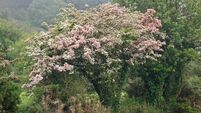
This means that there is much we can all do to help wild bees, especially at this time of year. During the month of April, observe how bees are drawn to wildflowers for their generous offering of nectar pollen. Dandelions are one of the best food sources for bees, so leave them be. Don’t spray herbicides or pesticides. Embrace wild spaces in farmland, parks and gardens - let the wildflowers grow. Watch and listen to the buzz of life in freely flowering native trees and bushes, such as the willow trees offering up their pollen rich catkins through March and April.
To find out more about how you can help bees, whether at home, in work, at school, on the farm, in the sports club, or the local park, excellent guidance can be found on the website of the All-Ireland Pollinator Action Plan - pollinators.ie. If you’re keen to find out more about solitary bees in particular, The National Biodiversity Data Centre will be running a new online course on Ireland’s leafcutter bees, mason bees, sharp-tailed bees and wool carder bees. Taking action for wild bees and other wildlife is a powerful way to engage with the wondrous world of wildlife all around us and can be a powerful antidote to despair.


CONNECT WITH US TODAY



Be the first to know the latest news and updates