Feeding bread to swans as a worthy eco-crime
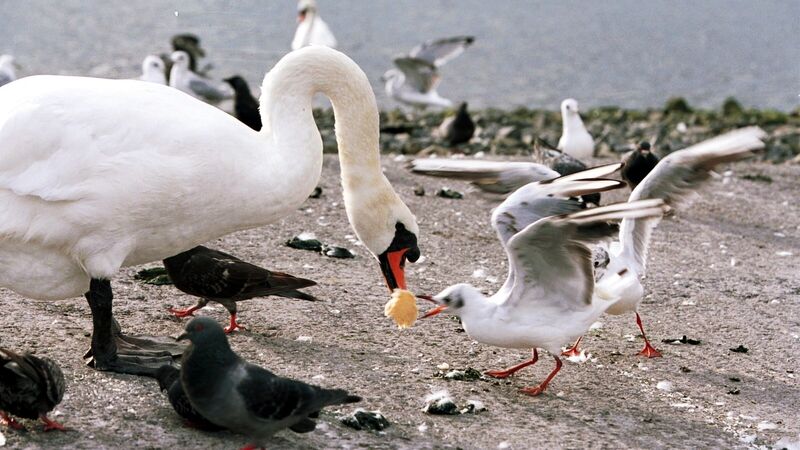
A Seagull liberates a lump of bread from a Swan at the Claddagh in Galway. Picture: Philip Cloherty
Bread, ‘the staff of life,’ is not a healthy food for birds. It isn’t toxic and won’t poison them, but it has almost no nutritional value.
Like children gorging themselves on junk-food, while turning their noses up at ‘healthy’ offerings, bread-addicted waterfowl may shun natural food. With their bellies full of bread, leaving little room for real food, they risk becoming undernourished in the midst of plenty.
But adults and children love feeding ducks and swans. It’s such a popular activity at the head of my local Swords Estuary, that there are traffic-jams there occasionally. Bread feeding may be criticised but it’s a marvellous experience for children.
The Swords swans often ignore the succulent algae all around them, waiting instead for the next bread-dispensing car to arrive.
If offering bread to birds is an eco-crime, I plead guilty as charged, having offered more bread to waterfowl than anybody else in Ireland. During the 1980s and 90s, I purchased sack-loads of discarded bread from a local grocer and fed it to swans in Dublin and Wicklow.
The judge may ask if I have anything to say before sentence is past, ‘Yes’, I shall plead, ‘may it please your Honour, but my primary purpose wasn’t to feed the swans. I needed to catch and ring them for research, bread being essential to that task. Offerings of nutrient-rich flaked-maize, chopped-up lettuce and cabbage, proved to be of no avail’.
A swan likes to swallow wet bread. On seizing a dry piece in its bill, it dips it in the water to soak. With the head submerged for a second, a swan hook is quickly deployed. Once the hooked tip of this shepherd’s crook bishop’s crozier is around its neck, the bird is captured. Age sex weight and wing dimensions having been recorded, it is released to the wild. Don’t try this at home, as they say, unless you’re a licensed bird-ringer.
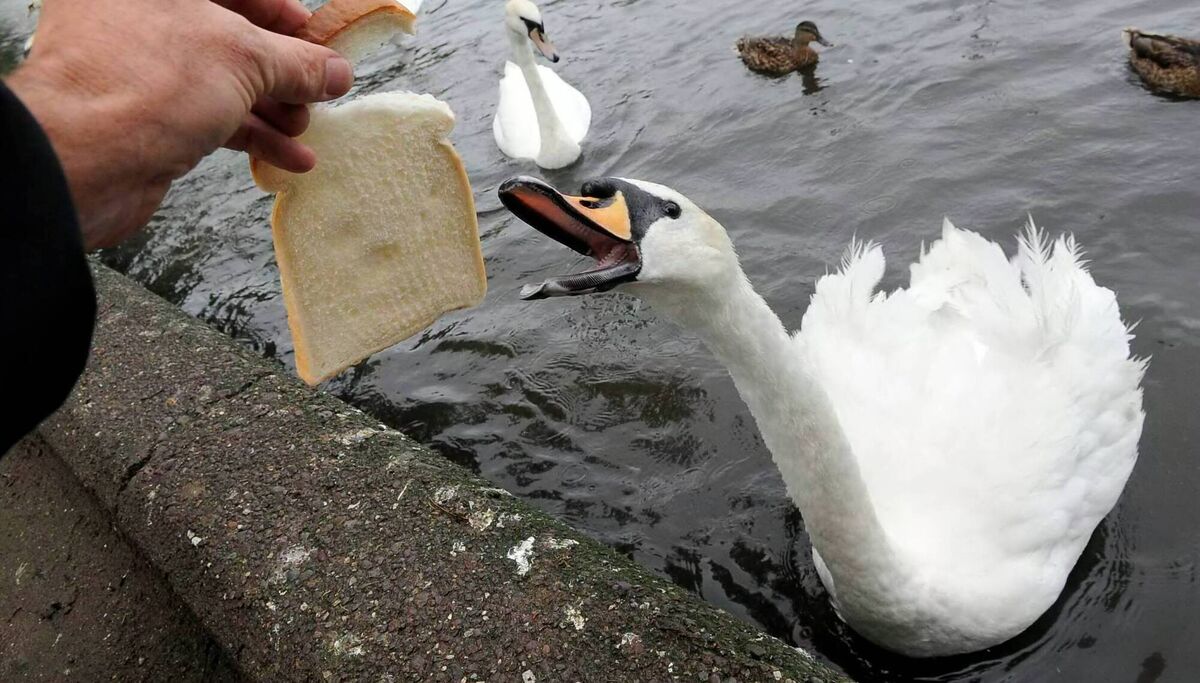
Of the 1,500 mute swans captured during the Dublin and North Wicklow study, none was ever injured being caught. Victims of collision with wires, or trapped in canal locks, were rescued. Fishing hooks were removed from swans’ tongues. A cygnet which passed through the whirling turbines of Leixlip power station was caught in the tail-race and nursed back to health. Of 52 swans covered in oil on the River Tolka, 42 were captured and nursed back to health.
Torn between approaching the catcher too closely and the irresistible temptation of eating bread, a swan becomes hyper-vigilant, its body- language and aggressive hissing reflecting this. But, once bitten twice shy, swans soon began giving me a wide berth.
I once carried out a profile-recognition experiment, arriving with a sack over my head and shoulders to see if swans still recognised me. The results were inconclusive. Normal people and their children became alarmed. I wonder why? The swans detected their anxiety and were spooked in turn.
There was little evidence of serious adverse effects from bread feeding among the swans. The practice, it’s claimed, can lead to such shortages of essential nutrients that cygnet’s wings fail to develop normally. However, I came across only two cases of this ‘angel wing’ among the thousands of swans studied. Neither of the victims could fly, but both managed to survive nonetheless.

CONNECT WITH US TODAY



Be the first to know the latest news and updates