Inishbofin makes a marvellous place to explore
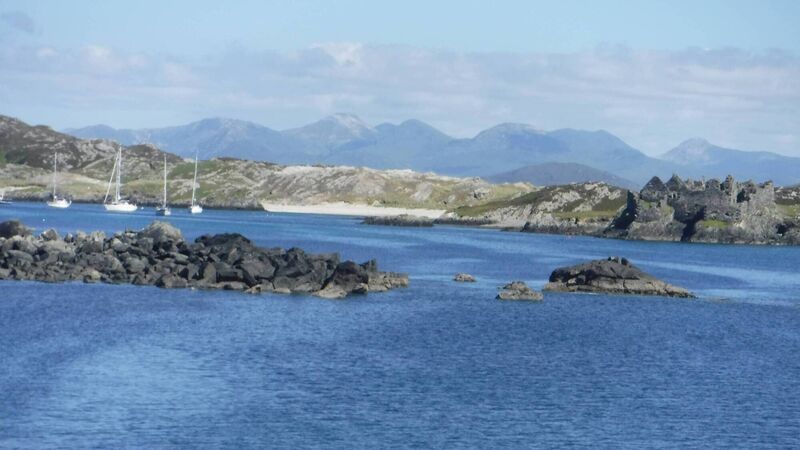
Sailboats shelter in Inishbofin Harbour, with the ruins of Cromwell’s Barracks on the right.
Oliver Cromwell is one of history’s great paradoxes. Undoubtedly, a man of sincere faith, he nevertheless executed the King of England and was more authoritarian than the monarch he replaced. Promoting tolerance and freedom of religion, he welcomed back Jews, who had been banished from England; on the other hand, he banned the Catholic mass. Religious freedoms were not extended to English Catholics who faced legal, social, and economic discrimination, but they were, in general, not physically harmed. By the standards of his time, he was a relatively moderate leader and has been rewarded with a statue outside London’s House of Commons.
This contrasts with the brutal sectarian massacres during his Irish campaigns and the violent expulsion of Catholics from their lands. Priests were treated with total hostility: he viewed them as instigating the 1641 rebellion, where Protestants were massacred, and later leading the resistance to his invasion of Ireland. Ordering the summary execution of Catholic clergy during his military operations, he later hunted priests with bounties placed on their heads.
Inishbofin Island was one of the last Royalist strongholds to fall, surrendering to Cromwellian forces in February 1653. A fort was then built on Port Island, the substantial remains of which may still be visited. Aimed to control entrance into the harbour, it was later used to imprison Catholic priests. Many were then transported to become involuntary, indentured servants on sugar and tobacco plantations in the West Indies. One of the host islands, Montserrat, is still widely known as the "Emerald Isle of the Caribbean” and the only place outside of Ireland where St. Patrick’s Day is a national holiday.
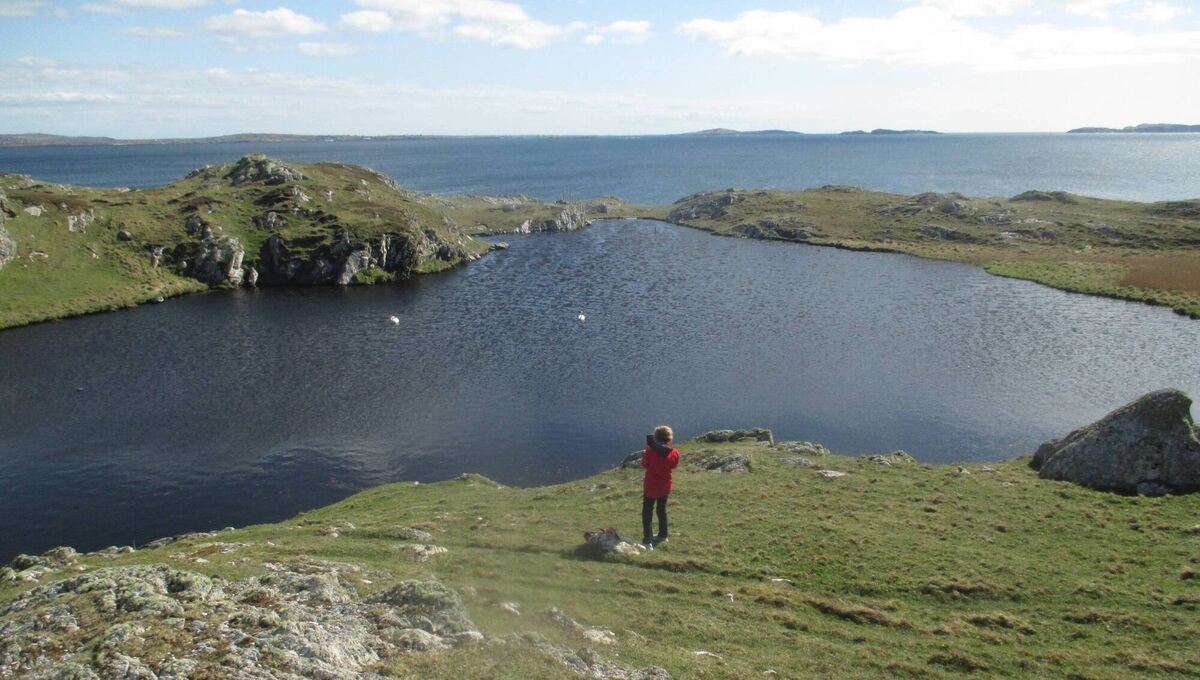
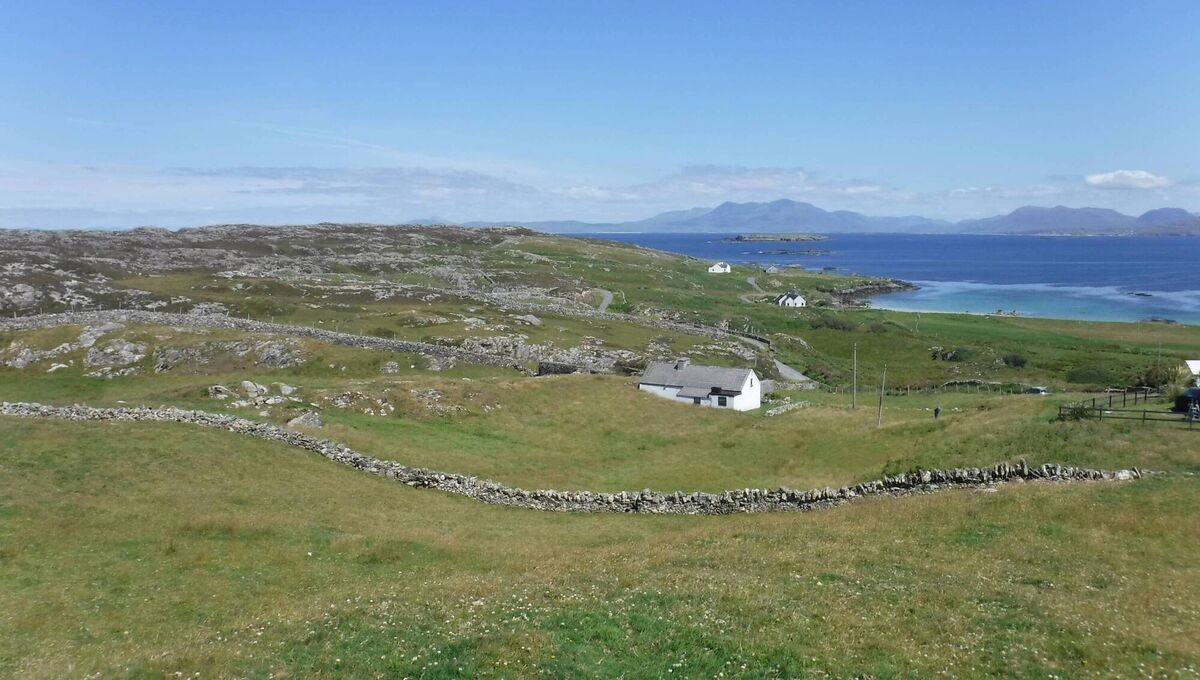
If you are thinking of visiting Inishbofin, the Island makes a marvellous place to explore for its unmatched coastal vistas and lack of serious hills. One of the most touristic Irish islands, Bofin has a well-developed infrastructure for welcoming tourists and is most renowned for its stunningly white beaches.
Offering excellent access for walkers and dry terrain, it lacks the dense pattern of stonewalls that commonly thwart exploration of other islands. And you will be following in the footsteps of literary heavyweights such as Ted Hughes, Sylvia Plath, Cecil Day Lewis, Louis ManNeice and Seamus Heaney, who all discovered a haven of peace on the island.
For a lovely walk taking in most of Inishbofin, follow the tarmac west along the south coast from the Harbour and then tag the walking arrows right, with the Instagram-pretty mountains of Achill, Nephin and Croagh Patrick filling the horizon. Right again takes you east along the sand dunes separating the unique lagoon of the Loch Bó Finne (Lake of the White Cow) from the Atlantic.
Follow a green road until it coalesces with blue arrows for the Middlequarter Loop. Soon after, it is worth making a diversion left and uphill, with easy scrambling required, to reach the splendid all-island viewing point atop Bofin’s second-highest hill. After descending, it is by quiet byroads and pastureland to pick up red arrows for the Cloonamore Loop. Rustic lanes then lead to an exploration of the island’s remote northeast on bog roads traversing Cloonamore.
Now comes the pièce de résistance of the outing: the eye-wateringly white sands of East End Beach, which could be straight out of a Greek Islands brochure, except they are better, offering unforgettable views of Connemara and the Twelve Bens Mountains in the background.
Foot it across the pristine sands to a picturesque row of fishermen’s cottages. Here, the arrows indicate right and back towards Inishbofin Harbour. On the way, you pass the Galley Restaurant, which makes for a sublimely scenic coffee stop. The route goes by a monastic site founded by St Colman, who is deeply associated with Inishbofin.
Born in Ireland during the 7th century and educated at Iona Abbey in Scotland, he became Abbot of the famous monastery at Lindisfarne in Northumbria. Resigning in 664, when the important Synod of Whitby decided to calculate the date of Easter using the Roman method instead of his preferred Celtic system, he returned to Iona. Later, sailing to Inishbofin, he founded the monastery, where he spent his final days. Now is a short ramble back to the trailhead, having walked about 13km in a time of about 3.5 hours If you are staying overnight on the Island, the Westquarter Loop, takes in some exhilarating Atlantic scenery and is a must for day two. It goes by the Stags Rocks, where dwells the Island’s seal colony. The Dún More Cliffs, an Iron Age promontory fort, a dramatic ocean blowhole and the pristine sands of Trá Gheal beach are other highlights, along with dreamy views of the now uninhabited Inishshark Island.
Located off the Connemara Coast, ferries operate to Bofin three times daily during peak season and twice daily in the off-season. They sail from Cleggan, which lies about a 15-minute drive from Clifden. Further information: inishbofin.com.
CONNECT WITH US TODAY



Be the first to know the latest news and updates