Birds of Ireland: Goldcrest
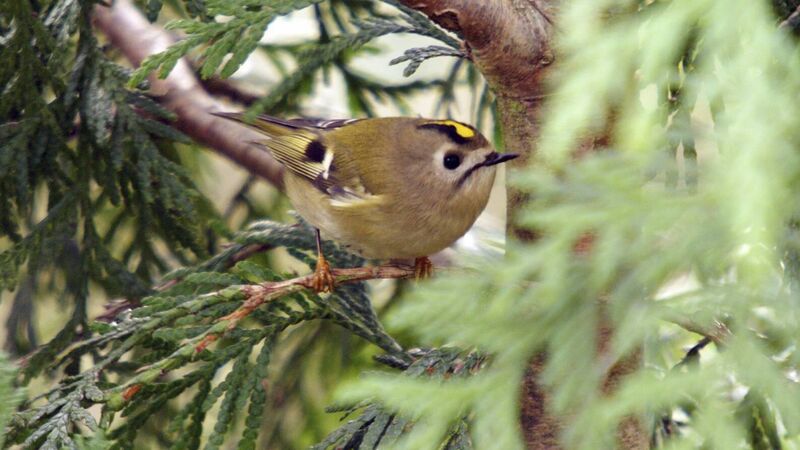
Goldcrests are the national bird of Luxembourg
A goldcrest is about 9 centimetres long with a wingspan of 14 centimetres.
They are a common breeding species found here all year round on woodland, farmland, and in gardens.
Goldcrests are the smallest bird in Europe — even smaller than a wren.
Both sexes appear similar. Adult goldcrests have an orange/yellow crown stripe on male — this yellow on females, bordered in black at sides. They have large dark eyes on a plain face and a short, dark line from the base of their beak giving a slightly sad expression. Goldcrests have a short, pale wing bar with a rectangular black patch behind it. They sometimes raise/spread out their crown feathers.
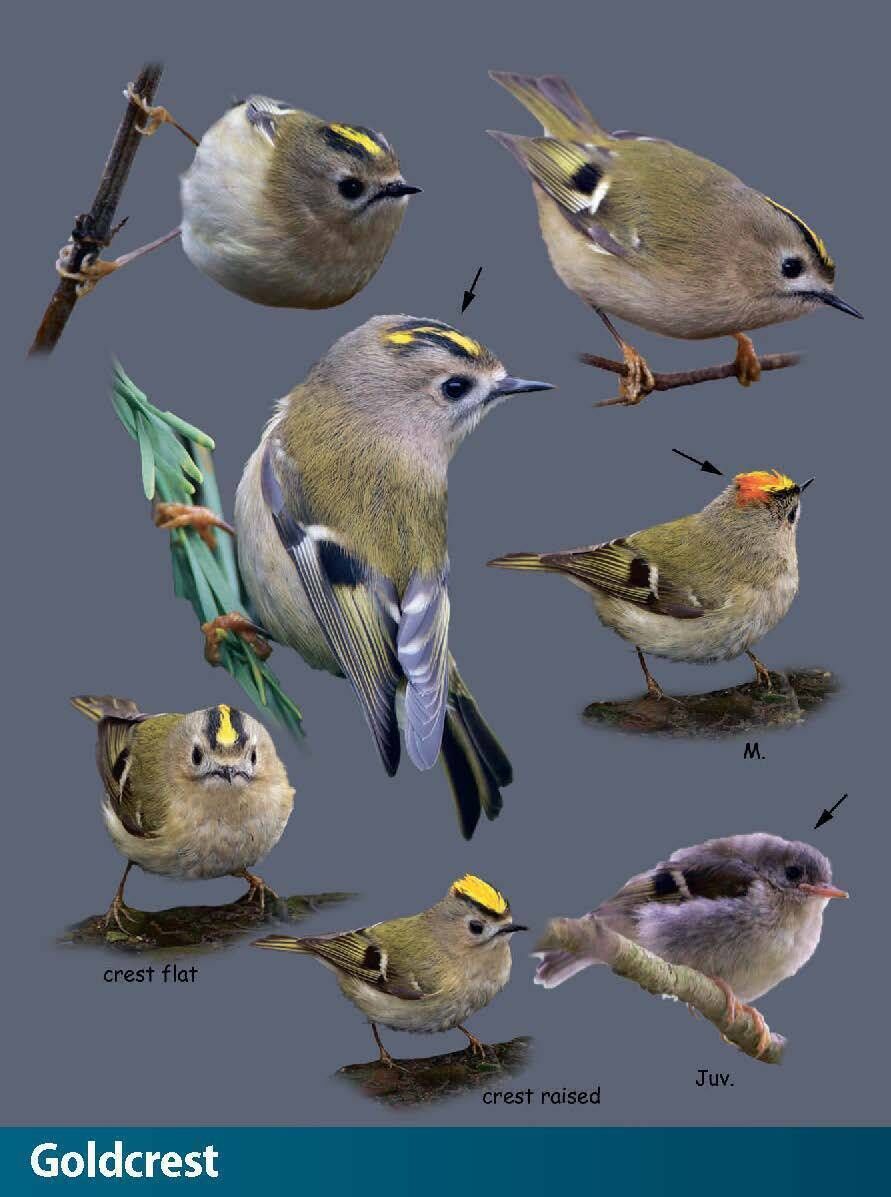
Juvenile and immature goldcrests lack the crown stripe.
A goldcrest has a buzzing flight and they hover to pick insects from foliage.
A goldcrest is usually heard before the bird is seen — they have a very thin, highpitched call, an erratic . Their song is high-pitched and includes a rapid , usually repeated four times, followed by similar, more varied phrase.
Warblers are a large group of small to medium-sized birds. Most are insect eaters though some will also eat fruit, especially outside the breeding season. Most are long-distance migrants and almost all in Ireland spend the winter in sub-Saharan Africa.
In recent decades very small numbers of two species, the blackcap and chiffchaff, have spent the winter here. Warblers tend to be very good singers.
Crests are small, warbler-like birds that get their name from their bright crests. The goldcrest is the smallest bird in Europe, weighing only about 6grammes and measuring just 9 centimetres from the tip of its beak to the tip of its tail. They are insect eaters, often hovering while picking insects from leaves.
Flycatchers, as the name suggests, are insect eaters. They all catch insects by darting out from a perch on a bush or tree to grab a flying insect and returning to a perch to watch and wait for the next opportunity. All are long-distance migrants. Irish flycatchers spend the winter in sub-Saharan Africa.
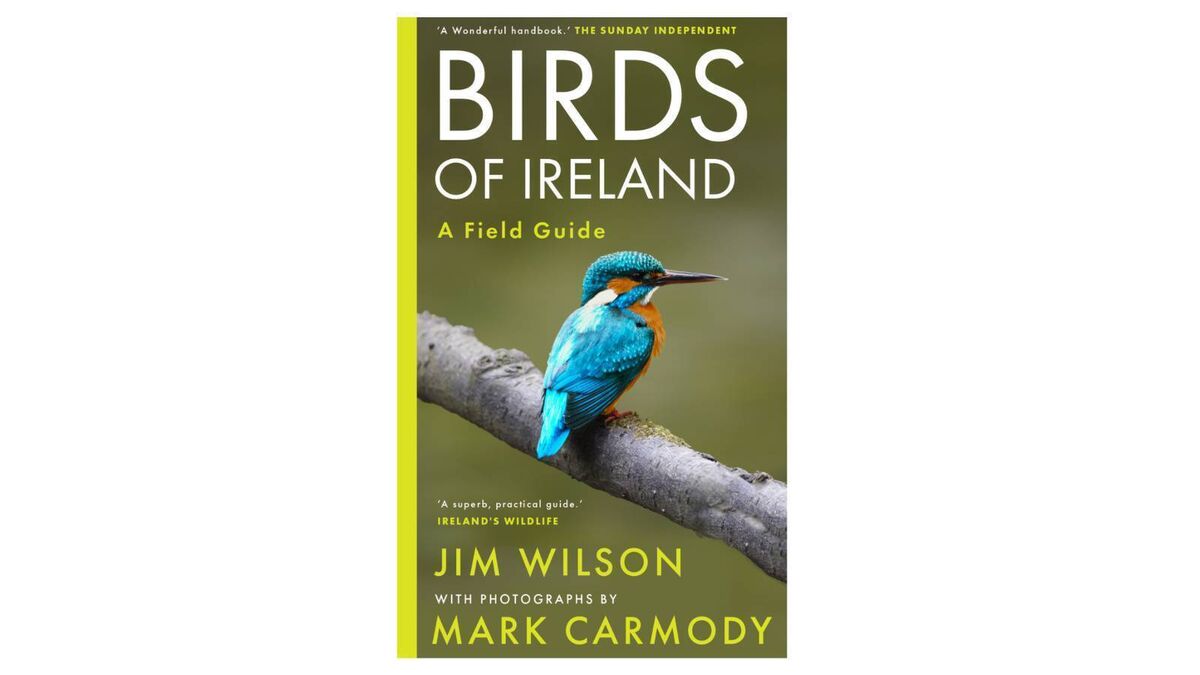
Featured in by Jim Wilson, with photographs by Mark Carmody
- Jim Wilson is a wildlife writer, broadcaster, tour leader, and former chairman of BirdWatch Ireland. He has been involved in the study and conservation of birds in Ireland for more than 45 years, contributing to several major surveys and international projects.
- Mark Carmody is an award-winning wildlife photographer, has a PhD in biochemistry and works as a European patent attorney.
Read More
CONNECT WITH US TODAY



Be the first to know the latest news and updates

![<p> The International Union for the Conservation of Nature says that “an ecosystem is collapsed when it is virtually certain that its defining biotic [living] or abiotic [non-living] features are lost from all occurrences, and the characteristic native biota are no longer sustained”.</p>](/cms_media/module_img/9930/4965053_12_augmentedSearch_iStock-1405109268.jpg "<p> The International Union for the Conservation of Nature says that “an ecosystem is collapsed when it is virtually certain that its defining biotic [living] or abiotic [non-living] features are lost from all occurrences, and the characteristic native biota are no longer sustained”.</p>")
