Flowers are great... until they bloom at the wrong time
Results of the 16th annual New Year Plant Hunt show how our weather is changing, impacting flowering times and other wildlife — birds, bees, butterflies, and a wide range of pollinators — that depend on our wild plants
Flowers are great... until they bloom at the wrong time

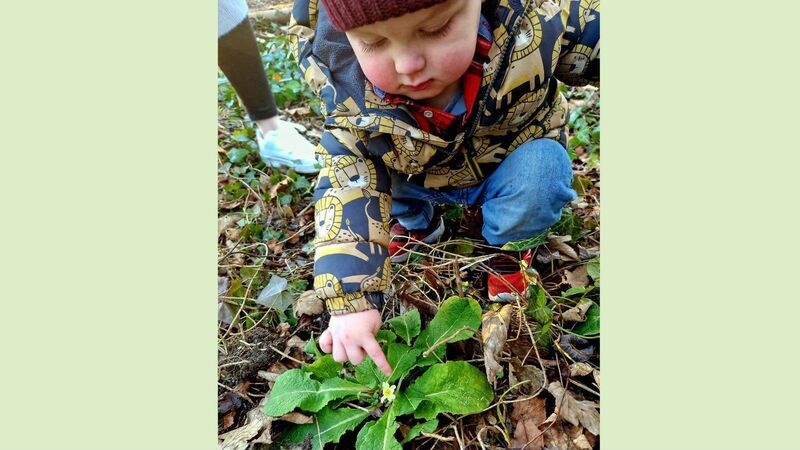
Now in its 14th year, the Plant Hunt contributes to our understanding of how wild and naturalised plants across Britain and Ireland are responding to a changing climate. Max Connolly finds a primrose. Picture: James Harding-Morris 

Flowers are generally a phenomenon of spring and summer.

From March, dandelions erupt along gardens and waysides, offering a feed of much-needed nectar for early emerging bumblebees. In April, primroses brighten ancient hedgebanks, and bluebells blanket the base of old, deciduous woodlands.

Through the height of summer, flower-filled meadows fill with mosaics of floral colour.

Most of our native flowering plants have sensible strategies to stay more or less dormant in winter, waiting until the spring equinox to get going with their year. Their flowering times have evolved over millennia in concert with the bees, butterflies and hoverflies who serve as pollinators — their life cycles enmeshed in reciprocity.

However, the 2026 New Year Plant Hunt shows that hundreds of plant species are now flowering in midwinter.

Urban botanists plant hunting in Leicester on New Year's Day, 2026. Picture: Joni Cook

Each year since 2010, the Botanical Society of Britain and Ireland (BSBI) runs a New Year Plant Hunt to find out which wildflowers are blooming as the new year unfolds. This year, more than 3,000 citizen scientists participated in the survey, including 167 surveys that were carried out across the Republic of Ireland by volunteer botanists. Together with the survey results from Northern Ireland, Scotland, Wales and England, the findings help to track how plants are responding to changing weather patterns and milder winter weather.

 9-year old Ada Ryan on a New Year Plant Hunt in Cornwall. Picture: Dan Ryan
9-year old Ada Ryan on a New Year Plant Hunt in Cornwall. Picture: Dan Ryan

This New Year’s plant hunters found an astonishing 663 different plant species in bloom in the first days of January. Across Ireland, about 232 different species were recorded in flower. Around half of these were still in flower from the previous season, lingering later than expected, assumedly enabled by the lack of extended cold spells. 

Wild strawberry trees, native to the Spain, Portugal and Ireland, normally flower in autumn, but this year were found still in blossom in Glengarriff in west Cork and Muckross in Kerry.

3-year old Ezri Jones uses a magnifying glass to check flowers on her New Year Plant Hunt. Picture: Michael Jones 

Around a quarter of the plants found to be flowering had emerged early, jumping ahead of their normal flowering time. Dandelions and daisies were the most commonly recorded flowering species in the first days of January. Daisies are a native flowering plant that are acutely aware of their environment and daylight levels — their name comes from the fact that their flowers open up at dawn and close again at dusk. This earned the name in Anglo- Saxon of ‘dages eage’ —meaning day’s eye — open by day and closed by night. Normally, daisies flower from March to October.

Sarah, Walter and Gareth use the BSBI Recording App to upload their plant finds. Picture: Louise Marsh

Last year, there were a total of 310 native plant species recorded in flower across Britain and Ireland, far more than the 10 or so species that would typically be expected to bloom in January. Native plants made up a more than half of the plants recorded in the 2026 New Year Plant Hunt, including common species such as herb-robert, lesser celandine, and common ragwort.

BSBI Ireland officer, Bridget Keehan, explained how plant hunts taking place in the south of the country and in coastal areas found more flowering species, due to milder temperatures and fewer frosts.

 Spanish Dagger (Yucca gloriosa) blooming in Cornwall at New Year. Picture: Sylvatica for BSBI 
Spanish Dagger (Yucca gloriosa) blooming in Cornwall at New Year. Picture: Sylvatica for BSBI 

Most of the longest lists of the plant hunters in the Republic were recorded in Munster, including a whopping 63 species flowering plant species recorded in County Wexford

Urban environments are also less exposed to the harshest winter weather, with pockets of warmer microhabitats. For this reason, recorders in urban areas had longer lists of plants in flower this January. The Raheen Ramblers in Limerick city recorded 56 plant species in flower. One especially interesting find has been the non-native species Bilbao fleabane — a native plant of Mexico that wasn't recorded in Ireland or Britain until 1992. This year, it was the 33rd most frequent plant recorded on Irish New Year Plant Hunt lists.

 Russell and Sarah check that Annual Meadow-grass is actually in flower. Picture: Louise Marsh 
Russell and Sarah check that Annual Meadow-grass is actually in flower. Picture: Louise Marsh 

It’s one thing to know that flowering plants from warmer parts of the world can hold on to their blossoms through the winter, accustomed as they might be to winter flowering or adapted to different climatic conditions.

Escaped horticultural varieties of plants, aka garden plants, have been cultivated and selectively bred over decades or even centuries to enhance certain traits. Many of these cultivars are far removed from their natural ancestors, which makes odd behaviour is a little less surprising. Snowdrops, crocuses, and daffodils, for example, have been selected over many generations to suit our aesthetic preferences — perhaps more blossoms, bigger brighter petals, or variegated leaves. 

 Urban botanist James Common records Mediterranean Nettle flowering in Newcastle at New Year 
Urban botanist James Common records Mediterranean Nettle flowering in Newcastle at New Year 

Native plant species, on the other hand, honour the reciprocal relationships between plant and pollinator that have been honed over the whole of their evolution. As such, they tend to flower and fruit in sync with their insect pollinators, attuned to the emergence of the particular species of bee that they rely on for pollination, for example. This makes it all the more surprising that so many native species are now flowering in January.

But for native plants to behave so differently from their normal seasonal behaviour is concerning, indicating one of the significant impacts of a climate chaos on wildlife.

Hedge Hebe blooming at Downderry in Cornwall.  Picture: Sylvatica for BSBI

According to Britain's Met Office, this data offers a unique snapshot of how our flora is responding to rapidly changing weather and climate. With more than a decade of data from the New Years Plant Hunt, they have been able to analyse the results over time, finding that for every 1°C rise in temperature at a given location, an average of 2.5 additional plant species have been observed in bloom during the study.

Rosy Cress in Stirlingshire at New Year. Picture: Matt Harding 

The data adds to our understanding of how rapidly changing climate is already causing dramatic shifts in the natural cycles of native plants, with far reaching impacts on many wild pollinators, in addition to other wild animals whose life cycles depend on a timely emergence of leaves, flowers and fruit from the plants they depend on.

CLIMATE & SUSTAINABILITY HUB

More in this section

Revoiced

Newsletter

Sign up to the best reads of the week from irishexaminer.com selected just for you.

Cookie Policy Privacy Policy Brand Safety FAQ Help Contact Us Terms and Conditions

© Examiner Echo Group Limited