Wasteful and dangerous to dump batteries and electronics
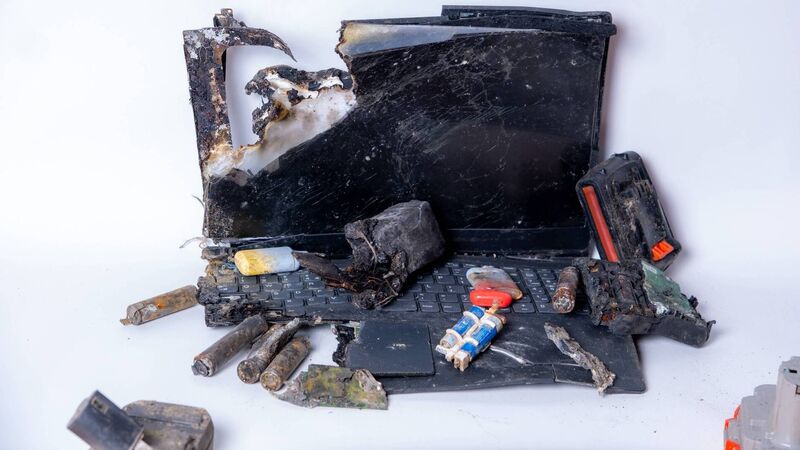
Some of the fast tech and low-quality, quickly discarded electronics found in municipal waste streams being sorted at Clean Ireland’s depot in Shannon, County Clare. Picture: Paul Corey
There has been a growing number of fires caused by batteries which have not been properly disposed of. Dangers created by used batteries are being highlighted by WEEE Ireland, the electrical equipment recycling organisation, which is appealing to people to use designated disposal facilities.
Some years ago, WEEE estimated an astounding 20 million batteries were in homes around the country on Christmas Day. There’s no reason to believe the situation has changed.
With a proliferation of battery-powered toys, lighting, gadgets, and tools, there’s sure to be discarded batteries lying around many houses. But it’s a year-round issue.

In addition to damage to the environment and groundwater contamination from leakage of toxic chemicals, fire is also becoming a problem. While no official statistics are available, fires are reportedly increasing.
Lithium is now used in many batteries, especially the rechargeable ones.
“A damaged lithium battery can catch fire, or explode, without warning," warns WEEE.
For safety reasons, people are asked not to put batteries into general bins, skips, or street bins. A 2024 WEEE survey found that one in eight people still put small electrical items into their general waste bins.
Consequently, more fires are occurring in bin lorries, waste transfer stations and recycling depots due to batteries from a variety of items, including phones and vapes, being incorrectly placed in these bins.
Compaction in trucks can crush, or puncture, the batteries causing them to short circuit and set the surrounding waste on fire, with obvious hazards for collection crews.
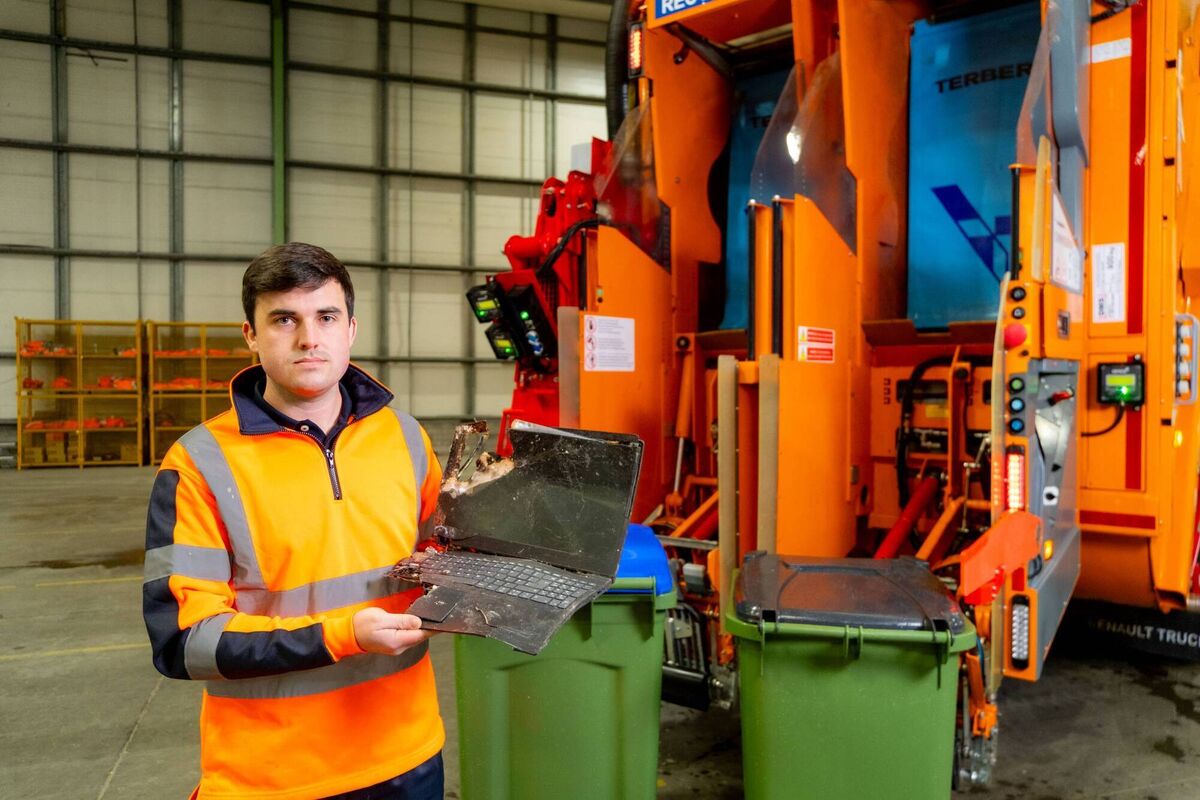
Damaged, or poorly-charged lithium items, such as e-bikes, e-scooters and laptops, have led to insurance claims following home fires. Fires have also broken out in commercial buildings.
Waste batteries should always be kept out of reach of children. Small, button-shaped lithium types are increasingly used to power many toys, and remote controls.
As young children are prone to putting things into their mouths, such batteries could cause them serious damage by choking, burning, or poisoning. There have been some shocking incidents resulting in serious internal burns and long-term health issues.
Animals are also at risk. In one case, 20 cattle died of lead poisoning after a used car battery was illegally dumped on a farm at Tarbert, County Kerry. It is believed the cattle licked broken battery parts.
Lastly, WEEE says batteries should always be recycled at its designated collection points, found at supermarkets, electronics stores and civic amenity/ recycling centres.
Always use the charger supplied with the device; do not overcharge, and unplug devices when they are full. Never use batteries that are damaged, swollen, leaking, or overheating. Neither should be batteries be dismantled.
CONNECT WITH US TODAY



Be the first to know the latest news and updates




![<p> The International Union for the Conservation of Nature says that “an ecosystem is collapsed when it is virtually certain that its defining biotic [living] or abiotic [non-living] features are lost from all occurrences, and the characteristic native biota are no longer sustained”.</p>](/cms_media/module_img/9930/4965053_12_augmentedSearch_iStock-1405109268.jpg "<p> The International Union for the Conservation of Nature says that “an ecosystem is collapsed when it is virtually certain that its defining biotic [living] or abiotic [non-living] features are lost from all occurrences, and the characteristic native biota are no longer sustained”.</p>")
