Female gorillas choosy about which group to settle in — potentially an inbreeding avoidance strategy
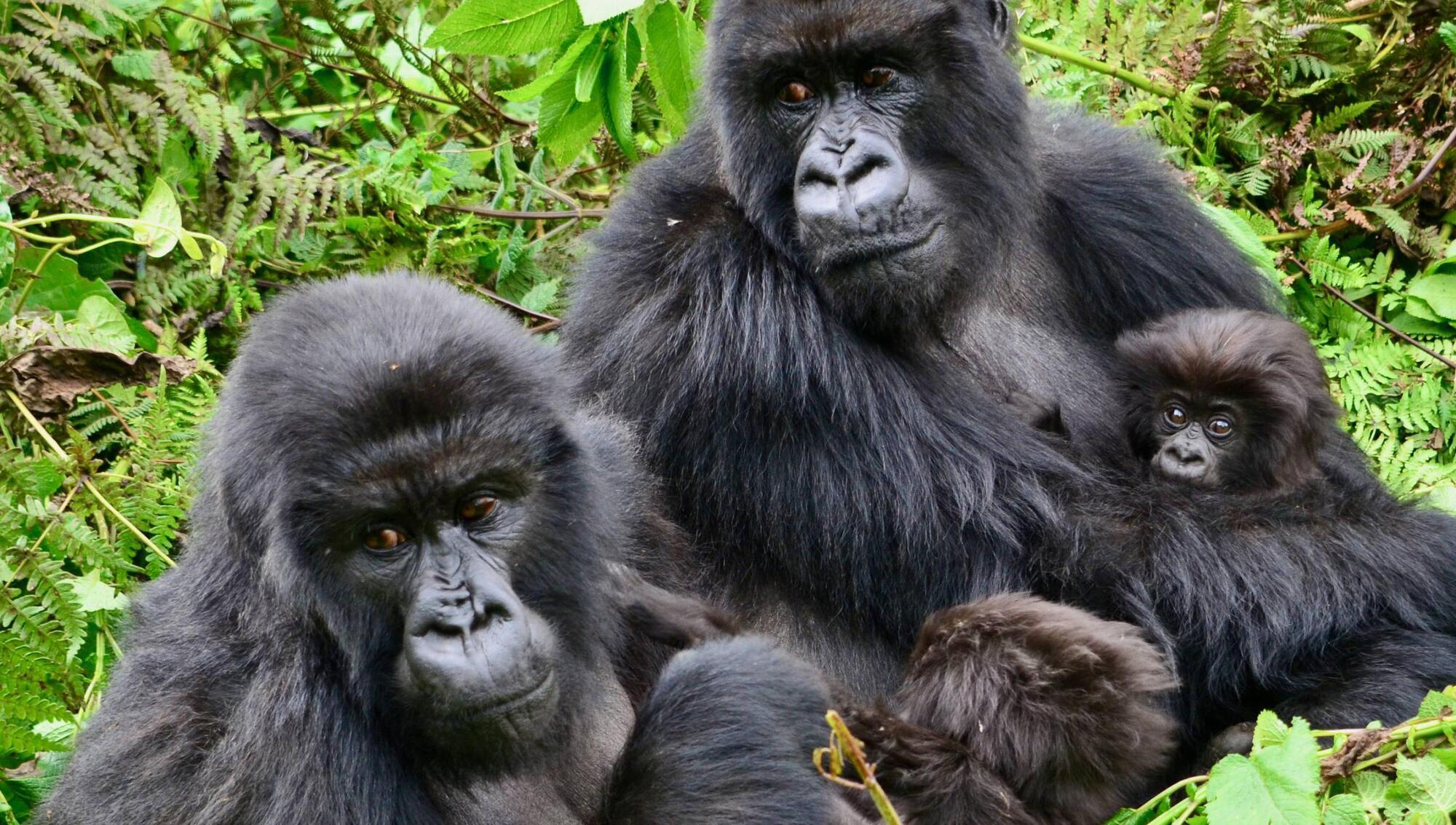
New 20-year study shows that female mountain gorillas use their social connections when choosing new groups — seeking familiar faces while avoiding childhood males. Picture: Cedric Ujeneza & Jean de Dieu Tuyizere / Dian Fossey Gorilla Fund
The ‘penny catechism’ warned us "not to marry within the forbidden degrees of kindred".
We learned this ominous-sounding phrase off by heart at school, but had little idea what it meant. Nor were our teachers keen to enlighten us as to its meaning.
Some offered a ‘birds and the bees’ type of explanation, claiming that all wild creatures avoid interbreeding with their kin. But incestuous temptations never actually arose.
As a paper just published on gorillas confirms, natural selection had solved the problem.
So happy to see my first PhD paper out: https://t.co/9yVkE6rVvF
— Vic Martignac (@VictoireMartig2) August 6, 2025
With my amazing supervisor @DrRobinMorrison and the Dian Fossey Gorilla Fund @SavingGorillas , we examined female dispersal decisions in mountain.
Some human societies encouraged ‘consanguinity’. The effeminate-looking boy-king Tutankhamun suffered from bone disease and a deformed foot. Walking aids were found in his tomb. His parents had been brother and sister. Were their son’s problems the result of incest? The jury is still out — some Egyptologists claim that there is little actual evidence that inbreeding among Egypt’s elite was all that detrimental.
The Habsburgs often married within the family. It helped maintain their power and extend their territories. Charles II, the last Habsburg king of Spain, died childless at the age of 39. His ‘in-breeding coefficient’ was off the scale. An autopsy report said that "his heart was the size of a peppercorn, his intestines rotten and gangrenous, he had a single testicle as black as coal, and his head was full of water".
The undesirable physical and mental effects resulting from consanguinity are carried on recessive genes, which in the normal course of events seldom matter. But, with an incestuous relationship, a rogue recessive ‘family’ gene may be inherited from both parents and expressed.
Sexual segregation, once practised in Irish schools, helps prevent inbreeding among wild creatures. Young male furry mammals in Ireland, for example, tend to move away from their natal areas on maturity, ensuring that they are unlikely to mate with their sisters who remain closer to home. Year-old female swallows return from Africa to the place where they hatched. So do males, but they tend to settle some distance away.
However, humans have another string to their bow. The Finnish philosopher Edward Westermarck, ‘the first Darwinian sociologist’, published his influential in 1891. He claimed that negative imprinting ensured that individuals, if raised together as children, wouldn’t be sexually attracted to each other in later life.
This ‘Westermarck Effect’, an ‘incest taboo’, helps prevent inbreeding among humans. Recent research on one of our closest animal relatives, the gorilla, suggests that we inherited it from our pre-human ancestors.
Victoire Martignac, of Zurich University, has been studying mountain gorillas at the Volcanoes National Park in Rwanda. Half of youngsters of both sexes, she found, move away from their roots, females tending to do so multiple times. But young females, her research showed, were choosy when joining other groups. They shunned troops in which males from their own neck-of-the-woods were present, but opted to join ones in which no males were their close relatives.
The evolutionary line leading to us, and the one which led to gorillas, separated around eight million years ago. Humans, it seems, didn’t invent the Westermarck Effect.