Michelle McKeown: Can we feed the world and save it too?

Rather than choosing organic everywhere or intensification somewhere, many scientists now advocate for a sustainable intensification approach: combining ecological practices with modern science and technology
Michelle McKeown: Can we feed the world and save it too?

Should we make all farming organic or focus on intensifying production in specific areas and rewild the rest? It’s a trade-off that pits land sparing against land sharing

Imagine a future where every field is organic. No synthetic fertilisers, no pesticides, and only nature-based methods guiding how we grow our food. The air is cleaner. Pollinators are thriving. Soil is healthy.

Now imagine a very different scene. Industrial-scale farms using precision technology to push yields to their limits, automated, efficient, and engineered to feed billions from tightly managed plots.

The rest of the land? Given back to forests, wetlands, or wildlife.

Which of these futures is better for the planet?

This question sits at the heart of a global dilemma: Should we make all farming organic or focus on intensifying production in specific areas and rewild the rest? It’s a trade-off that pits land sparing against land sharing, and the answer isn’t as straightforward as many might hope.

Organic everywhere: better for biodiversity, worse for space?

Organic farming has earned its eco-friendly image. It avoids synthetic inputs, supports biodiversity, and often improves soil health. But it also comes with a major challenge: lower yields. On average, organic farms produce less food per hectare than conventional ones – on average 10-25% lower yields, although this varies by farming type and region. That means we’d need much more land to grow the same amount of food organically.

Globally, this raises an uncomfortable truth, if we go fully organic, we may have to convert more land to agriculture. Land that might otherwise be home to forests, peatlands, natural grasslands, for example. That extra land demand could accelerate biodiversity loss, increase greenhouse gas emissions, and threaten the very ecosystems organic farming seeks to protect.

A 2019 study published in the journal Nature Communications, and led by Cranfield University in Britain, found that going fully organic in Britain could increase the carbon footprint of food production by up to 70%, mostly due to land-use change overseas to compensate for lower yields [exa.mn/6yj]. In other words, what we gain in pesticide reduction, we may lose in deforestation and carbon debt elsewhere.

Land sparing: high-yield farming, but at what cost?

The alternative? Intensify production on the most suitable land using high-yield methods, synthetic fertilisers, irrigation, and even genetically modified crops, while sparing other land entirely for nature. Known as the land sparing model, this approach banks on efficiency. The idea is simple: grow more on less land, so that we can set aside more of the planet for conservation and rewilding.

In theory, it’s sound. Modelling studies suggest that intensifying production on existing farmland could allow for up to 40% of agricultural land to be restored to natural habitats, if done right. But there are huge caveats.

First, intensive farming often depletes soil, pollutes water, and erodes local biodiversity. It’s also a major driver of greenhouse gas emissions, especially from livestock and fertiliser use. Without strict environmental regulations, intensification can do more harm than good. Second, land sparing relies on strong policy enforcement. Just because one area produces more doesn’t mean another area will automatically be rewilded. Too often, both areas are exploited, we intensify here and expand there, chasing economic returns rather than ecological balance.

A third way? Smarter hybrids

What if the real solution lies between these extremes?

Rather than choosing organic everywhere or intensification somewhere, many scientists now advocate for a sustainable intensification approach: combining ecological practices with modern science and technology. Think precision fertiliser use, cover crops, integrated pest management, agroforestry, and drought-resistant crop varieties, which are applied strategically in different contexts.

In some areas, especially in regions with high population density or poor soils, organic or agroecological methods may work best. In others, especially where yields are already high, efficiency gains through innovation may free up land for nature.

This nuanced approach supports the idea of land-use triage, where prioritising land for farming, conservation, and multi-use based on local environmental, social, and economic conditions.

Feeding 10 billion people without breaking the planet

By 2050, the world will need to feed nearly 10 billion people. That means producing more food while using less land, water, and carbon. The global food system already accounts for over one-third of greenhouse gas emissions, and agriculture is the leading cause of deforestation and biodiversity decline.

To meet this challenge, we can’t rely solely on ideology, whether this is organic purity or tech-driven maximalism. Instead, we need evidence-based, regionally adapted food systems that recognise trade-offs and seek win-wins.

This includes:

(1) shifting diets, especially reducing high-emission foods like beef in favour of more plant-based proteins

(2) cutting food waste, which currently squanders up to 30% of global food production

(3) supporting smallholder farmers, particularly in the less developed countries, where yield gaps are large but often due to lack of access to tools, credit, or knowledge, and not poor practice

and finally

(4) investing in agroecological transitions that don’t just mimic nature, but restore its functions within food production.

What can Ireland do?

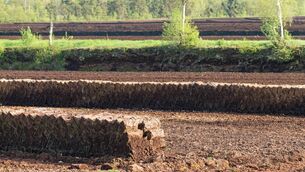
Ireland, with more than 68% of land used for agriculture, mostly for beef and dairy, is deeply tied to these global debates. Should we expand organic? Intensify grazing more efficiently? Rewet peatlands and reduce cattle numbers? The answer likely lies in doing all of the above, strategically.

That means, protecting carbon-rich landscapes like peatlands from any form of expansion, and supporting organic and regenerative methods on marginal land, using precision technology and nutrient budgeting on high-output farms, and designing fair transition schemes that support farmers in making evidence-informed choices.

It’s not either/or

There is no silver bullet. But the wrong question is 'which system is best?'.

A better question is 'how can we design farming systems that meet human needs without destroying the ecosystems that make life possible?'

Sometimes that will mean going organic. Sometimes it will mean going high-tech. But always, it will mean going smarter.

x

More in this section

Revoiced

Newsletter

Sign up to the best reads of the week from irishexaminer.com selected just for you.

Cookie Policy Privacy Policy Brand Safety FAQ Help Contact Us Terms and Conditions

© Examiner Echo Group Limited