Birds of Ireland: Water Rail

A water rail. Picture: Richard Mills
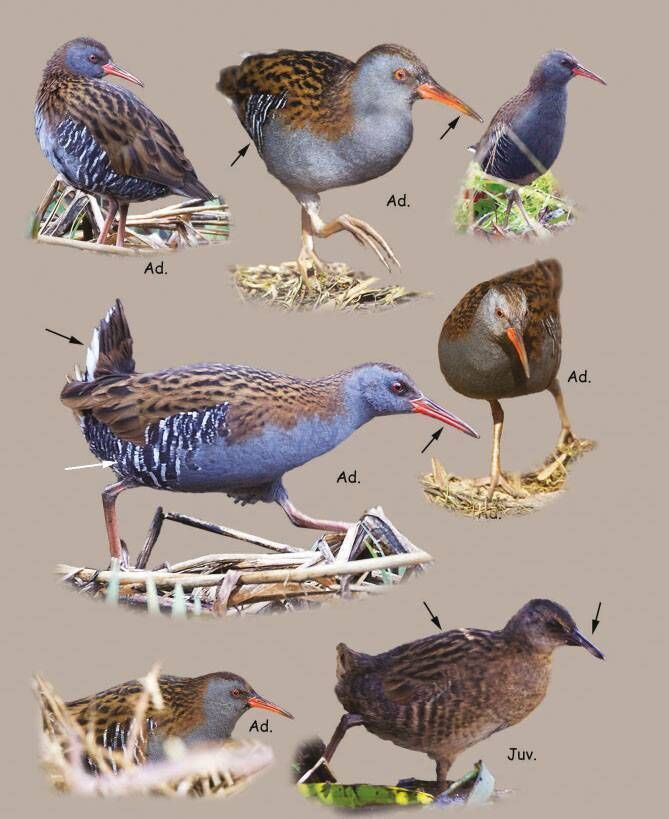
A water rail is about 22-26 cm long with a wing span of 38-45pm. They are a common breeding species found here all year around — typically on wetlands.
Slightly smaller than a blackbird, a water rail has a dark red eye; a long, thin, slightly downcurved pink-red beak, dark culmen and tip; long legs; large, unwebbed, and pale pink feet.
Adult water rails have black streaked upper-parts, brown back/wings; a dark underside; grey face/neck/breast; belly/ flanks heavily barred black/white; vent buff; undertail coverts white.
Juvenile and immature water rails look similar to the adults but with a paler face/breast/belly; annd a shorter dull beak.
In flight there are no obvious markings but their legs hang down; and they usually only fly a short distance if disturbed.
A water rail's voice is the easiest way to identify this secretive bird — it's a loud grunting/squealing pig-like call from a reed bed or other waterside vegetation, mainly at dawn/dusk and at night.
1. Don’t be tempted to buy the first pair of binoculars you look at. You will be hoping to get long use from them and it is wise to shop around.
2. Before looking through the binoculars, check for scratches on the glass or bumps on the surface and make sure that the central focusing wheel moves freely.
3. Look through the opposite end of the binoculars for damage or dust inside. (This applies to telescopes also.)
4. There should be a coating on the lenses, usually blue but sometimes green or yellow.
5. Be sure there is no noticeable colour difference between the objects you are looking at with the naked eye and what you see through the binoculars.
6. Some binoculars are better at focusing on objects very close to you. The closer the object, the better you can focus.
7. Check for the amount of blurring (if any) at the edges of the image in view; the less the better.
8. The weight of the binoculars is very important. As already mentioned, holding binoculars up to your eyes for even a few minutes can be quite tiring. Make sure you are comfortable with them.
Practice with your new binoculars as often as possible. Look at objects at different distances and heights and try to find and focus on them as quickly as possible. Many people find locating a bird with binoculars quite difficult at first but with just a little practice it will become second nature. The secret is to fix your eyes on the bird or object and then, without looking away from it, place the binoculars to your eyes. Being able to grip and raise your binoculars to your eyes without taking your eyes off the bird is very important.
The strap on your binoculars should be adjusted so they do not bounce all over the place when you are walking. The best position is at or about chest level, and make sure you can take them off easily without getting the strap caught around your head.
Just like the gunslingers in the Wild West, you need to be quick off the draw with your binoculars to get a close look at a bird that might not wait around for long.


CONNECT WITH US TODAY



Be the first to know the latest news and updates