Islands of Ireland: Heading towards Coney Island in Cork
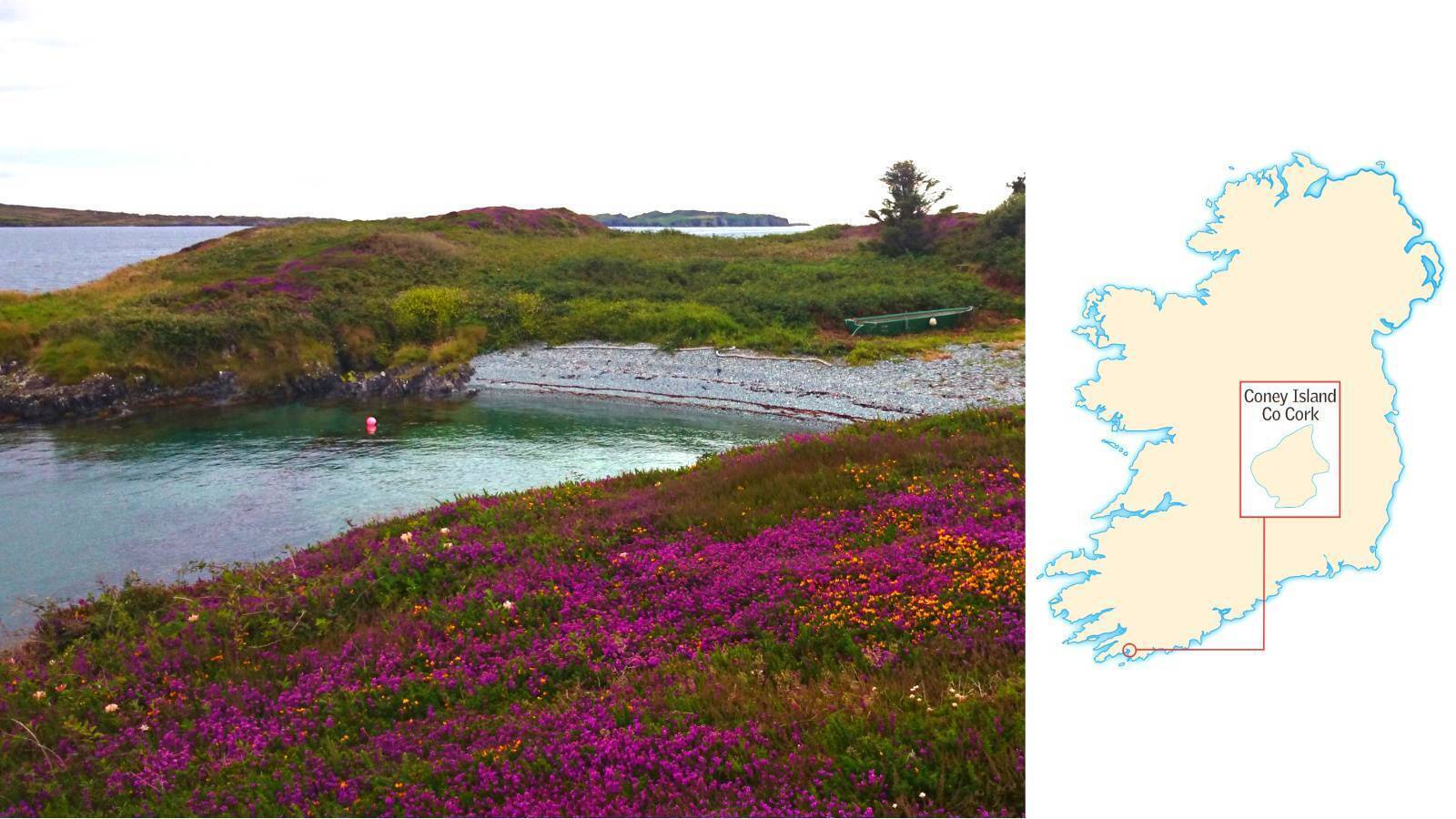
Coney Island, Roaringwater Bay, Cork. Picture: Dan MacCarthy
This name was made famous by Van Morrison in his eponymous 1989 song: “And all the time going to Coney Island I'm thinking, Wouldn't it be great if it was like this all the time”.
Van’s island is, of course, in County Down, but this is a tiny one in County Cork totalling a mere six acres. However, in the eye of this beholder it is no less beautiful. For such a tiny island its three sandy beaches would put much larger islands to shame distributed as they are at three points of the compass. Bundles of purple heather tumble across its hillocks. Up above, Mount Gabriel with its meteorological stations, stands aloof. Perhaps Van may pen a ‘Coney Island II’.
And people apply the song’s lyrics to other Coney’s such as the New York or County Sligo ones. There is another in the Shannon Estuary in County Clare, while there are many Rabbit Islands including the one at Castletownshend, County Cork and one at Baltimore too, but to call that an island is a bit of a stretch. The Irish for this Coney Island is Oileán an Choinicéir, the Island of the Rabbit Warren.
And there ... it ... goes ...
— Skibbereen Heritage (@skibbheritage) July 11, 2024
A summer sunset in #WestCork is always a joy...#roaringwaterbay #westcork #purecork #skibbereen pic.twitter.com/nRT6b6iNGi
A boyhood exploration of the nearby Horse Island in Roaringwater Bay, fadó fadó, nearly led to it being the final one for this columnist when a bank of purple heather concealed a deep mine shaft. Some reflexive dexterity brought safety, but several sheep at the bottom of the shaft were not so lucky. A close call. There is at least one more shaft on Coney Island though they have long since fallen into disuse.
These were copper mines and part of the excavations on Horse Island and the Mizen Head in general from the 19th century. It was, if not quite a gold rush, then a copper rush, as thousands were employed.
Mining for copper on the Mizen head has been carried out since the Bronze Age 5,000 years ago. One historic period was from about 200 years ago and the miners were referred to as “the Danes”. A later period from around 1820 to 1874 yielded better ores and these were exported to Swansea and “sold for a high price”.
The reported in 1906 that: “Indications point to the fact that beyond all doubt the localities surrounding Schull, Ballydehob, Crookhaven as well as the islands in the neighbourhood are particularly rich in mineral wealth, copper a very valuable metal just now being the most extensively discovered.” The report went on to state that Coney Island, Schull Harbour “is a place too that has attracted the attention of the mining community and we have been informed that steps have been taken to start operations there also”.
And regarding mining possibilities further out the Mizen Head, the newspaper enthused: “The music of the miner’s pick will be heard again at Durode shaft which is to be reopened and actively worked”.
The Coney Island mine was operated by the Schull Copper Mining Company for a few years without any significant return. It was also a site of tragedy. At least one fatality occurred on the island with the death of a labourer called Charles McCarthy, aged 16, in 1907 when “engaged in wheeling stone to build wall, went into a natural cave for private purpose, was killed by stone falling from top of cave”.
Other mines in the area in this period included the ones at Mount Gabriel itself and Coosheen in Schull Harbour which for a time produced significant quantities of baryte.
Two of the more famous islands in the US, Coney Island and Long Island in New York, find their echo across the Atlantic in County Cork. Or should that be the other way around? Like many American placenames, Coney derives from Irish origins probably from coinín or rabbit. Whether this source, as has been suggested, was an Irish ship’s captain thinking longingly of home, we will never know.
There is a solitary house on Coney Island, which is privately owned, and there is no record of anyone having lived there historically. That is a possibility however, as there is ample cover to protect from inclement weather.
: Coney Island is privately owned.
: Southern Star 03/06/1906; dmm.org.uk
CONNECT WITH US TODAY



Be the first to know the latest news and updates