Islands of Ireland: Arranmore is a magnet for hillwalkers, birdwatchers, anglers, swimmers, divers... and island fans
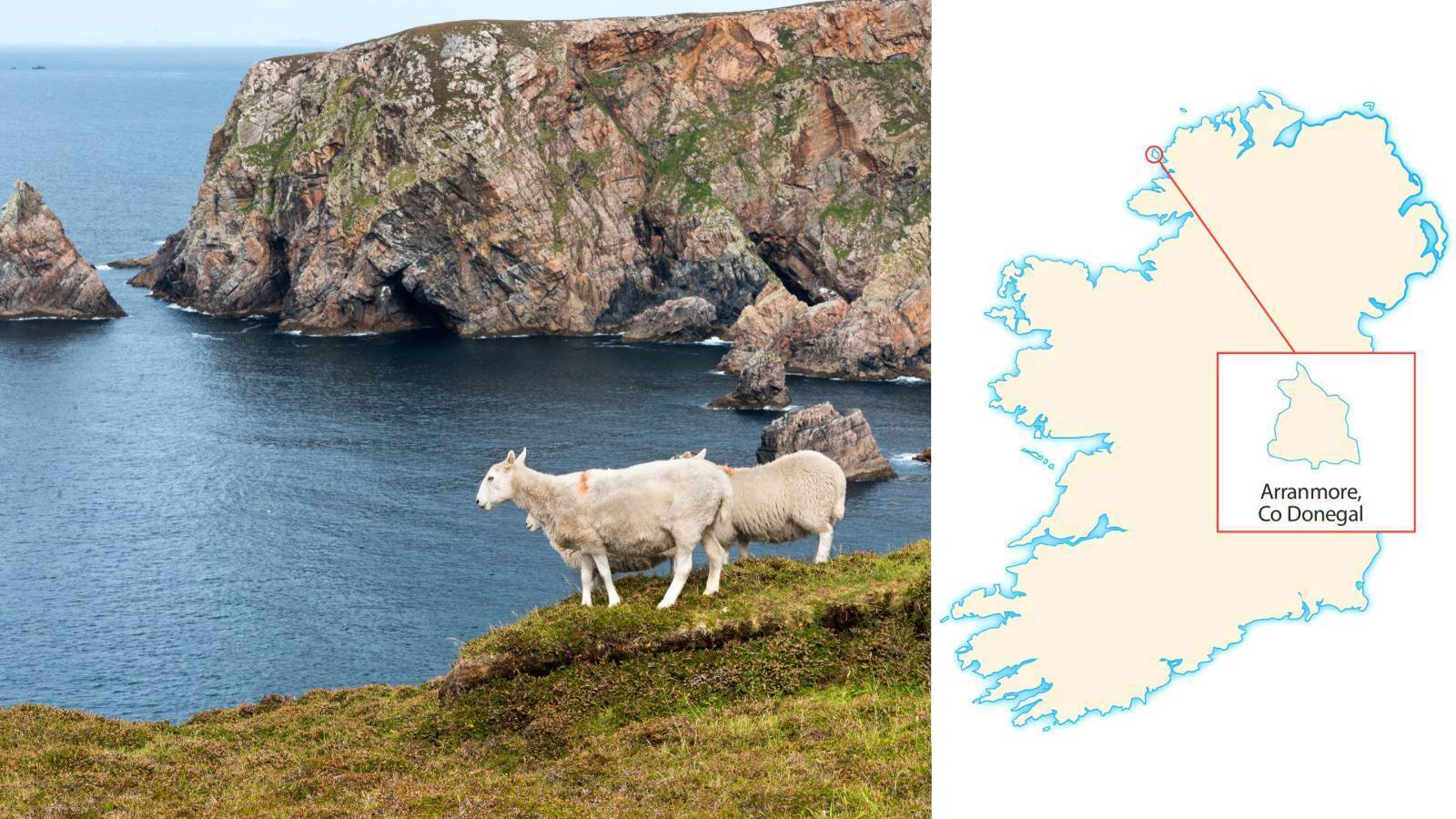
Arranmore, County Donegal has several walking trails which start at the pier and lead around the island
Among the more appealing descriptions of Arranmore in County Donegal is one from the kayaker who circumnavigated Ireland a couple of decades ago. Jasper Winn described the seventh largest Irish island thus: “In my mind I’ve recreated Árainn Mhór as a mix of Dingle, Dublin and my own idea of the garden of earthly delights.”
The appeal is threefold: the vibrancy of a coastal community; enough urbanity to slake that demand, and a beautiful island in the Atlantic Ocean with enough nature to satisfy the keenest David Attenborough.
The easily-accessible island is a magnet for hillwalkers, birdwatchers, anglers, swimmers, divers and simply for those who simply fancy a boat trip and a short amble or a spot of lunch. (And island-hopping obsessives too, of course). There are several walking trails which start at the pier and which lead around the island through upland bog, past handsome lakes and beneath the islands’ peaks of Cnoc an Fhrancaigh and Cnoc na gCarn. One trail leads to the northwest of the island where the lighthouse can be found. Like all our other lighthouses, it is unmanned and automated. Since 1865 it has directed ships away from its rocks.
Arranmore (in English) is not to be confused with the Aran Islands in Galway though this does happen occasionally. In the Galway context, Arann means ‘kidney-shaped’ but it would be an odd kidney that gave its name to the Donegal island. In Scotland there is also an Isle of Arran. Arranmore was also known as Árainn Uí Dhomhnaill, 'Aran of the O'Donnells' in honour of the O’Donnell clan which dominated the region known as Tyrconnell, which included Donegal and parts of several other counties. The clan’s most famous son was Red Hugh who led Irish forces in the Battle of Kinsale before his exile to Spain in 1602.
The island lies about 4 kilometres off the fishing port of Burtonport with dozens of islands large and small in between, including Inishcoo, Rutland and Eighter. Its main settlement is on the west coast at Leabgarrow where along with a few bars can be found one of the few nightclubs on an island: Smugglers.
Business life on the island revolves around the co-op which was begun in 1976 and which is involved in housing, tourism, heritage, running a shop and a helipad as well as Irish language courses, according to the Coastal Atlas of Ireland. It might be easier to state what activity it isn’t involved in. Either way, it is a lifeline for Arranmore. The population of the island in 2022 was 478 which swells dramatically in the summer. In 1841 1,000 more people called it home. The main reason that the population fell so steeply was of course, the Famine with Arranmore being particularly badly affected. Many of Arranmore’s emigrants headed for Beaver Island in Lake Michigan in the US. A monument on the island connects the two islands and celebrates their connection.
Arranmore has long inspired poetic colour. In the early 19th century the famous balladeer Thomas Moore wrote: "Oh! Arranmore, loved Arranmore,/ How oft I dream of thee,/ And of those days when, by thy shore,/ I wander'd young and free./ Full many a path I've tried, since then,/ Through pleasure's flowery maze,/ But ne'er could find the bliss again /I felt in those sweet days.”
And the bad times too are remembered of course. In this case, the ‘Arranmore Disaster’ recalls the tragedy of a boat returning from Scotland in 1935 when 19 islanders drowned. Familial connections to Scotland over the generations saw many islanders (tatie hokers) travel to their Gaelic cousins for the potato harvesting season and those links are still as strong as ever.
“Twas in the year of thirty five on a bleak November eve/ This awful tragedy occurred, it caused us all to grieve/ Those cheerful lads returning from the Scottish harvest yield/ Upon the stormy ocean their lives were forced to yield.”
It is a musical and poetical tradition that finds its current iteration in the traditional brotherly duo Ye Vagabonds, Diarmuid and Brían Mac Gloinn, whose people come from the island and whose music captures a flavour of this unique place.
: , Jasper Winn, Sort of Books
CONNECT WITH US TODAY



Be the first to know the latest news and updates