Anja Murray: Ireland is home to 31 species of wild orchid — including one found nowhere else in the world
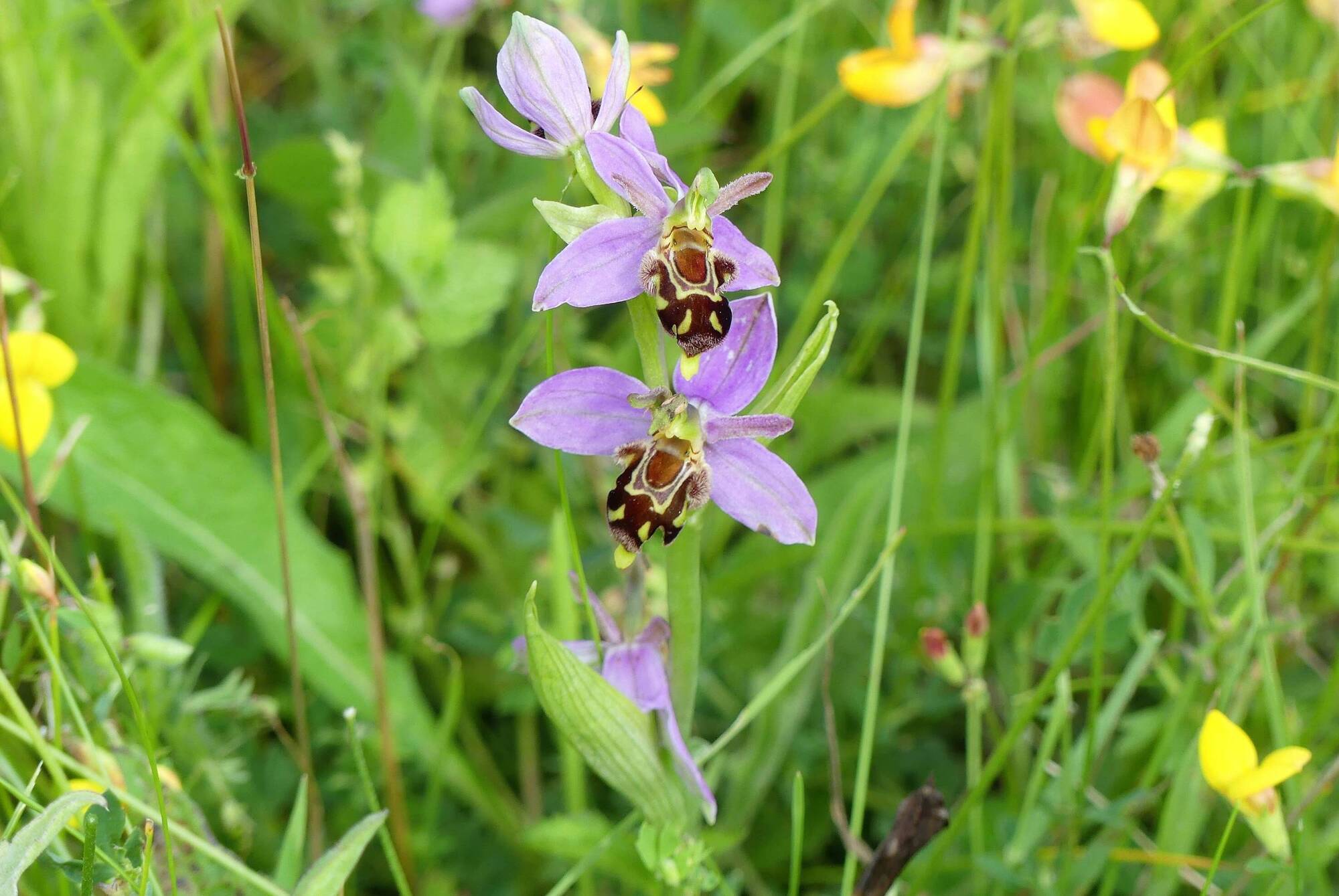
Ophrys apifera, known as the bee orchid
A mention of orchids sparks images of elaborately beautiful tropical flowers. It often surprises people to discover that Ireland is home to 31 different species of wild orchid, some common and some exceedingly rare. One species, the western marsh orchid, is unique to this island, which means that it is found nowhere else in the world.
Many of our native wild orchids are in flower and easy to observe during the summer months.
The bee orchid is especially fascinating. Their flowers have evolved to mimic a bumblebee. This clever ploy is designed to lure in freshly hatched male bees, who can’t tell the difference between a female bee and these orchid flowers and are thus duped in to believing that they have found a female bee to mate with. Bee orchids even produce a scent like that of a female bee, in the form of chemical signals called pheromones. When the male bee lands on the flower, he attempts to copulate with it, a phenomenon called ‘pseudocopulation’. Orchid pollen attaches to his back and he then inadvertently carries this along to the next bee orchid he visits.
But the really intriguing thing about the particular species of bee orchid that is native to Britain and Ireland, is that bees rarely land on them. One theory is that the bee that these orchids evolved to resemble are no longer present here. Instead, they have come to rely on the wind to help disperse the pollen, but not far enough to cross pollinate. Having gone to so much trouble to look just like a bee, our bee orchids have to settle for self-pollination.
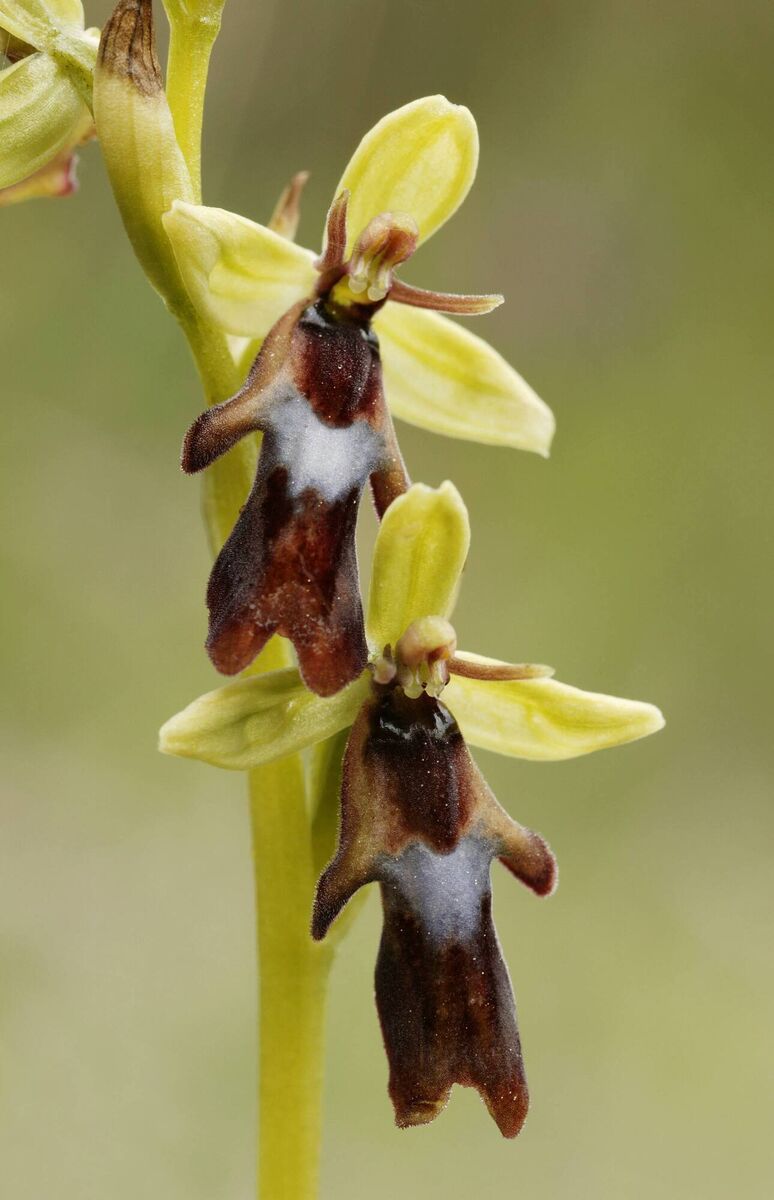
The other native orchid here that impersonates an animal is the fly orchid — a close relative of the bee orchid. I was lucky enough to find a few fly orchids growing on limestone pavement in the Burren near the end of May, the dark brown flowers on stems as tall as 60cm making them easy to spot. These fly orchids, contrary to their name, produce a scent that mimics the sex pheromone of a wasp, and are pollinated by pseudocopulation with inexperienced male wasps, newly hatched in advance of the females of their species.
Many orchids have a symbiotic relationship with fungus, whereby the germination of their seeds is dependent on the presence of particular fungal mycorrhiza in the soil. These microscopic fungal threads help the young plant to draw in essential nutrients to their roots. Later, the mature orchid plant repays the loan by supplying the fungus with carbohydrates produced through photosynthesis. Both orchid and fungus rely on each other.
This relationship is why so many orchids are especially vulnerable to changes in land use. Many of the orchids characteristic of species rich grassland habitats have been declining in both frequency and abundance in recent years. For thousands of years, they have been maintained by extensive grazing and cutting for hay in late summer.
Changes in farming practice that cause deterioration of orchid rich grassland habitats include use of inorganic fertilisers and herbicides, installation of field drains, reseeding of old pastures, and a switch from hay and farmyard manure to sileage and slurry. Fertilisers and pesticides will generally kill of the fungal partners in the soil, and once these are gone, there will be no new orchids. As soil nitrogen levels are boosted, orchids and other sensitive species lose out. Orchid-rich pasture and meadows, once so common across Ireland, are now increasingly rare.
Another exceptional native wild orchid is the bird’s nest orchid, a plant that contains no chlorophyll at all. These woodland orchids are a pale and ghostly looking, and while they flower form may to July, the flowers aren’t any different in colour to the stems or the leaves, all of which are a very pale brown. These orchids have no chlorophyll at all, so no part of them is ever green, and they are not able to photosynthesise to produce their own food. It is not yet fully understood how the fungus benefits from this relationship.
One of the rarest orchids here is the elusive ‘Irish lady's tresses orchid’, found only in four or five places in Ireland. Irish lady’s tresses grow only in damp meadows in Ireland, Canada and parts of the outer Scottish Hebrides. Nowhere else in Europe is this orchid found. It is very particular in its requirements, taking up to eight years to flower. As part of its life cycle, it needs the ground to be flooded and grazed conservatively, so where it does occur, careful management is needed to ensure this rare orchid can continue to exist.
In Irish, many orchids are called Magairlín — which translates to English as ‘little testicles’. This name has probably come about because the little tubers that these orchids have on their roots look like a pair of testicles. In the Dingle peninsula, a potion made from the early purple orchid was called ‘Magairlín meidhreach’, translating as ‘merry little testicle’. There is also a poem from 1735 describing how “a decoction of the roots of the early purple orchid, drunk with goats milk, excites sexual desire, aids conception, and strengthens the genitals”.
This same anatomical similarity is also what likely gave rise to the tradition in many parts of Ireland of making a love potion with the root tubers of early purple orchids. Upon drinking the concoction, a man could be induced to fall in love with the potion maker.
Some of the best places to see wild orchids are The Burren in county Clare; The Raven in County Wexford; the Cloheen intake near Clonakilty in County Cork; Bull Island in Dublin; and Mullaghmore in county Wexford. With declining diversity, exploring our wild orchids is a wonderful way to bear witness to what we are losing, as well as allowing ourselves to be enchanted by their beauty.
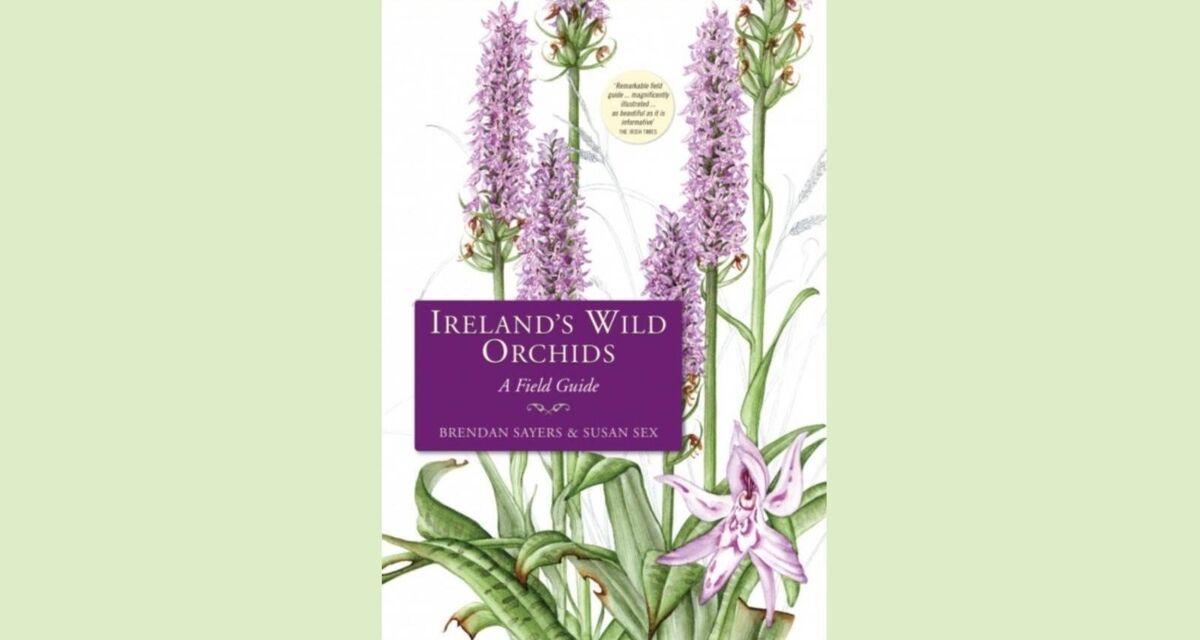
One of the best sources of information about our orchids is a beautifully produced little book, by Brendan Sayers and Susan Sex, published by the Collins Press.

CONNECT WITH US TODAY



Be the first to know the latest news and updates