Islands of Ireland: Illaungorm North in Galway was once home to two families
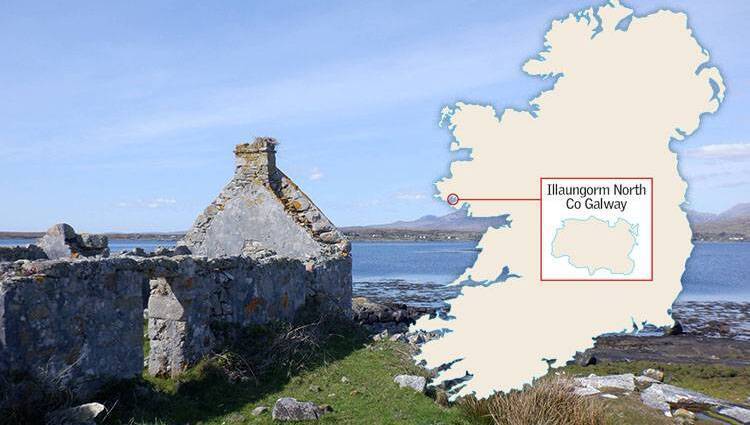
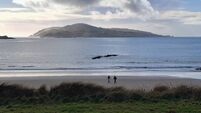
Illaungorm North in Galway. Picture: Dan MacCarthy
In the inner reaches of Bertraghboy Boy in Connemara where the hulking masses of the Twelve Bens and Maumturk mountain ranges dominate the skyline there is another bay hidden away. Cashel Bay has a myriad of small islands scattered around its edges (Illaunaknock, Corn Island, Illaunaguilky) while a few large ones occupy centre stage. It is a quiet place, with scant sea traffic, and a joyful escape from the city.
One of the larger islands is Illaungorm North which was once home to two families but they have been gone for about 100 years and the island now looks a little worse for wear in their absence.

An extensive bog covers the flat island with few flowers to provide colour. A solitary tree, nearly bent double from the prevailing winds, testifies to the wild and windswept environment where raising a family must have been extremely difficult. Nevertheless, that was achieved for a time by two families.
If it was any consolation to the inhabitants (it probably wasn’t) Illaungorm North has astonishing views of those mountains with light blazing across the quartzite surfaces on a fine day or on a rainy day huge curtains of rain can be seen lashing the slopes mercilessly.

There are the remains of a quay on the northern shore of the island near a few houses where the two families were recorded as living by a constable John Kelly in 1901 for the census that year. A short walk from the strand brings the visitor to the houses which are now roofless but whose walls are sturdy still with impressive blocks locked together.
The 1911 Census shows the same families in situ. The earlier Census shows the Green family living in the first house. There were six children and the parents Mark (60) and Kate (60) were illiterate. Kate spoke only Irish but all the children and father Mark were bilingual. The family shared two rooms. Mark’s occupation was given as ‘farmer’.
The second house was occupied by Michael and Mary Connolly in their 60s. They had a boarder called Penelope Green. All were illiterate and spoke Irish only. Michael was also a farmer. Some maps show the island as having 57 acres but this is reduced to 35 at high tide leaving a huge inter-tidal area.
Illaungorm North and its namesake ‘South’ are known locally as the Blue Islands and in Irish as An tOileán Gorm Thuaidh and Oileáin Ghoirm Theas. The Irish name may be a Gaelicisation from the 1660 version: Iland O Mulgran.
The late mapmaker Tim Robinson, who wandered over every rock in Connemara in researching his books on the area ( ; and ), had the same interpretation. He disputes the idea that the islands were so named for the blue flowers that prevailed there but suggests a derivation from the landowner.
Robinson says the houses were probably built by the Congested Districts Board in the 1890s and were abandoned in 1931. He also found the island to be a haven for birds and hares “which being rarely troubled by those who kill for pleasure are rather tolerant of the occasional visitor”.
Forty years after Robinson’s visit his description is still on the money when the visited. From conversations with locals living around the bay Robinson even unearthed a few placenames for Illaungorm North: A little creek on the northeast is called An Caladh Cam (the Crooked Harbour); and on the southeast an exposed sheet of rock is called Leac an bhFaoileán, The Flagstone of the Seagulls.
Illaungorm South, always uninhabited and covered in gorse, can be reached at low tide. One final interesting detail on Illaungorm is the presence of bog deal in a cutaway bog. The kayaker David Walsh observed some fine examples of ancient pine preserved there. No doubt this supplemented the firewood supplies of the Greens and Connollys as well as providing planks for building.
No ferry. Kayak from either Canower Pier on the north of the bay or Glynsk Pier on the south of the bay.
: galwaycommunityheritage.org; Connacht Tribune 27/01/1984; logainm.ie; Oileáin, David Walsh, Pesda Press.