Islands of Ireland: Galway's Friar Island — a magnet for kayakers, divers... and sheep
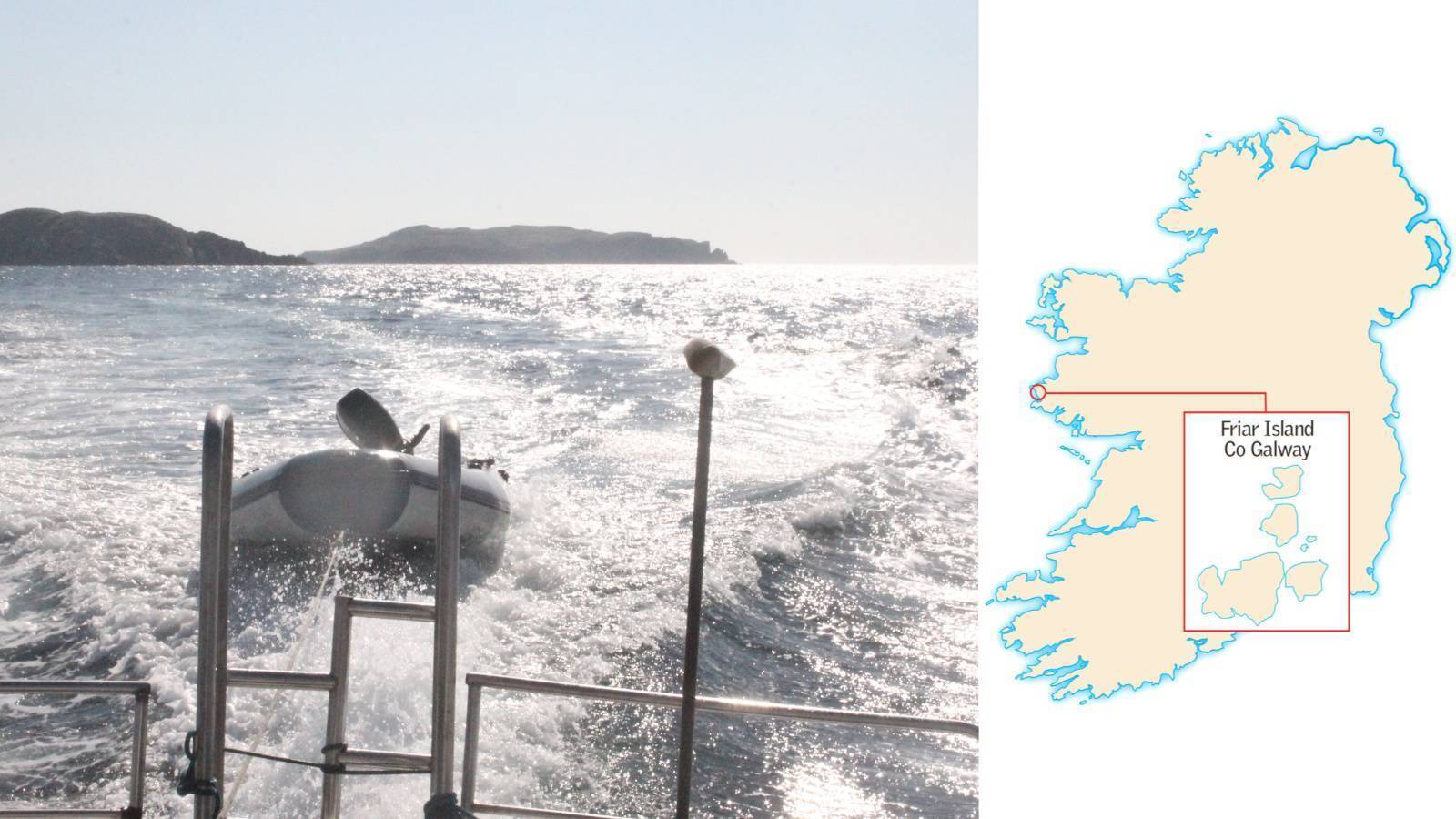
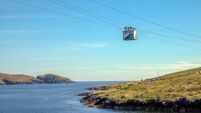
Islands of Ireland. Friar Island (to the left in this image). Picture: Dan MacCarthy
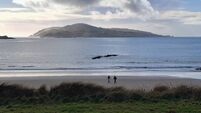
Friar Island is one of those places that is more than the sum of its parts. Each of its four sections, sort of like a distorted four-leafed clover, is unremarkable but together they form a very attractive place. Perhaps it has to do with location. At a few kilometres off the west coast of County Galway the island provides a shelter from rough seas for any seafarer in need of succour. There is a delightful channel between the western sections which tower above the kayaker, whose vessel is the only type of boat that can pass through there.
Beyond Friar Island are Cruach and the former ecclesiastic centre of High island... and after that it’s Newfoundland. And there are no friars here now but possibly some lived there in centuries past, perhaps an anchorite’s cell related to High Island.

It is hard to believe that that adjacent High Island with its plethora of ecclesiastic riches including a church, cross slabs, and leacht is the only island of the three or four in the area to possess such antiquities. It is likely that Friar Island was used as an anchorite’s cell, though no evidence has emerged to prove the theory. The archaeological record for the 32-acre island shows zilch.
Its name has had various guises including Olen-ambrahar or the Fryar’s Island which date from 1684. Though it has many features lending themselves to nomenclature including deep gullies (or zawns as they are known in Cornwall), there are no associated names — again suggesting a dearth of habitation, as man likes to leave his mark. The one exception is the third smallest island of the group which has the name ‘Malthooa’ the name for which translates as ‘northern ball’ or ‘lump’.

If High Island was the inspiration for poet Richard Murphy, Friar Island too has had its champion in the artist Norman Ackroyd whose etching captures it in a time of wildness. It is a companion piece to the similarly wildly-rendered Cruach and High Island.
The island is grazed by sheep hence the almost complete absence of trees and flowers there. A steep slope allows the animals to be brought on and off and the pen at the top of the slope is the only visible manmade structure on the private island. This is also the point where passing kayakers alight and make their way to the plateau atop. On the western side the usually high waves and rugged shoreline make landing nigh on impossible.
Apart from kayakers, the area is a magnet for divers with clubs from all over the country attracted to its depths. Apart from Friar, High and Cruach, divers frequent places including Buachaill, Mweenmore Shoal, Sunfish Rock, Pigeon Cove, and Dooninaheena. On a trip a few years ago to Friar Island the Dublin University Sub Aqua Club wrote: “We dived on the side of the island facing Inishbofin, probably the north side. It was a lovely dive with a lot of life, lovely clear water and nice dropoffs down to beyond 35 [metres]. There was a little less kelp in the shallows here. Deeper, there were big boulders, teeming with crabs, lobsters, ling and blennies. Very nice dive.”
With such a fractured coastline populated by underwater reefs and characterised by treacherous currents it is surprising that there have not been more shipwrecks recorded in the area. One such was in 1880 when a barque called the Verity with a crew of 15 en route from Galway to Nova Scotia in Canada foundered on the shore very near to Friar Island in a fierce storm. A Chilean and a Swede drowned and everyone else was rescued.
There are several other Friar Islands in the country including at Lough Leane, County Kerry; Glengarriff, County Cork; on the Shannon at Lough Ree; and there is also one further south near Ballina, which was submerged in 1929 to facilitate the construction of the hydroelectric dam at Ardnacrusha.
: No ferry. Kayak from a storm beach at ‘Islands Viewing Point’ about 2.5km west of Claddaghduff, County Galway (just south of Clifden). Alternatively, kayak from Anchor Beach, 2km west of Cleggan.
: logainm.ie; dusac.org