Be tick aware: Keep yourself and your family safe from Lyme disease
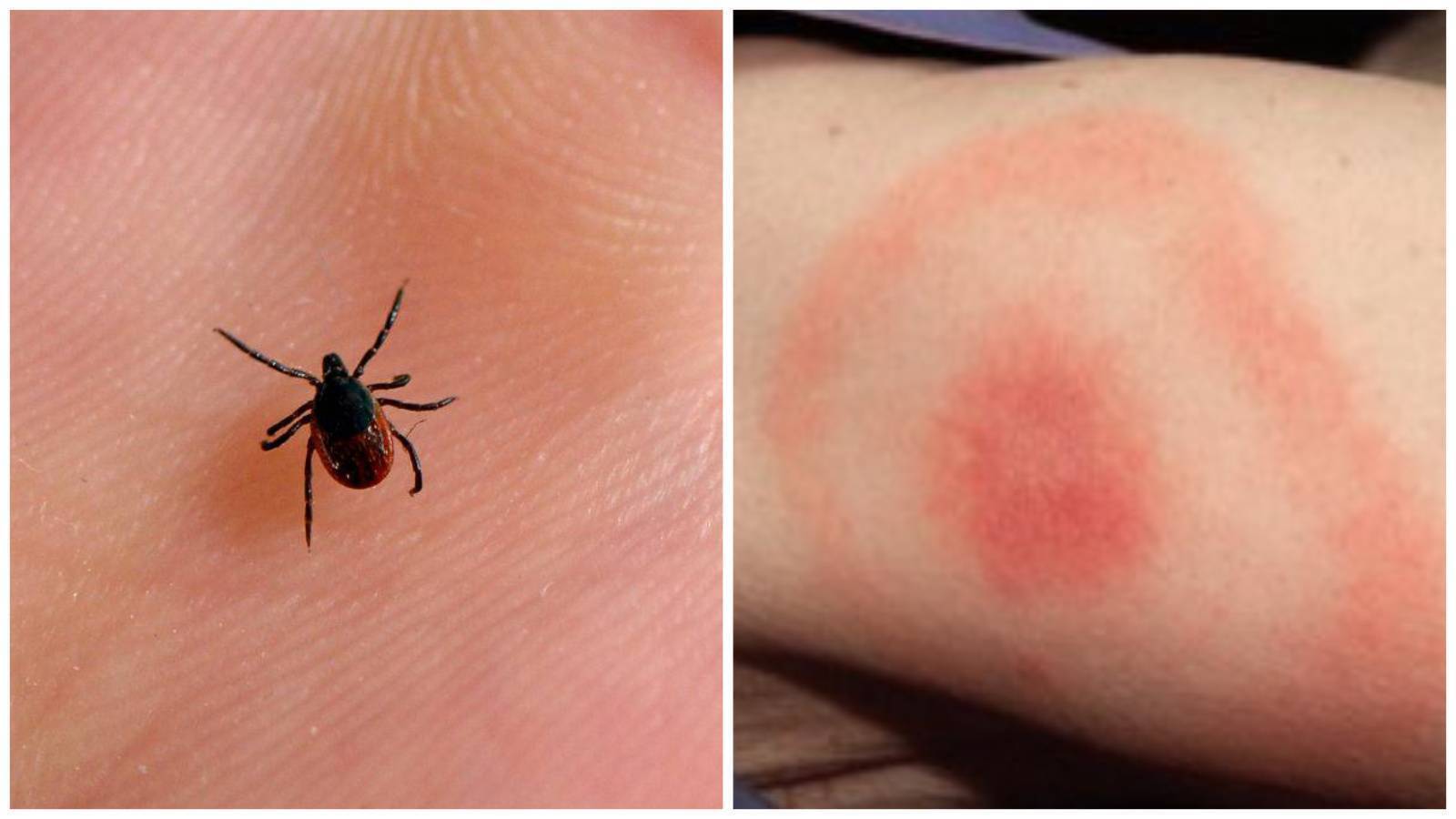
Lyme disease can be difficult to diagnose. There is not always an obvious rash. Blood tests help confirm or rule out Lyme disease —  but these tests are not always accurate in the early stages of the disease
Be tick aware: Keep yourself and your family safe from Lyme disease

Lyme disease is a bacterial infection that can be spread to humans by infected ticks. It's usually easier to treat if it's diagnosed early. The rash can look like a bull's-eye on a dartboard. https://www2.hse.ie/conditions/lyme-disease/

With the summer holiday season upon us and more people in the outdoors, a warning about the danger of contracting Lyme disease is timely.

The disease is spread through bites from infected ticks, but can only be caused if the tick has already bitten an infected animal, usually a deer or a sheep.

It is commonest among hill-walkers, hikers, campers and others whose leisure activities, or work, is in heathland, light woodland and other grassy areas, or brings them into contact with certain animals.

Rozanna Purcell describes having a tiny tick removed after a hike recently. Picture: @rozannapurcell

Roz Purcell whose book The Hike Life documents her 50 favourite hikes in Ireland has described on Tiktok [ @rozannapurcell] her efforts to have a tick removed correctly recently. She says she was surprised by how tiny the tick was. 

The deer population has grown massively, countrywide, and, most people agree, is out of control. As deer are almost everywhere — in parks, woods, farmland, roadsides and private lawns and gardens — the need for greater care is obvious.

Politicians tend to raise concerns about traffic hazards and trespass by deer, but don’t say enough about Lyme disease which can have debilitating, long-term effects on people. Early symptoms include fever, rash, tiredness and muscle and joint pain.

Ticks are most active from May to September, in both urban and rural environments. Long ago when children had freedom of the fields during long, summer days, we got bites when grass was high, or when meadows were freshly mown.

We knew the tick in Irish as a ‘sceartán’ — an almost invisible fellow who struck by biting you and raising little lumps of blood before you knew it.

The tick injects bacteria into a person’s blood while feeding on the blood. Around 200 people test positively for Lyme disease in Ireland, annually. However, only a small proportion of ticks are capable of infecting people — as low as 1% to 3% — but it can be up to 50% depending on location.

Lyme disease is a bacterial infection that can be spread to humans by infected ticks. Picture: HSE 

Now, the Health Protection Surveillance Centre is highlighting areas where ticks are most likely to be: shady and humid woodland clearings with grass; open grassland, parkland, fields and bushes; walking paths, especially those bordered by long grasses; wooded and forested areas, and vegetation close to lakes and beaches.

In general, the longer the tick has been attached to the skin, the greater the chance of being infected, says the Centre.

Lyme disease is usually easier to treat if it's diagnosed early. How to remove a tick. Picture: How to remove a tick — HSE 

“All the evidence suggests that ticks need to be attached and feeding for quite some time (as long as 24 hours) before there is a risk of becoming infected. If a tick is removed as soon as it bites, the risk of infection is very low."

The Centre advises people visiting at-risk areas to cover exposed skin by wearing long trousers tucked into socks/boots and long-sleeved tops; to wear boots rather than sandals; to use insect repellent, and to inspect skin and clothes every few hours.

x

More in this section

Revoiced

Newsletter

Sign up to the best reads of the week from irishexaminer.com selected just for you.

Cookie Policy Privacy Policy Brand Safety FAQ Help Contact Us Terms and Conditions

© Examiner Echo Group Limited